|
living in 1962 15000+ posts
Joined: Jun 2002
Posts: 19,546 Likes: 1 |
Joe's gonna what? 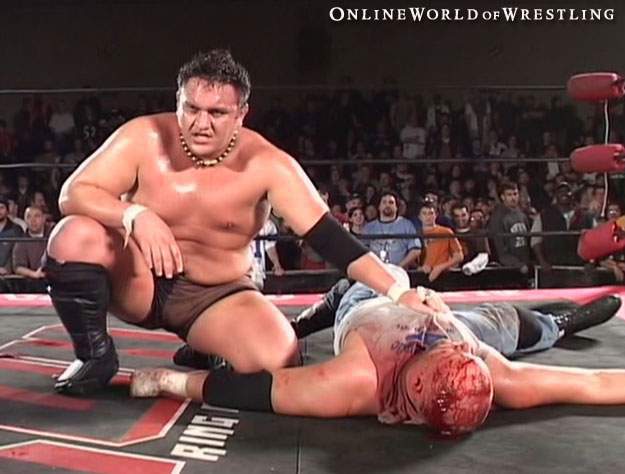 Real name - Joe Seanoa
Aliases - King Joe
Hometown - Los Angeles, California
Debuted - September, 1999
Titles Held - Ballpark Brawl Natural Heavyweight; NWA International Tag Team (with Keiji Sakoda); PWA Pure Wrestling; ROH Pure; ROH World; TNA World; TNA World Tag Team; TNA X-Division (3x); TWE Heavyweight; UPW Heavyweight; UPW No Holds Barred (2x); UIWA Tag Team (2x)
Other Accomplishments - Winner of 2006 EWF Xtreme 8 tournament; Winner of 2004 IWA-Mid South Revolution Strong Style tournament; Ranked #4 by Pro Wrestling Illustrated on the PWI 500 list in 2006; Winner of PWI Feud of the Year award for 2007 (vs. Kurt Angle); Winner of PWI Most Popular Wrestler of the Year award in 2006; Recipient of 5 star match rating by Wrestling Observer Newsletter in 2004 (vs. CM Punk – October 16, 2004); Recipient of 5 star match rating by Wrestling Observer Newsletter in 2005 (2x, vs. AJ Styles and Christopher Daniels – September 11, 2005 and vs. Kenta Kobashi – October 1, 2005); Winner of Wrestling Observer Newsletter’s Best Brawler Award for 2005 and 2006; Winner of Wrestling Observer Newsletter’s Match of the Year award for 2005 (vs. Kenta Kobashi – October 1, 2005); Winner of Wrestling Observer Newsletter’s Most Outstanding Wrestler award in 2005; TNA Triple Crown Champion; Winner of 2005 TNA Super X Cup Tournament; Winner of 2007 TNA Turkey Bowl match; Winner of 2008 TNA King of the Mountain match
“Joe’s gonna kill you! Joe’s gonna kill you!”
That is the classic battle cry Samoa Joe’s fans belt out when they know it’s time for their hero Joe to get to business. Samoa Joe, 29, has seen a lot and performed for a lot of people. He is no stranger to performing as at the tender age of five years old he and his family’s Polynesian dance troupe performed as part of the 1984 Summer Olympics Opening Ceremony. From there Joe fine-tuned himself into a talented athlete and was a top high school football star and a California State Junior Judo Champion.
But it was in 1999 when Joe began wrestling that he found his calling in life. He trained out in California and was a star pupil in the then-WWF developmental affiliate Ultimate Pro Wrestling, where he worked with fellow future star John Cena, among others.
Through 2001 and 2002 he split his time between California indies like UPW and Pro Wrestling Guerrila and as Japan’s ZERO-ONE promotion, picking up various championships and continually honing his craft.
Don’t let the name Samoa Joe fool you; he isn’t some barefooted, hardheaded caricature. This guy is the real deal.
But it was in 2002 when he joined Ring of Honor as Christopher Daniels’ hired assassin as part of the “The Prophecy.” He quickly rose through the rank and file of ROH, and punched his ticket into Ring of Honor lore on March 22, 2003 when he defeated Xavier for the ROH Heavyweight Championship.
Joe embarked on star-making and record-breaking title reign, elevating the ROH Championship into a legitimate World Championship along the way. He defeated and defended against all of Ring of Honor’s top stars and legends, perhaps most notably his three defenses against CM Punk that earned virtually universal praise from wrestling fans and analysts worldwide. Finally after a twenty-one month championship reign, he dropped the belt to Austin Aries on December 26, 2004. Even in defeat Joe was cemented as a legend among Ring of Honor lore.
He rebounded quickly and soon picked up the ROH Pure Championship and held it for over three months in 2005. In October 2005, Joe had a once-in-a-lifetime match against Japanese legend Kenta Kobashi that earned many critics “Match of the Year” for 2005.
Meanwhile, in the summer of 2005 Joe also began working concurrently at TNA Wrestling. He debuted at the Slammiversary PPV in June 2005 to much fanfare from commentator Mike Tenay. Joe quickly destroyed the TNA X-Division, racking up an impressive undefeated streak en route to challenging for the X-Division championship in a three-way dance against AJ Styles and champion Christopher Daniels at the “Unbreakable” PPV in September 2005. Styles won the X-Championship, but Joe was not pinned and thus kept his undefeated streak alive.
Through 2006 Joe continued to divide his time between Ring of Honor and TNA, playing much different characters and carrying much different agendas. In Ring of Honor, he acted as one of ROH’s biggest defenders in their wild and heated inter-promotional war against Combat Zone Wrestling. He also continued to put on five-star quality matches against opponents like “American Dragon” Bryan Danielson and Takeshi Morishima.
Over in TNA, Joe, Styles and Daniels revolutionized the X-Division through the first part of 2006. They put on truly amazing and entertaining matches between all three combinations. Along the way he dropped the X-Title to Daniels in a three-way Ultimate X match at “Destination X” in March 2006, without getting pinned once again and thus kept his undefeated streak alive. Joe won the X title back from Daniels in April, but dropped it a couple of months later in another three-way bout, this time with Senshi pinning Sonjay Dutt, allowing Joe’s streak to continue. Joe then spent the rest of 2006 climbing the ranks of TNA, working with the heavyweight main event talent like Sting, Jeff Jarrett and Scott Steiner.
By the fall of 2006, Joe finally reached superstar status when he began clashing with new TNA arrival Kurt Angle. The pair butted heads through the fall until their first match-up at “Genesis” in November 2006. Angle won their first meeting, ending Joe’s eighteen month undefeated streak. The rivalry was TNA’s hottest ever and it showed in pay per view buy rates. Joe picked up the victory in their rematch the next month at “Turning Point.” Angle finally won this first chapter of their epic feud with a 3-2 Iron Man win at “Final Resolution” in January.
Also early in January 2007, Joe announced to Ring of Honor that after March 4 he would no longer be a full-time active member of the roster. The Ring of Honor cards through January and February were billed as part of the “Samoa Joe Farewell Tour.” His final match as part of the full-time roster was a victory over long-time ROH rival Homicide.
Joe then concentrated fully on his TNA requirements, as he was now considered a legitimate main event level star for TNA. Joe picked up his second X-division Championship on the July 12 Impact and went on to be a part of the “Match of Champions” at Victory Road. He teamed with TNA World Champion Angle to beat Team 3-D to win the TNA Tag Team Championships. From there Joe and Angle renewed their feud as they fought over all of the company’s belts. At Hard Justice in August, Joe lost his X-Title and both Tag belts to Angle, and faded into the background for a while feuding with guys like Christian Cage and Robert Roode.
Joe then formed an uneasy alliance with Kevin Nash, who mentored Joe in the ways of being a true main event superstar. In the main event of Turning Point in December 2007, Joe was supposed to team with The Outsiders against The Angle Alliance, but Scott Hall no-showed and Joe cut an impassioned live promo bemoaning the old guard and calling for a new guard of talent to emerge. Joe spent the first part of 2008 teaming with Nash, Christian Cage and others against Kurt Angle and his Alliance.
It all built to the next chapter in the Joe and Angle rivalry, a Six Sides of Steel cage match between the two men for the TNA World Championship at LockDown in April 2008. The build for this match was fantastic, as it showed both men in legitimate training footage preparing for the match MMA-style. It was the best build for a match the company had done in years. And finally Joe’s dream came true, as he beat Angle clean in the middle of ring to become TNA World Heavyweight Champion. Joe went on to defend the belt against a variety of opponents like Scott Steiner, Kaz, Booker T, Christian Cage and Kurt Angle throughout the spring and summer of 2008.
Along the way as Joe was Champion he remained in an uneasy alliance with Kevin Nash. Ultimately, to the surprise of no one, Nash finally turned on Joe during his World Title defense against Sting at Bound For Glory IV, causing him to lose his belt. Joe, along with old rival and friend, AJ Styles, began a youth movement in TNA against Nash, Angle, Sting, Steiner and Booker T, who called themselves “The Main Event Mafia.”
Currently Joe and AJ, along with Rhino and Team 3-D, are leading the “TNA Frontline” against The Mafia in a war that has been carrying the company since the fall of 2008.
Samoa Joe is one of the new-age look of wrestlers who doesn’t look like the muscle bound monsters of the ‘80s and ‘90s. He is a naturally gifted athlete who moves and flies like a cruiserweight yet has all the power and strength that allows him to put on heavyweight main event clashes. He is one of the most consistent performers in the ring and can put on top quality matches with a variety of opponents, big or small, fast or slow. His Ring of Honor matches with CM Punk and Kenta Kobashi are stuff of legend and his rivalry with Kurt Angle in TNA is what the company should use as a template on how to book all of their feuds.
He is vastly underrated on the microphone and his physical appearance often deters new fans from buying into Joe’s talents and mystique. But make no mistake about it; Joe is one of the absolute best in-ring performers the industry has seen in a long time. He has the support of legends like Bruno Sammartino the respect of his modern day peers.
Samoa Joe is one of the main reasons that Ring of Honor is where it is today, and he is one of the few legitimately unique talents that TNA is properly showcasing on a national stage. His unique charisma, undeniable in-ring talent and overall “it” factor makes Joe one of the most engaging performers of the twenty-first century.
He’s already won over virtually every fan who’s seen him compete in the ring, and he’s not even 30 years old. It’s kind of scary where he could end up and what this guy could do in the future as he continues to evolve and work with world-class talent.
Don’t let the name Samoa Joe fool you; he isn’t some barefooted, hardheaded caricature. This guy is the real deal. 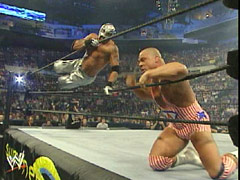 Real Name - Oscar Gutierrez
Aliases - Rey Mysterio Jr.; Colibri
Hometown - San Diego, California
Debut - April 30, 1989 (at the age of 15!)
Titles Held - WWE World Heavyweight; WWE Tag Team (4 - 1 with Edge, 1 with Rob Van Dam, 1 with Eddie Guerrero, 1 with Batista); WWE/WCW Cruiserweight Championship (8; 5 in WCW, 3 in WWE); WCW World Tag Team Champion (3 - 1 with Billy Kidman, 1 with Juventud Guerrera, 1 with Konnan); WCW Cruiserweight Tag Team Champion (with Billy Kidman); AAA Mexican National Trios Champion (with Octagon and Super Muneco); AAA Mexican Welterweight Champion; WWA Lightweight Championship (3); WWA Tag Team Champion (with Rey Misterio); WWA Welterweight Champion (3); WWC World Junior Heavyweight Champion; IWAS Tag Team (with Konnan)
Other Accomplishments: Won 2006 Royal Rumble; Member of AAA Hall of Fame - Class of 2007; Member of Tijuana Hall of Fame - Class of 2006; Ranked #4 singles wrestler in PWI 500 in 1999; Won Wrestling Observer Newsletter Awards for Rookie of the Year in 1992, Best Flying Wrestler from 1995-97 and 2002-04, and Most Outstanding Wrestler in 1996; was also part of their match of the year in 2002 (with Edge vs. Chris Benoit and Kurt Angle for the WWE Tag Team Championship at No Mercy on October 20, 2002)
It takes a remarkable talent to become a top level guy in WWE when you’re less than six feet tall. Rey Mysterio has joined a select pantheon of guys to make it to the top of the mountain without having “the look” that Vince McMahon typically builds his company around, which includes Bret Hart, Shawn Michaels, Chris Jericho, Chris Benoit, and his late friend Eddie Guerrero. That alone would guarantee him at least a spot on this list. It’s the career he had before he became the WWE’s “biggest little man” that has him in some pretty heady company in our books.
Rey began his career in his hometown of San Diego. He trained under his uncle, the original Rey Misterio, and made his debut in a small church in Tijuana, Baja California, Mexico against Psicosis, according to legend (or at least his Wikipedia page; same difference, really). It’s apt that his first match was against Psicosis, as they would have an amazing chemistry during matches that took place all over the world over the years, from Japan to ECW to WCW, although their rivalry did not continue in WWE in any way to speak of (outside of their match at the first One Night Stand). The fact that his debut was at 15 is also noteworthy because, come on, he was 15! That is, aptly, around the age when I became a huge mark for him in WCW. According to this article, Rey’s parents had to sign a waiver claiming all responsibility for any injury he might have in the ring for that to work out. Given all the knee surgery he’s had in his career, I hope that they’ve stopped having to live up to that obligation.
By the time he was 18, his uncle bestowed the family stage name on him, and he became Rey Misterio Jr. while wrestling for the lucha libre promotion AAA. He kept that suffix until he came to WWE. While in AAA, he had a rivalry with Juventud Guerrera, a man who would go on to owe him thousands of dollars. They’d be tag team champion partners and rivals in WCW, too, but I find the debt more amusing, especially since Rey showed up at an AAA show to yell at “the Juice” about it. I like to assume that he was wearing his mask at the time. It’s worth noting that luchador impresario and occasional wrestler Konnan (who is part of this list) is the guy who recruited him for AAA when it was opening up, since it was Konnan who wound up bringing Rey and a legion of other luchadores to WCW.
In a round about way, that leads us to 1994, when Rey made his American PPV debut by appearing on When Worlds Collide. He teamed up with Latin Lover and Heavy Metal to take on Fuerza Guerrera, Madonna’s Boyfriend (the late Louie Spicolli), and Psicosis. I told you they wrestled each other a lot. That was a AAA show which was co-promoted by WCW. Konnan was even in the main event! Depending on your perspective, this can be seen as Eric Bischoff’s first step to infusing the luchadores in to his product to help differentiate it from what the WWE was putting out during the Monday Night Wars or a footnote in the business in general and Rey’s career specifically; if you’re Paul Heyman, it’s probably the latter.
You see, in between showing up on a card promoted by WCW and debuting on Nitro, Rey had the seemingly requisite run in ECW that every top worker in the late 90’s had. With Konnan facilitating the deal, he wrestled long time rivals Guerrera and Psicosis in 1995, which just happened to be ECW’s peak as a promotion. This is generally where Eric Bischoff is credited/blamed for getting/stealing the idea to use luchadores (again, especially if you’re Heyman), which totally ignores that PPV I just mentioned. But that’s pretty irrelevant to the fact that Rey and his opponents put on amazing high flying exhibitions in ECW before they did the same thing (minus the chair tossing, crowd diving antics) for an audience of millions during WCW’s glory days.
Rey made his debut for that audience in 1996, at the Great American Bash, against fellow ECW alumnus Dean Malenko, with his last name changed to Mysterio. Malenko won that match to retain the Cruiserweight Title, but Rey would go on to defeat him for the belt on Nitro the following month, picking up a win over that damn Psicosis again at Bash at the Beach in between. His work at those shows is generally overshadowed by that whole nWo thing, especially since his being lawn darted in to the side of a trailer by Kevin Nash factored so heavily in to that angle. But given his status in WWE, and how much the entire nWo has disintegrated since WCW died, I think he’s got the last laugh there. Especially since these matches are the ones getting on DVDs. At any rate, during his four month first reign he would defeat that mooching Juventud, unifying the Cruiserweight Title and the WWA Welterweight Championship, before dropping the belt back to Malenko.
Over the next year, he’d go on to work with other cruiserweight luminaries like Guerrera, Psicosis, Malenko, and Ultimo Dragon. He also spent time trying to make Prince Iaukea not suck, but that’s best ignored. It’s his title vs. mask match at Eddie Guerrero at Halloween Havoc that’s the most fondly remembered to this day, however. It may have been overshadowed by Hart/Austin at Wrestlemania and the first Hell in a Cell during the same year (I say that partially because I wasn’t following wrestling at the time), but it was certainly a match of the year contender, and still holds exceptionally well to this day. Rey picked up the victory and established a rivalry with Eddie that they would reprise years later in WWE, comprising the last prolonged feud of Eddie’s career and life.
Rey divided his time in 1998 between trading the Cruiserweight title with Chris Jericho during his star making run as an obnoxious, loophole abusing heel and being embroiled in a rivalry with Eddie and Juvie in the LWO stable, a group of luchadores Eddie put together so he wouldn’t be left out of having his own ego enhancing stable, I guess. Look, it was WCW in 1998; everybody had a “me too” nWo knock off stable, even Ultimate Warrior. This could be why only Goldberg wound up really getting over. Rey was an unwilling member of the stable (he only joined because Eddie beat him in a match via Juvyference), and wound up teaming up with then Cruiserweight Champion Kidman against them as a result. That’s a partnership that lasted through WCW’s final days and led to tag title runs in two different weight classes, as well as a friendly rivalry over the Cruiserweight title.
It was his connection the LWO that led to him losing his mask at Superbrawl, oddly enough. From my vague recollections, ignoring the amazing research powers of the internet because hell, it’s WCW in the late 90s and I can’t be bothered, it went something like this: Kevin Nash was being a cruiserweight bully and disbanding the LWO on pain of death because the NWO had just reunited, due to Bischoff being creatively bankrupt and handing the book over to Poochie, and thus all of these other stables needed to die. Rey was the only one of the group who refused to take off his LWO shirt, despite not ever wanting to be in the stable and actively undermining it every chance he got. This somehow led Rey teaming up with Konnan in a hair vs. mask match against Lex Luger and Kevin Nash.
Rey’s team lost, and Nash showed up with the mask next night, getting in one of his requisite funny lines about it not fitting while calling Rey out for a match. An odd thing happened, though; Rey blocked a Jackknife Powerbomb with punches and landed on top of Nash, scoring the pin. This kicked off a short lived “giant killer” gimmick for Rey Rey, as he went over the likes of Scott Norton and Bam Bam Bigelow before Nash got his win back at the next PPV. As part of a pretty major push, he’d win the Cruiserweight Title from Kidman and even defeat then WCW World Champion Ric Flair via dq on the Spring Break Nitro, knocking him in to the pool that surrounded the ring at the close of the show.
He and Kidman would be go on to be drawn in to the already excellent feud between the IV Horsemen of Benoit and Malenko and Raven and Saturn over the tag titles, winning them from the Horsemen on Nitro before dropping them to the ECW expats. From there, he was briefly drawn in to Randy Savage’s feud with Kevin Nash over the World Title (on the shockingly logical basis for Savage that Rey had beaten Nash and thus knew his weaknesses) before joining old pal Konnan in the No Limit Soldiers stable, an attempt to get some crossover heat from then popular rapper (and future terrible ballroom dancer) Master P. This was a feud in which WCW did what it did best; waste millions of dollars by not understanding their audience. You see, the No Limit Soldiers were hip hop loving baby faces, fighting a surly group of rednecks led by Curt Hennig. Guess who the predominately Southern WCW fan base cheered for?
The one good thing that debacle did, besides give the world Hennig’s pretty hilarious “I hate rap” entrance music, was lay the foundation for the Filthy Animals stable. After P. left WCW in order to drop off the face of the Earth (or at least far out of my consciousness), Konnan and Rey kept teaming. Eventually, Rey’s old buddy Kidman, his on and off screen girlfriend Torrie Wilson, and everyone’s old rival Eddie Guerrero joined the group. Rey would spend the rest of his time in WCW (and the rest of WCW’s time on this mortal coil) in the group.
They got a pretty solid push under the old WCW brain trust, and that only increased when Vince Russo came aboard. Admittedly, it was a trade off; while they’re prominence on Nitro increased, so did the incoherence of their face/heel status. They were involved in a ongoing feud with the fully heel Revolution stable of Malenko, Saturn, and Shane Douglas, but they also buried baby face Ric Flair in the desert during Russo’s first PPV, which wound up being a symbolic burial for Flair as well, as he wouldn’t appear on WCW TV again until Kevin Sullivan was booking things. These kinds of shades of gray worked in WWF, but it came across as more crap being flung at the wall at high velocity by Russo in WCW. Still, they were a fun group, and they got over as much anyone did in WCW. I’ll let Kyle David Paul explain, as he did in that Konnan profile I linked to:
The Filthy Animals were a great idea. …They were neither heels nor faces, instead pranksters with chips on their shoulders. Dressed mostly in street clothes, they felt authentic and modern at a time when we saw WCW returning to pre-nwo styles of programming.
Rey involvement in the first (and strongest) line up the group fielded did get him another tag title reign, this time with Konnan, but injuries sidelined him for most of Russo’s first run holding the book. By the time he came back, Russo and Bischoff were both back and the Millionaire’s Club/New Blood feud was going on. The new incarnation of the Filthy Animals, comprised of Rey, Konnan, Juvy, and Disco Inferno, initially sided with the heel New Blood (basically the entire mid card), but Rey came across more as someone hanging with the wrong crowd than a full on heel. It didn’t help that Russo’s “drunk in a Ferrari with no brakes” pacing meant that, despite the fact that he got on TV regularly and was involved in feuds with the likes of the Misfits in Action and Kronik, he didn’t get to wrestle too much.
Still, Rey got another tag title run out of the deal, this time a transitional run of a night with Juvy. When things finally calmed the hell down a little in the fall, he and the Animals became faces. They feuded with the Natural Born Thrillers, a group of Power Plant Trainees that included Sean O’Haire and Chuck Palumbo, over the tag titles before moving on to a feud with former stable mate the Disco Inferno and his heterosexual (presumably) life partner Alex Wright. Juvy was fired for attacking a cop while high (making me wonder why the hell he’d lend the guy a credit card) and eventually replaced by Kidman in the group, who had crashed back to the mid card after a depressingly one sided feud with Hulk Hogan.
In WCW’s twilight, the Animals would feud with Lance Storm’s Team Canada, Rey would have a Cruiserweight title match with future nemesis Chavo Guerrero at WCW’s penultimate PPV, and he and Kidman would be involved in a tournament for the newly formed Cruiserweight Tag Titles. They lost in the finals to Elix Skipper and Kid Romeo at WCW’s final PPV, the show with the most darkly ironic name in the company’s history, Greed. They became the last champions in the belts sadly short history by winning a rematch on the final Nitro, a title change which was pretty much immediately ignored because Vince McMahon was involved in all of the post match vignettes, having just bought the company and all.
Rey sat out the remainder of his WCW contract in lieu of jumping directly to the WWE, which meant he had the good fortune of missing the Invasion angle. He worked a few indie dates during this time, sans mask, including this match with Eddie Guerrero and CM Punk for IWA Mid South.
[youtube]http://youtube.com/watch?v=S0KEYRyZ0H4&feature=related[/youtube]
Like every WCW mainstay but Sting, Rey eventually signed with WWE. His debut was hyped with some pretty damn cool vignettes for weeks in advance, and he made his debut on Smackdown, a show he’s become synonymous with by being one of the few guys in the split brand era to stay on one show for his entire WWE run (at least to date). Fittingly, his debut match was against Chavo, and he picked up the win, debuting the 619 as his signature move (he’d used it as a taunt in WCW).
He’d go on to team up with future world champs John Cena and Edge in feuds against the Un-Americans of Chris Jericho, Christian, Test, and Storm, leading to a great moment when Rey dove off the top of a steel cage on to them, and also the really cool in hindsight moment where the triumphant babyfaces posed together. They also had a match with Team Awesome (Angle, Benoit, and Eddie) to kick of Rey’s first major WWE feud[youtube]http://youtube.com/watch?v=eFdOa0F7xOQ[/youtube].
Rey made his PPV debut against Angle at Summerslam ‘02, losing in one of the best PPV openers I’ve ever seen. I mean, it was no Owen/Bret, but it’s pretty indicative of the stacked card they had that year. He’d go on to be a member of the fabled Smackdown six during Paul Heyman’s run booking the show. The idea there was simple; put some combination of Edge, Mysterio, Angle, Benoit, and Los Guerreros in matches together every week. It was beautiful, and led to the last really great run of wrestling on TV. It also helped distract people from Big Show’s awkward transition from world’s largest jobber to a world champ and Dawn Marie having sex with Torrie Wilson’s dad until he died. That’s how great it was. Those six comprised the three teams who traded the WWE Tag Team Championship with each other during its infancy, leading to that match of the year at No Mercy and a great 2/3 falls rematch where Edge and Rey won the belts on Smackdown. They eventually dropped them to Los Guerreros at the Survivor Series.
After the Smackdown six ran its course, Rey was put on the shelf by A-Train (known today as Tomko’s hairy partner in Japan) to set up a feud with Edge. That is also around the time when Smackdown began to go down hill. Rey returned at the first split brand Royal Rumble, but didn’t do anything of consequence until he began a feud with Matt Hardy. Hardy was in the middle of his Mattitude gimmick, and was an incredibly fun heel. They had a disappointing match at Wrestlemania, Rey’s debut at there, which was cut down to nothing on a four hour show for reasons that continue to escape me. They had a better match for the belt on Smackdown months later in San Diego, with Rey earning his first WWE Cruiserweight Title Reign, but not before being a sacrificial lamb for the Big Show, a role he reprised this year. It did involve a pretty cool image of Show picking him up while on a stretcher and whacking a steel post with him, though.
Rey would go on to float around the card for much of the next year and change, feuding with Tajiri, Chavo, and Spike Freakin’ Dudley over the Cruiserweight title. He also teamed with the similarly directionless RVD to form a pretty good tag team during a pretty bad time in Smackdown’s history, helping to at least end the reign of Rene Dupree and Kenzo Suzuki, who make Deuce and Domino… well, Deuce and Domino are still pretty lame by comparison there, but Kenzo and Dupree were pretty bad.
Rey finally got something with some meat to it when he chose Eddie to sub for an injured RVD as his tag partner in a match against the Basham Brothers at No Way Out in 2005. They won the WWE Tag Team Championship and went on to have the first partner vs. partner match in Wrestlemania history at that year’s show. It was a match that typified their months long feud; Rey won, it was good, but not up to what you’d expect from them, especially if you had images of their Halloween Havoc encounter in your mental hard drive. Still, it was a good, heated feud, and more importantly for Rey, helped establish him as a major player, as he won the vast majority of the matches against the former world champ and top face on the show before losing the final blow off on the first Friday Night Smackdown. It also included a tasteless angle involving the paternity of Rey’s son, which led to the first and hopefully only ladder match over the custody of a child. That set a trend of Rey being involved in tasteless angles that included Eddie Guerrero that would define the biggest push of his career.
After feuding with another main eventer, JBL, Rey became embroiled in the Raw vs. Smackdown feud. He teamed up with Matt Hardy against the Bizarro Dream Team of Snitsky and Chris Masters in his hometown at Taboo Tuesday and was set to be part of Team Smackdown with Eddie at the Survivor Series. Tragically, Eddie died two weeks before the show. The inter promotional match went off pretty much how you’d expect, with Eddie’s sub Randy Orton continuing his sole survivor streak, but Eddie’s death and Rey’s push to the top of the company became intertwined, and Orton came along for the ride for good measure.
The biggest example of this came on a special edition of Smackdown when Rey took on the Big Show. Rey came out in one of Eddie’s low riders during his entrance. Nice tribute, right? Unfortunately, you can see how the whole thing ended here.
[youtube]http://youtube.com/watch?v=j2jL_AXwO2s[/youtube]
Orton would be preoccupied with Undertaker for the next month, while Rey would go on to get a fourth WWE Tag Title reign with his fourth different partner (and seventh between WCW and WWE), then World Champ Batista. After Eddie’s death, Batista decided to work through the injury that would have seen him drop the belt to Eddie the day he died. Putting him in a tag team was a way of covering for those nagging injuries. Of course, having Mark Henry attack him at the end of a tag title match pretty much defeated that purpose. It was supposed to set up a feud for the World Title at the Rumble, but wound up leaving Batista legitimately injured and forced to relinquish the belt. He and Rey also dropped the tag titles to MNM in the process.
And thus Rey’s path to the title was open, although it wasn’t obvious at the time. Kurt Angle wound up jumping to Raw and keeping the belt warm for Randy Orton, who was slated to win the title from Batista at Wrestlemania that year. Angle simply subbed for him through feuds with Henry and ‘taker on the way there. A funny thing happened backstage when Orton threw one of his bi-annual tantrums, though:
Randy Orton was originally meant to win the title at WrestleMania 22 before his poor discipline soured management on the decision. Vince McMahon decided to go with Kurt Angle instead, then Pat Patterson suggested they go with Mysterio due to his Eddie Guerrero connection and the ‘feelgood factor’. Since Vince was reluctant to put the title on someone of Mysterio’s size, he put the decision to the vote with the rest of the creative team and they did indeed choose Mysterio.
Thanks Iain! And Dave Meltzer.
So, Rey went on to win the Rumble after entering second, a shocker given that HHH and Orton were the expected winners by pretty much everyone (or at least me; I’m not sure what the sheets were predicting and the net was parroting at that point), and they were all in the final three. Rey dedicated the win to Eddie after riding his low rider out to the ring during his entrance again. It set up a defining theme of his main event push; it was more about Eddie than him, which is what made it so bittersweet, even for a guy who considers himself one of Rey’s biggest fans. He certainly has the talent to get over on his own (and did) and there was a perfectly good underdog story there without making it about Eddie’s ghost.
Orton and Rey went on to feud over the title shot, with Orton going as far as telling Rey Eddie was in hell during the build up to their match at No Way Out. Orton won the match by cheating, and it seemed like that was that as far as Rey Mysterio as a main eventer went. However, Teddy Long went on to award Rey a spot in the title match between Orton and Angle. Which is another thing that bothered me at the time; when the Rock was in a similar situation, he won his shot in the main event back from Big Show. I realize they wanted to play up Rey’s underdog status, but they went so far as to book him that way that he never seemed to actually go over anyone.
One pretty big exception was when he pinned Orton at ‘Mania, winning his first world title. Just to make the moment more poignant and/or so we didn’t forget about the Eddie connection, he celebrated with Chavo and Eddie’s widow, Vickie. It was a fairly short match by World Title, ‘Mania main event standards, which showed Smackdown’s place in the pecking order, if nothing else (although they were higher on the card than Batista and Undertaker would be a year later in their title match). That said, it was spirited match, and did at least pay off the Orton/Mysterio feud with the good guy getting a win.
Unfortunately, that was pretty much the only clean win Rey got as a champion. From there, he jobbed early and often, from being saved from losing the belt to Angle by Henry to being more or less buried in the build up to a title match at Judgment Day with JBL, jobbing three consecutive weeks to Henry, the Great Khali, and Kane (in what was pretty much a commercial for See No Evil). Rey did retain the title at that show, but that was via a combination of JBL having to go on what turned out to be a long hiatus from the ring in real life and Chavo helping him onscreen.
After being involved in the ECW revival, which involved jobbing to RVD on the WWE vs. ECW show (which was sadly the peak of the ECW revival, a week before the actual show debuted) and having a fun, if brief, no contest with Sabu (which was your big hint that this wasn’t the old ECW) at One Night Stand , Rey wound up jobbing one last time while champion, dropping the belt to King Booker at the Great American Bash after Chavo turned on him.
That set up a big feud between the two over Eddie’s legacy. So yeah, they kept going there. During the course of their series of matches, Vickie Guerrero turned heel for the first time. Outside of milking a man’s untimely death, it did lead to a memorable “I Quit” match that allowed Rey to take some time off for long needed knee surgery that was delayed for months during his main event push. It also made their rivalry more personal and less about who Eddie loved more, which was a welcome change of pace.
As these things are designed to do, that segued to Rey’s big comeback at Summerslam the following summer. That, in turn, pretty much leads us to where he is now. After triumphing over Chavo on PPV and in a rematch of their “I Quit” encounter (which served to shuffle Chavo of screen this time, to serve his suspension for being involved in the Signature Pharmacy scandal), Rey moved on to the main event for a short period of time, getting a World Title shot against Batista and the Great Khali. He feuded for a couple months with Finlay before heading back to the main event to challenge Edge for the World Title, with a short feud with MVP in between. While it was doubtful Rey was going to recapture the title with Edge vs. Undertaker set in stone for ‘Mania, a torn bicep made the question moot and put him on the shelf for his second straight ‘Mania. He was used to help kickstart the Big Show/Floyd Mayweather match, but his role was pretty much forgotten when crowd reaction demanded Show turn face.
For someone who’s generally thought of as a high flyer, Rey’s had a pretty versatile career. He helped bring the eye popping lucha libre style to a mainstream audience via his performances in WCW, but that’s only part of his legacy. He’s been a great utility player, doing everything from being a tag wrestler to putting on “David vs. Goliath” matches with a host of big men. After years of accumulated wear and tear, he’s adapted his style. He’s no longer a hurricanrana machine who can invent moves as he goes along, but he’s adapted to his decreased speed and the omnipresent WWE style while still being an exciting, dynamic performer. He’s also carved out a niche for himself, being the only prominent masked wrestler in the U.S. (yeah, nuts to you, Shark Boy), and become a merch moving machine, behind only John Cena, DX, and Stone Cold in the WWE pantheon of guys who move t-shirts and other licensed paraphernalia.
Most of all, though, he stands as the biggest success story of all the guys who made the transition from WCW to the WWE after the buyout. Other than Booker T., he’s the only guy to ascend to the World Title from that position and earn a spot as a top level guy in the company. The fact that he’s still there while Booker fights Robert Roode at Universal Studios gives him the edge, I think. In fact, Rey’s ability to be one of the most beloved baby faces in the WWE despite being weak on the mic and 5′6 is nothing short of amazing, and perhaps the best reason why he’s cracked our top 25. If he can overcome the injuries that have sidelined him lately and keep from lending Juvie any more money, he may find himself in the top 25 of a similar list once again.
|