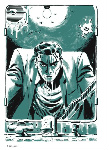
Real Name - Mick Foley Aliases - Cactus Jack Manson; Mankind; Dude Love; Jack Foley Hometown - Long Island, New York Debuted - June 1986 Titles Held - CWA Tag Team (with Gary Young); ECW World Tag Team (2x, with Mikey Whipwreck); MSW North American; GLCW Heavyweight; IWA World Tag Team (with Tracy Smothers); NWL Heavyweight; OMW North American Heavyweight; SCW Tag Team (with the Blue Meanie); USWA World Tag Team (with Scott Braddock); WCWA World Light Heavyweight; WCWA World Tag Team (2x – 1 with Scott Braddock, 1 with Super Zodiac II); WCW World Tag Team (with Kevin Sullivan); WWF Championship (3x); WWF/WWE Hardcore title (3x – 1 time co-holder with Edge); WWF Tag Team (8x – 1 with Steve Austin, 1 with Chainsaw Charlie (Terry Funk), 2 with Kane, 1 with Al Snow, 3 with the Rock) Other Accomplishments - New York Times bestselling author; Winner of PWI Match of the Year award in 1998 (vs. Undertaker – June 28, 1998); Winner of PWI Match of the Year award in 1999 (vs. the Rock – January 24, 1999); Winner of PWI Most Inspirational Wrestler award in 1993; Ranked #46 out of 500 Best Wrestlers during the PWI Years by Pro Wrestling Illustrated; Winner of 1997 Slammy award for Loose Screw; Winner of Wrestling Observer Newsletter’s Best Brawler award from 1991-2000; Winner of Wrestling Observer Newsletter Best Interview award in 1995, 2004, and 2006; Winner of Wrestling Observer Newsletter’s Feud of the Year award in 2000 (vs. Triple H), Member of Wrestling Observer Newsletter Hall of Fame (Class of 2000)
Mick Foley was born in Bloomington Indiana, but lived there for only a short time before his family relocated to Long Island. While there, he lived a normal childhood, although as he grew up he grew more and more interested in wrestling. While in college, he hitchhiked to Madison Square Garden to see the WWF show headlined by Jimmy Snuka vs. Don Muraco in a cage.
After being spurned by a girl he’d had a crush on (who thought his name was Frank), Foley and his friends began making home movies. The first was a comedy called “The Legend of Frank Foley.” The second was one that would foreshadow Mick’s future career.
“The Loved One” featured Mick as a wrestler named Dude Love who was managed by the Grand Lizard as he prepared to face Big Dick Zuck for the WWF championship. The match culminated with Mick climbing onto a friend’s roof and jumping off. He missed, Big Dick hit his finisher (the Sodomizer) and Dude vanished into the woods, never to be seen again.
The video started circulating among the wrestling community and a copy finally made its way to Dominic DeNucci. DeNucci offered to train Foley to wrestle – an offer Foley eagerly accepted.
DeNucci was also responsible for Foley’s first television exposure. As a former WWWF tag team champion, DeNucci would provide some of his talent to the WWF. They would appear on television in squash matches. Wrestling under the name of Jack Foley, Mick made his WWF debut.
Under the name of Cactus Jack Manson, Mick wound up going to Memphis’s Continental Wrestling Association (a forerunner to the USWA). While here he became part of Robert Fuller’s Stud Stable and began tagging with Gary Young. Foley’s first taste of gold came on October 24, 1988. During a match between the Rock N Roll RPM’s (Mike Davis and Tommy Lane) and Bill Dundee and Todd Morton, the belts were held up and a tournament was held to crown new champions. Cactus and Young defeated Dundee and Morton in the finals to become the new CWA tag team champions. They held the belts for about two weeks before they were defeated by Robert Fuller and Jimmy Golden.
November saw Cactus being sent south. The CWA (now known as the USWA) was purchasing World Class Wrestling Association from the Von Erichs and quite a bit of CWA talent was sent to WCWA to help rebuild the company. Other names that were sent down included Billy Joe Travis, Jeff Jarrett, Tony Falk, and new booker Eric Embry.
In WCWA, Jack became part of General Skandor Akbar’s Devastation, Incorporated. It didn’t take long for Cactus to win gold, either. On December 30 he defeated Eric Embry for the WCWA World Light Heavyweight championship. Embry regained the belt five days later.
The following May saw Cactus and Super Zodiac II (a masked Gary Young) defeat Jeff Jarrett and Kerry Von Erich to win the WCWA World Tag Team titles. They lost the belts to Jarrett and Mil Mascaras on June 9.
Cactus regained the tag belts with new partner Scott Braddock on August 4. This reign is notable for the fact that the belts were renamed the USWA World Tag Team titles. Cactus and Braddock lost the belts to Jarrett and Matt Borne a week later.
Not long after Cactus left the USWA, had a quick stop in the Continental Wrestling Federation, another quick stay in WCW, and settled down in Herb Abrams’s UWF. While there he formed a tag team with Bob Orton that feuded with Don Muraco and B. Brian Blair.
Later in 1990 Foley left the UWF and began working for Tri-State Wrestling. Two years later, Tri-State would be sold to Tod Gordon and renamed Eastern Championship Wrestling (which would become Extreme Championship Wrestling in 1994). Foley began feuding with Eddie Gilbert and the feud culminated in a best of three series that took place at Tri-State’s 1991 Summer Sizzler supercard. Cactus defeated Eddie in a falls count anywhere match, then Gilbert evened the score by beating Cactus in a stretcher match. The series ended in a double DQ during a cage match.
Cactus had gained notice for his brawling style while in Tri-State. While there he had competed in falls count anywhere matches, cage matches, stretcher matches, and even a barbed wire match (again facing Eddie Gilbert). The notoriety served him well as he was soon offered a contract with WCW.
Cactus debuted for WCW in September of 1991 by jumping Sting. He feuded with Abdullah the Butcher and Van Hammer before facing Sting at 1992’s Beach Blast.
In early 1993 Cactus began battling Vader. After Jack suffered a knee injury, he and Vader planned a way that he could vanish due to injury. During a TV taping Vader powerbombed Cactus on the concrete floor of the arena. This left Foley with not only an injured knee but also a legitimate concussion.
Cactus returned through a series of vignettes that have come to be known as the Lost in Cleveland series. The idea was that Cactus had vanished after the powerbomb and a news reporter was searching for him. She found him living with homeless people and afflicted with amnesia. The angle bombed (not surprisingly) and was dropped.
Cactus returned in the fall and jumped right back into his feud with Vader. The two finally crossed the line at the 1993 Halloween Havoc, where they battled in a Texas Death Match. The match (which Vader won after shocking Cactus into unconsciousness with a cattle prod) was so violent that WCW executives reportedly made the decision that the two would never again face each other on pay-per-view.
In March of 1994 Cactus suffered one of his most famous injuries while touring in Germany. Cactus was once again facing Vader when his head got tangled in the ropes. Foley legitimately began choking as (unbeknownst to him) WCW ring technicians had tightened the ropes earlier in the night. While fighting for his life, Foley managed to slide his head free and drop to the floor with the price being that his right ear was torn off his head.
At May’s Slamboree Cactus and Kevin Sullivan teamed together to win the WCW tag team titles from the Nasty Boys. They would lose the belts to Pretty Wonderful (Paul Roma and Paul Orndorff) at Bash at the Beach.
During this period, ECW was co-promoting with WCW and Cactus was right at home. Cactus began working with young Mikey Whipwreck and the odd duo won the tag team titles from Public Enemy in August. Public Enemy regained the gold at November to Remember.
Late 1994 also saw Cactus head to Jim Cornette’s Smoky Mountain Wrestling, where he began feuding with Boo Bradley (better known as Balls Mahoney). Cactus worked to cause problems between Bradley and Chris Candido by making allegations toward Candido about Bradley’s manager Tammy Lynn Sytch (Sunny).
1995 saw Cactus head to Japan, where he began competing for IWA. It was during this time that Foley entered the IWA King of the Death Match tournament. In the finals he defeated Terry Funk.
During this time Cactus also headed back to ECW where he began denouncing hardcore wrestling and feuded with Tommy Dreamer while allying himself with Raven. As part of the gimmick, Cactus sang the praises of the WWF and WCW, even trying to get Dreamer to call Eric Bischoff for a job.
December saw Mikey Whipwreck defeat 2 Cold Scorpio to win the tag team titles. Cactus Jack immediately nominated himself as Whipwreck’s partner. They held the belts until February when they were defeated by the Eliminators.
In April, Cactus wrestled his final match in ECW due to the fact that he had signed a contract with the WWF. Cactus was defeated by Mikey Whipwreck and then joined in the ring by Stevie Richards and the Blue Meanie. While the crowd cheered, the three danced and performed a Fargo Strut.
Later in the year Mick debuted in the WWF as Mankind – a demented man who wore a leather mask and enjoyed pain. Mankind almost immediately began feuding with the Undertaker. At the 1996 King of the Ring Mankind faced Undertaker and (thanks to an accidental shot from Paul Bearer) Mankind advanced in the tournament, finally losing to Hunter Hearst Helmsley in the finals. After feuding with Helmsley, Mankind was set to face the Undertaker in a boiler room brawl at Summerslam. The goal of the match was to reach the ring and take the Undertaker’s urn from Paul Bearer. Undertaker reached the ring first but Bearer refused to give it to him, handing Mankind the victory.
Mankind and “Uncle” Paul continued to run roughshod over the WWF. At the Mind Games PPV Mankind faced Shawn Michaels for the WWF title. In Your House: Buried Alive saw Undertaker defeat Mankind in a Buried Alive match only for Bearer to immediately debut the masked Executioner (Terry Gordy) who helped Mankind bury Undertaker anyway. The feud culminated at In Your House: Revenge of the Taker where Undertaker won and Bearer vanished from television.
Mankind conducted a series of interviews Jim Ross to further get the character over and then he saw an opportunity. Steve Austin and Shawn Michaels had won the tag team titles from Owen Hart and the British Bulldog. Michaels was injured and unable to compete, so Mankind tried to replace him. Austin put his foot down and refused to work with Mankind.
The night of Austin’s (solo) title defense against Owen and the Bulldog, Foley showed up in a new guise as Dude Love made his debut. Austin and Dude held the belts until Austin suffered a neck injury at Summerslam.
Dude began a feud with Greenwich snob Hunter Hearst Helmsley that was set to culminate in a falls count anywhere match. In a great piece of video work, Dude and Mankind appeared on the Titantron, discussing which of the two should face Helmsley. The answer? Neither. Cactus Jack had finally made his WWF debut and he won the match by piledriving Helmsley through a table.
Terry Funk soon joined the WWF under the guise of Chainsaw Charlie and he and Cactus began feuding with the New Age Outlaws. This culminated in Chainsaw and Cactus winning the tag team titles at Wrestlemania. The next night, however, both men were assaulted by the rejuvenated D-Generation X and the Outlaws reclaimed their belts. Cactus closed the book by telling the fans it would be a long time before they saw him again.
This led to a feud where Dude Love joined Vince McMahon’s corporation and began challenging Austin for the WWF title. At Over the Edge the Undertaker kept things fair in Love’s title match. Because of this Dude lost the match and was immediately fired by McMahon.
This led to the return of Mankind and the renewal of his feud with the Undertaker. This time the feud is best remembered for the brutal Hell in a Cell match at the 1998 King of the Ring. Both men suffered severe injuries as the Undertaker broke his ankle and Foley suffered a concussion, lost two teeth (one of which wound up embedded in his nose), dislocated his shoulder, broke ribs, and suffered puncture wounds from thumbtacks. After the match, Vince McMahon personally asked Foley to never do anything like it again.
As a result, Mankind underwent a transformation to a kind of clueless goof. This first appeared when McMahon decided to create the Hardcore championship, which he promptly awarded to Mankind. In addition, at Survivor Series, it appeared that Mankind was McMahon’s personal choice to win the tournament for the vacant title. In actuality it was the Rock.
Mankind decided to cheer his “friend” McMahon up while he was hospitalized. Mankind appeared in McMahon’s hospital room with Yurple the Clown and Mr. Socko – a sweatsock with a face drawn on it that Foley wore as a sock puppet.
This pushed Mankind to the top of the card as the fans overwhelmingly got behind him. On January 4, 1999 Mankind finally defeated the Rock to win the world title. On Nitro, Tony Schiavone commented about the win and in response WCW fans changed the channel in droves to be able to see the win.
Mankind and the Rock spent the next few months trading the title back and forth. Finally the two patched things up and wound up winning the WWF tag team titles from Big Show and the Undertaker on August 30. A week later the Big Show and Undertaker reclaimed the belts (with help from Triple H).
The so-called Rock N Sock Connection defeated Big Show, Mideon, and Viscera on September 20 to regain the gold only to lose it three days later to the reformed New Age Outlaws.
On October 14 the Rock gave in to Mankind’s begging for one last match – that turned out to be a title match against the Outlaws. The Connection won the belts again. On Smackdown, however, Mankind found a copy of his book that he’d given the Rock in the trash. Mankind refused to tag in and as a result the Connection lost the tag team titles to Hardcore and Crash Holly.
Finally Mankind began feuding with Triple H and this triggered a return to Cactus Jack. At the 2000 No Way Out Triple H won a hell in the cell match which meant Cactus’s retirement.
Foley returned at Wrestlemania for a one time shot and lost the match.
Foley spent the rest of the year as the WWF commissioner with assistant commissioner Debra. In December Commissioner Foley was fired by McMahon and vanished.
Foley spent a great deal of 2001 making sporadic appearances before returning as commissioner toward the end of the year. In November Foley and McMahon had a real-life falling out and Foley was granted his release.
Foley began returning again in 2003. He would only make sporadic appearances, primarily as a referee.
In 2004 the Rock N Sock Connection reunited to feud with Evolution. After losing at Wrestlemania the Rock departed again and Foley continued feuding with Randy Orton. The feud ended at Badd Blood after Foley won a hardcore rules match.
After a couple more quick appearances, Foley returned full time in 2006 where he began feuding with the newly-rejuvenated ECW in an angle reminiscent of his anti-hardcore gimmick from 1995.
After the second One Night Stand, Foley began feuding with Ric Flair over comments that both had made in their books. At Summerslam Foley lost a match to Flair when McMahon threatened Foley’s friend Melina. Melina later betrayed Foley and McMahon fired him.
Foley spent much of 2007 making more referee appearances until 2008 when he became the new color commentator on Smackdown. In August problems again arose between McMahon and Foley that resulted in Foley leaving the company once more.
In September Foley made his debut for TNA. On October 23rd it was announced that Foley was now a “majority shareholder” of TNA, which meant that Foley would be returning to an authority role.
At 2009’s Genesis Foley returned to the ring by tagging with AJ Styles and Brother Devon against Kip James, Scott Steiner, and Booker T.
Mick Foley has definitely become a legend in this business. He’s always had the skills – after all, he won the PWI Best Brawler award every year for nearly a decade (only stopping because he ended his full-time wrestling career).
But more than for Foley’s wrestling skill, his charisma on the microphone has won him over. After Mankind returned following Dude Love’s departure in 1998 the new Mankind won legions of fans for his personality. After all, how many people could use a magic marker to draw a face on a sock and make it a viable weapon?
Foley’s charisma has also enabled him to work in other areas besides just as a wrestler. He’s worked as an authority figure in both WWE and TNA. He worked as a broadcaster for WWE. And his charisma (paired with the Rock’s) provided Raw with its highest rating ever (for a segment called Rock, This Is Your Life).
One reason that wrestling fans love Foley is because he’s one of us. He was just a kid from Long Island who loved wrestling. The difference is that he loved it so much he was willing to do whatever it took to be part of it. That drive pushed Foley to the top of the WWE and made him a legend.
Foley has proved it time and again – he is definitely one of the top 100 wrestlers of the modern age.
Quote:
18. DUSTY RHODES
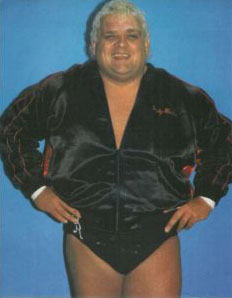
Real Name: Virgil Runnels Aliases: The Midnight Rider Hometown: Austin, TX Debut: 1968 Titles Held: NWA Central States Heavyweight; NWA Central States North American Tag Team (with Dick Murdoch); NWA Florida Bahamian; NWA Florida Brass Knuckles (2x); NWA Florida Global Tag Team (with Magnum TA); NWA Florida Heavyweight (10x); NWA Florida Southern Heavyweight (7x); NWA Florida Tag Team (4x – 1 each with Dick Murdoch, Dick Slater, Bobo Brazil, and Andre the Giant); NWA Florida Television (2x); NWA Florida United States Tag Team (2x – 1 each with Bugsy McGraw and Blackjack Mulligan); NWA World Heavyweight (3x); NWA Georgia Heavyweight; NWA National Heavyweight; NWA Television; NWA United States Heavyweight; NWA World Six Man (with the Road Warriors); NWA World Tag Team (2x – 1 each with Manny Fernandez and Dick Slater); NWA World Television (2x); NWA America Tag Team (2x – 1 each with Baron Von Raschke and Dick Murdoch); NWA Texas Brass Knuckles (2x); NWA Detroit World Tag Team (with Dick Murdoch); NWA Mid-Atlantic Tag Team (with Buff Bagwell); NWA Hawaii North American Heavyweight; NWA San Francisco United States Heavyweight; NWA Tri-State North American Heavyweight; NWA Tri-State United States Tag Team (with Andre the Giant); NWF World Tag Team (with Dick Murdoch); IWA World Tag Team (with Dick Murdoch) Other Accomplishments: Winner of 1987 Jim Crockett Memorial Cup (with Ivan Koloff); Winner of NWA Bunkhouse Stampede from 1985-1988; Winner of PWI Wrestler of the Year award in 1977 and 1978; Winner of PWI Most Popular Wrestler of the Year award for 1978, 1979, and 1987; Winner of PWI Match of the Year award in 1979 (vs. Harley Race – August 21, 1979); Winner of Wrestling Observer Newsletter’s Best Babyface award in 1980 ; Co-Winner of Wrestling Observer Newsletter’s Most Charismatic award in 1982 (tied with Ric Flair); Winner of Wrestling Observer Newsletter’s Best Booker award in 1986 ; Winner of PWI Match of the Year award in 1986 (cage match vs. Ric Flair – July 26, 1986); Winner of Wrestling Observer Newsletter’s Most Overrated award for 1987 and 1988; Winner of Wrestling Observer Newsletter’s Readers’ Least Favorite Wrestler award in 1987 and 1988; Winner of PWI’s Feud of the Year award in 1987 (Super Powers/Road Warriors vs. the Four Horsemen); Winner of Wrestling Observer Newsletter’s Worst Feud of the Year award in 1988 (Midnight Rider vs. Tully Blanchard); Winner of Wrestling Observer Newsletter’s Worst Gimmick award in 1988; Winner of Wrestling Observer Newsletter’s Most Embarrassing Wrestler award in 1990; Winner of Wrestling Observer Newsletter’s Worst Television Announcer award in 1997; Member of WCW Hall of Fame (Class of 1995); Member of Wrestling Observer Newsletter Hall of Fame (Class of 1996); Member of WWE Hall of Fame (Class of 2007)
Dusty Rhodes grew up in Austin Texas. In college, he was a member of the University of West Texas’s football team. Then he was trained by Joe Blanchard.
He made his debut as a heel who was part of a tag team with Dick Murdoch that was known as the Texas Outlaws. In November of 1968 he and Murdoch were in Bob Geigel’s NWA Central States promotion (which centered around Kansas City). On November 7 the Outlaws defeated Tommy and Terry Martin to capture the North American Tag Team titles. The reign was a little more than a month long as December 27 they lost the belts to Bob Geigel and the Viking.
Of course, by then Dusty had also won his first singles title as he defeated Tommy Martin (again) on December 13 to win the Central States Heavyweight title. Again, he held it about a month before dropping it to Don Kent.
After this, Dusty returned to Texas and began working for NWA Big Time Wrestling, a company that would become World Class Championship Wrestling in the 1980’s. That summer Dusty and new partner Baron Von Raschke defeated Wahoo McDaniel and Thunderbolt Patterson to capture the territory’s North American Tag Team titles. In August Thunderbolt and Wahoo defeated them and recaptured the gold.
As 1970 opened, Dusty hit the road with Dick Murdoch as the Outlaws reunited. They began traveling the country. In March they were in NWA Detroit, where they captured the territory’s World Tag Team titles from Ben Justice and the Stomper. They held the belts until August, losing them to Bobo Brazil and Lord Athol Layton.
The next stop was Florida. On September 17 the Outlaws captured the Florida tag team titles from Jose Lothario and Argentina Apollo. During this time Dusty was also chasing Lothario’s Brass Knuckles title. Dusty captured it on December 1. Later that month the Outlaws were stripped of all titles (likely due to leaving the territory).
January found the Outlaws in Australia for Australian World Championship Wrestling. January 21 found them winning the IWA World Tag Team titles from Mark Lewin and Mario Milano. By March, however, they had lost the belts to Lewin and his new partner Killer Kowalski.
Dusty’s next stop was Oklahoma for NWA Tri-State (a company that would become Mid-South Wrestling). On May 21 he defeated North American champion Bill Watts to take the belt. Watts regained it in October.
1972 saw Dusty heading to Hawaii. On November 25 he took the North American heavyweight title from Sam Steamboat. Bill Robinson took the belt away the following June.
While still holding the Hawaiian belt, Dusty also began returning to Florida. While there he won the Brass Knuckles championship again. And again Dusty was stripped of the title in December – this time for assaulting NWA President Sam Muchnick.
By late summer, however, Rhodes had found a new partner in Dick Slater and had regained the Florida tag team titles. They lost them in December (which was apparently an unlucky month for Rhodes’s title reigns) to Jos and Paul LeDuc.
September had seen Rhodes defeat Bill Dromo for the promotion’s Southern Heavyweight title. By the end of the year Dusty had lost that belt to Jos LeDuc as well.
This time, however, Dusty wasn’t leaving town. He defeated LeDuc in January of 1974 to regain his title. He wound up losing it later that year to Pak Song.
In May, Dusty’s career changed forever. Dusty was tagging with Pak Song with manager Gary Hart as they faced Eddie and Mike Graham. Song accidentally hit Dusty and Rhodes had enough. He joined the Grahams in attacking Song and Hart – turning babyface in the process.
The feud continued through the rest of the year as Dusty took Pak Song’s Florida heavyweight title away in October before losing it to Bill Watts in November.
Late 1975 saw Rhodes on a roll again. He defeated Killer Karl Krupp to begin his third Southern Heavyweight reign (which ended when he lost the belt to Harley Race. Dusty also took the Florida Heavyweight belt from Bob Roop on October 6. However, the Florida reign ended on October 28 when it was vacated after Rhodes defended it in a match against King Curtis Iaukea.
1976 saw Dusty also starting to travel a bit northward as he was also working for NWA Georgia. On January 30 he defeated the Spoiler for the Georgia Heavyweight title before losing it back to him a week later.
Back in Florida Dusty regained the Florida Heavyweight title from Bob Orton Jr. in July before dropping it to Superstar Billy Graham in October.
Dusty regained the belt from Buddy Wolfe the following June and lost it to Ernie Ladd a month later. Later in the year the belt was vacated, Dusty took it back, and lost it to Lars Anderson before regaining it in November. Killer Karl Kox took the belt away in February of 1978.
During this time Dusty was heading north again – this time to Jim Crockett’s Mid-Atlantic Wrestling. In September he resumed teaming with Dick Slater and defeated the Minnesota Wrecking Crew (Gene and Ole Anderson) to capture the Mid-Atlantic tag team titles. The Wrecking Crew regained them a month later.
Back in Florida, Dusty regained the Southern Heavyweight title from Slater on June 18th. It wasn’t long before Slater defeated his sometime-partner to regain the title.
Meanwhile, Dusty was adding to his collection by defeating the Spoiler on the 19th to recapture the Florida Heavyweight belt. September saw the Spoiler taking it back.
Later in the year Dusty captured the Television title from Bobby Duncum before he closed the year out losing the belt to Bugsy McGraw with Dusty finally reclaiming the belt in January of 1979.
In November the Florida Heavyweight title had been vacated again. Dusty defeated Bob Roop in the finals of a tournament to crown a new champion and he lost the belt to Mr. Uganda in December.
That same month Dusty finally started turning his December luck around as he returned to NWA Tri-State. He allied himself with Andre the Giant and won their tag team titles in a tournament although Andre was soon replaced by the Spoiler. On January 25 the Spoiler turned on his partner which allowed the Angel and the Assassin to capture the gold.
Still in January of 1979 Dusty returned to Big Time Wrestling in Texas where he won the Brass Knuckles title from Rocky Johnson. By the end of the month he’d dropped the belt to Mark Lewin.
On July 4 Dusty regained the NWA Florida Heavyweight belt from King Curtis Iaukea. It would be vacated less than a month later.
On August 21 Dusty won the NWA World Heavyweight title from Harley Race, vacating the Florida Heavyweight belt in the process. Harley would win it back five days later.
After losing the belt, Dusty continued traveling the territories. On December 21 Dusty defeated Mark Lewin to regain the Texas Brass Knuckles title. Lewin would regain it in January.
Dusty won his first belt of the 1980’s in April as he defeated Leroy Brown to win the Southern Heavyweight belt for the sixth time.
On July 14th, Dusty and Bugsy McGraw won a tournament to win the Florida United States tag team titles. August would also see Dusty and Bobo Brazil defeat Ivan Koloff and Nikolai Volkoff for the Florida Tag Team titles. Both belts would slowly lose prominence before quietly being vacated.
In October Dusty regained the Florida Heavyweight title. He held it about two weeks before losing it to Dory Funk Jr.
November found Dusty in California, defeating Dick Slater for the NWA San Francisco United States Heavyweight title. Two months later the promotion would shut down with Dusty as its final champion.
In 1981 Dusty regained the Florida Tag Team titles, this time with Andre the Giant as his partner. Again the belts would fade away and quietly be vacated later in the year.
June 21 saw Dusty return to the top of the mountain as he again defeated Harley Race for the NWA World Heavyweight title. He would hold it until September when he was defeated by another up-and-comer – Ric Flair.
October of 1982 saw Dusty regain the Florida Southern Heavyweight title by defeating Jimmy Garvin. Less than a month later Kevin Sullivan ended Dusty’s final run with this belt.
In February of 1983 Dusty (now working under a mask as the Midnight Rider) teamed with a young wrestler named Terry Allen as they defeated the Fabulous Kangaroos for the Florida Global Tag Team titles. Later in the month Rhodes left the area and presented Scott McGhee with his belt.
July found Dusty in the Bahamas where he challenged Angelo Mosca for the Florida Bahamian title. He held the belt until the following fall when he departed Florida for the last time.
In November Dusty teamed with Blackjack Mulligan to regain the Florida United States Tag Team titles from the Zambuie Connection, who’d supposedly won a tournament after Dusty and Bugsy vacated the belts. Mulligan wound up replaced by Mike Davis and they were defeated by Ron Bass and the One Man Gang on November 30.
In fall of 1984, Dusty wound up signing with Jim Crockett’s Mid-Atlantic Wrestling. In October Dusty and Manny Fernandez captured the NWA World Tag Team titles. They held them until March, when they dropped the belts to Ivan and Nikita Koloff.
Rhodes wasn’t worried, however. He was busy feuding with Tully Blanchard over the NWA World Television title. They traded the belt through July of 1985, when Dusty was stripped of the belt due to injury.
While Dusty was recovering, he found himself easing into the position of booker for Crockett’s company.
In December Dusty “won” the NWA Georgia National Heavyweight title from Buddy Landel. The actual truth was that Landel had been released and Dusty was awarded the belt. Dusty lost the belt the following March to his old foe Tully Blanchard.
In May of 1986 Dusty teamed with the Road Warriors to take the NWA World Six-Man title away from Ivan and Nikita Koloff and Baron Von Raschke. (Raschke had replaced Krusher Khruschev, who’d in turn replaced Don Kernodle.)
Dusty returned to the top of the mountain as he defeated Ric Flair at the 1986 Great American Bash to regain the NWA World heavyweight title. His reign lasted until August 9, when Flair recaptured the gold.
In September Dusty took the World Television title from Arn Anderson. At Starrcade in November Arn’s fellow Horseman (and old Dusty foe) Tully Blanchard brought back the belt in a first blood match.
In November of 1987 Dusty won the United States title from Lex Luger. The belt was again vacated in April when Dusty attacked Jim Crockett.
February of 1988 saw Dusty and the Road Warriors losing the Six-Man belts to Ivan Koloff and the Powers of Pain. The belts were vacated in April when the Powers jumped to the WWF, and in July Dusty and the Warriors regained the gold.
Things turned bad with the Warriors in October when they attacked Dusty, leading to a match in November that saw Dusty get busted open as Animal jabbed one of the Warriors’ trademark spikes into his eye.
Ted Turner had just bought the company, and the new bosses were not happy with the blood – especially since they’d just forbidden it. Dusty lost a blowoff match to Animal at Starrcade and Dusty was then fired.
Dusty debuted in the WWF soon after calling himself the Common Man (and playing off his American Dream nickname). Now allied with Sapphire, Dusty found himself feuding with Macho King Randy Savage and Queen Sherri. After a win against Savage and Sherri at Wrestlemania, Sapphire wound up deserting Dusty for the Million Dollar Man Ted DiBiase. Dusty feuded with DiBiase until he (and his son Dustin) left the company in early 1991.
Dusty returned to WCW and began working backstage full-time. Later he began also working as an announcer – calling Saturday Night with Tony Schiavone and doing PPV’s with Schiavone and Bobby Heenan.
In 1998 Dusty joined the New World Order, much to the shock of Tony Schiavone.
Dusty left WCW soon thereafter and headed to ECW where he feuded with Steve Corino. After a bloody, violent feud with Corino, Dusty returned to WCW where he and Dustin feuded with Flair and Jeff Jarrett.
After the WCW buyout Dusty wound up opening his own wrestling company in Georgia – Turnbuckle Championship Wrestling.
2004 saw Dusty return to the national spotlight as he became TNA’s Director of Authority (and also worked backstage as head booker). In 2005 he was asked to step down so Dusty resigned from the creative team and waited out his contract.
Dusty signed a WWE Legends deal in September of 2005 and was also brought onto the creative team. Today Dusty remains part of WWE Creative as well as performing commentary on weekly Florida Championship Wrestling broadcasts with Josh Mathews.
Dusty Rhodes is unusual in wrestling. He was never an incredible technical worker. He never had a million-dollar build.
What Dusty had was charisma that let him build a connection to the fans that was almost unprecedented. During the 1980’s NWA heyday Rhodes, calling himself the son of a plumber, represented the common man against the jet-flying, filthy rich Four Horsemen.
Dusty also had a keen mind for the business that the WWE is still using today. While Dusty is today famous (or infamous) for the so-called Dusty Finish, he could book feuds that would draw crowds and pack houses.
For all of his contributions, Dusty continues to work in the industry today. In addition, his legend lives on through his sons Dustin and Cody. For all that he has done, Dusty Rhodes has definitely earned his place on this list of the top 100 wrestlers of the modern era.