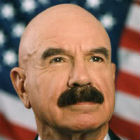
Max Schulz is a Manhattan Institute senior fellow and author of "Energy and the Environment: Myths and Facts." He writes:
AS we mark the 38th Earth Day, it's worth noting that this secular "religion" has led many Americans to fervently believe some things that just aren't true.
What are the myths propagated by the Church of Environmentalism? Consider the pronouncements from the greens' "Vatican": Last Earth Day, Greenpeace USA exhorted its followers to action because "our forests are being destroyed at an unprecedented rate." More, we must switch to "clean alternative" energies like wind power, because "we all know that fossil fuels contribute to global warming."
But it's not so. Yes, the United States lost forestland throughout much of the 19th century, as the new nation grew - but the amount of forestland stabilized throughout much of the 20th century.
According to the Forest Service, we have actually seen a net reforestation since 1985. We aren't losing forestland, we're gaining it.
Greenpeace's call for replacing fossil fuels with cleaner alternatives might make sense, but only if there were any realistic alternatives available. Presently renewable energies like wind power, solar power and ethanol aren't close to being able to substitute for the coal, natural gas and oil that make up the lion's share of our energy sources. Coal provides half our electricity today. Wind and solar provide less than 1 percent.
More, alternative fuels can be as land-hungry as agriculture. The typical 1,000 megawatt coal or nuclear plant might sit on a few acres. To generate the same amount of electricity with renewables would require 60,000 acres for a utility-scale wind farm, or about 11,000 acres of photovoltaic cells capturing the sun's light.
Ethanol, too, can't be produced in the massive quantities required to make a significant dent in our gasoline consumption - and its production depends on vast tracts of farmland, too.
Other myths?
* More than four of every five poll respondents said that our cities are getting dirtier. In fact, pollution has been slashed since 1970, and our cities are far cleaner today.
* A majority believes our chief supplier of foreign oil is Saudi Arabia. In fact, it is our friendly neighbor to the north, Canada. All told the Persian Gulf supplies just 17 percent of the oil we import, and just 11 percent of all the oil we use.
This Earth Day, Greenpeace and its fellow environmental ecclesiasts will once again call on their flocks to take action. By all means, let us safeguard the environment - but with steps rooted in fact, not myth.