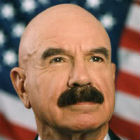
John McCain (R., Arizona) has pushed an amendment through the Senate that would effectively bar all stressful interrogation techniques. The danger for American security is that this would telegraph to every terrorist in the world that he has absolutely nothing to fear from silence should he fall into U.S. hands.
The McCain Amendment is driven by the so-called torture narrative: the proposition that CIA techniques for questioning high-level al Qaeda detainees somehow "migrated" to Iraq and caused the Abu Ghraib abuses.
But the irony is that Congress is proposing this remedial overreaction at the very moment the evidence has become overwhelming that the torture narrative is false.
Former Defense Secretary Jim Schlesinger headed one of more than a dozen major inquiries into detainee abuse, and he explained last year that the Abu Ghraib abuses were simply sadistic behavior by poorly trained reservists on the "night shift." The victims weren't even intelligence targets. If that evidence wasn't conclusive enough, we now have the verdicts of the nine courts-martial that punished the Abu Ghraib offenders, none of which found evidence to support the proposition that the abuses had anything to do with interrogations.
We aren't saying that there haven't been abuses--probably hundreds of them--of detainees in the war on terror. But there have also been more than 70,000 detainees. In other words, the rate of prisoner abuse compares favorably with the U.S. civilian detention system, and it is better than the rate in earlier conflicts such as World War II. Alleged abuses have been routinely investigated, and punished when warranted in courts-martial that have revealed a military willing and able to police its own.
In Iraq at this very moment the military is dealing with a hardened al Qaeda wing headed by Abu Musab al Zarqawi, whose un-uniformed fighters are not entitled to Geneva Convention protections against aggressive interrogation. Neither the McCain Amendment nor the Administration's reaction to it send a message of resolve to win that intelligence war.
Two persistent sources of confusion in this debate have been misreadings of the Geneva Conventions and sloppy (or willfully distorted) use of the word "torture." The Geneva Conventions are very strict about which detainees qualify for the protections of "prisoner of war" status: They must, for example, have fought in uniform and shown some respect for the laws of war, such as avoiding attacks on civilians.
What's more, any form of manipulation, including positive reinforcements such as better rations, are forbidden when it comes to interrogating legitimate POWs. Recognizing guerrillas and terrorists as POWs would be a form of unilateral disarmament, and, worse, would legitimize their behavior. The U.S. was respecting, not skirting, international law when it refused to classify them as such.
As for "torture," it is simply perverse to conflate the amputations and electrocutions Saddam once inflicted at Abu Ghraib with the lesser abuses committed by rogue American soldiers there, much less with any authorized U.S. interrogation techniques.
No one has yet come up with any evidence that anyone in the U.S. military or government has officially sanctioned anything close to "torture." The "stress positions" that have been allowed (such as wearing a hood, exposure to heat and cold, and the rarely authorized "waterboarding," which induces a feeling of suffocation) are all psychological techniques designed to break a detainee.