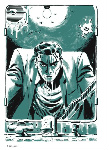
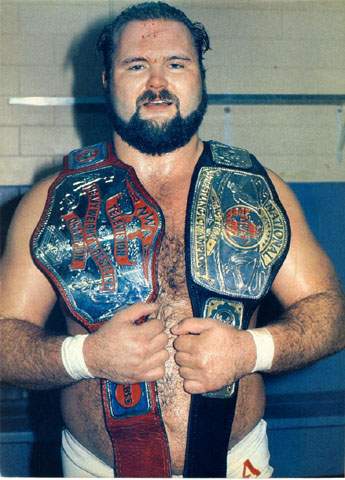
it seems appropriate to me to post these next two together.
Quote:
37. TULLY BLANCHARD
Aliases - The Outlaw; The Midnight Stallion Hometown - San Antonio, Texas Debuted - 1975 Titles Held - NWA Central States Heavyweight; NWA National Heavyweight; NWA Television; NWA United States Heavyweight; NWA Mid Atlantic World Tag Team (2x - with Arn Anderson); NWA World Television (2x); NWA All-Star World Tag Team (with Barry Windham); SWCW Southwest Heavyweight (4x); SWCW Southwest Tag Team (5x - with Gino Hernandez); SWCW Southwest Television (3x); SWCW World Tag Team (2x with Gino Hernandez); WWF World Tag Team (with Arn Anderson) Other Accomplishments - Founding member of the Four Horsemen
He hasn’t been an active player on the national level of professional wrestling in nearly two decades, but every time you tune in to Raw on Monday night, you see Tully Blanchard. Whether it’s Shawn Michaels’ swagger, Triple H taking a shortcut or even Ric Flair styling and profiling, you’re seeing a little bit of Tully each time.
One of the National Wrestling Alliance’s top heels of the 1980’s, really the only knock you can level against Tully Blanchard on a performance level is that he wasn’t quite Ric Flair, but he was damn close. If Ric Flair hadn’t already been around and been just a hair better at playing the cocky heel in the ring and on the microphone, it’s not inconceivable to think that Tully Blanchard could be a 16-time World champion today. But since Ric Flair did exist—though even the “Nature Boy” will admit to having learned a step or two from Blanchard—Tully will just have to settle for having been one of the most important and influential wrestlers of the modern era.
Groomed for athletic excellence for an early age, Tully, son of American Wrestling Association star Joe Blanchard, was a college football standout at West Texas State University, playing alongside fellow future wrestling stars Ted DiBiase and Tito Santana. Upon graduation, Tully joined his father’s Texas-based Southwest Championship Wrestling in 1975 as both an in-ring performer and in a variety of backstage roles.
Tully started out as the babyface protégé of his father, but before long took on the cocky heel role he’d play the rest of his career, forming a successful tag team with Gino Hernandez as the original Dynamic Duo. Over the next decade, Tully would hold every major title in SCW.
In 1984, with SCW on its last legs, Tully found himself courted by the NWA and made the jump to the North Carolina-based Jim Crockett Promotions, the most prominent member of the group. With valet Baby Doll by his side, Blanchard made an immediate impact, feuding with Ricky Steamboat and Wahoo McDaniel and quickly tasting his first NWA gold, defeating Mark Youngblood in March to win the Television championship.
With perennial World champion and major draw Ric Flair often touring the NWA and unable to appear as frequently in JCP as the Crockett family would have liked, Blanchard often found himself playing the role of de facto top heel of the territory. As Tully possessed both a smooth, athletic style in the ring with clever forms of cheating thrown in for good measure as well as a cool, cocky persona on the microphone, all traits he shared with Flair, this hardly proved a problem and despite being a “bad guy,” Blanchard developed something of a cult following among male fans who enjoyed rooting for the renegade.
JCP demonstrated its faith in Blanchard by placing him in a feud with the NWA’s top babyface—and head booker of the territory—Dusty Rhodes in an on-again, off-again rivalry that would remain near the top of the card for the next two years. Dusty ended Tully’s year-long reign as Television champion in March of 1985, though Blanchard recovered the belt not long after before dropping it again to Rhodes at the end of the summer in a match where he also lost Baby Doll to his rival for 30 days. Tully truly came into his own during the feud as his character proved every bit the natural rival to Rhodes’ working class everyman that Flair’s did, with the added heat of their common Texas roots, and his chemistry with Baby Doll was probably the earliest example of a male talent utilizing a female valet to her fullest potential.
In the fall of 1985, Blanchard shifted his focus to NWA United States champion Magnum T.A., the hottest young up and comer JCP had seen in years. With the help of the returning Baby Doll, Tully stole a win and the title from Magnum, kicking off an intense months-long feud. Also around this time, Blanchard began to associate with World champion Flair as well as the National Tag Team champions Arn & Ole Anderson, assisting them in their feud with Rhodes while they reciprocated in his matches with Magnum—thus were the seeds of the Four Horsemen sewn.
Tully dropped the U.S. title back to Magnum at Starrcade 1985 in November in a horrifically bloody steel cage I Quit match that saw Blanchard submit after his rival lacerated him with a jagged piece of wood. Following the championship loss, Tully began to undergo a metamorphosis, taking on the polished James J. Dillon as a manager and later firing Baby Doll on national television with a slap to the face. Dusty came to Baby Doll’s rescue, re-igniting the feud with the rejuvenated and now more vicious and calculating Blanchard.
As 1986 dawned, Tully, along with Flair, the Andersons and manager Dillon, officially formed the Four Horsemen, the first true super stable in professional wrestling as they would dominate the NWA and its major championships for the balance of the 80’s. While Blanchard’s focus remained primarily on Dusty, defeating him for the National title in March, he also distracted major contenders to Flair’s World title like Ron Garvin, who he battled in taped fist matches throughout the summer’s Great American Bash tour.
In the fall of 1986, Tully turned his attention back to Dusty, who had lost the services of Baby Doll, but regained the Television title from Blanchard’s Horsemen comrade, Arn Anderson. At Starrcade 1986, Blanchard defeated Rhodes for the title in a first blood match, finally putting an end to the lengthy singles feud between the two. Tully would only enjoy a Television title reign of a few months, his final major run with that title, before losing it to Nikita Koloff and taking on a new role necessitated by shifts within the Horsemen membership.
The aging Ole Anderson was kicked out of the Horsemen in favor of young powerhouse Lex Luger, and with Luger becoming the group’s secondary singles competitor behind Flair, Tully took Ole’s spot teaming with Arn. While Blanchard had been a superlative singles competitor, he and Anderson proved such a good match as partners that the duo quickly emerged as one of the dominant tag teams of the decade and cemented a reputation over the next several years as one of the best of all time.
During the Great American Bash tour over the summer of 1987, the Horsemen and Dillon engaged Rhodes and Koloff as well as the Road Warriors and their manager, Paul Ellering, in the brutal War Games, a series of double ring steel cage matches that could only end in submission. Blanchard and Anderson survived War Games to defeat the Rock & Roll Express in September for the World Tag Team titles and retain them against the popular former champions as well as the Road Warriors throughout the fall, often by getting themselves disqualified.
It took another shakeup in the ranks of the Horsemen to get the titles away from Blanchard and Anderson as Luger was booted from the group early in 1988 and then teamed with Barry Windham at the first Clash of the Champions to win the belts from his former allies. However, the Horsemen had the last laugh, with Windham turning on Luger during a rematch, joining the Horsemen and giving Arn and Tully back the belts. At the 1988 Great American Bash, the duo again escaped with their titles, wrestling Sting and Koloff to a time limit draw.
While Blanchard and Anderson were riding high in the ring, backstage things were not so rosy, as both clashed with Rhodes over their pay rate. In the fall of 1988, Tully and Arn elected to leave the NWA together, dropping their titles to the Midnight Express on the way out the door and effectively ending the golden age of the Horsemen.
Blanchard remained off national television for nearly a year before he and Anderson surfaced in the World Wrestling Federation under the tutelage of manager Bobby Heenan in October of 1988. While they were WWF rookies, Tully and Arn carried much of their notoriety from the NWA to the more prominent promotion and found success in their new home despite its tendency to highlight showmanship over athleticism. In particular, a feud between the pair, newly christened the “Brain Busters,” and the young Rockers team of Shawn Michaels and Marty Jannetty in the waning months of 1988 and into 1989 produced an excellent series of matches.
After defeating former WWF World Tag Team champions Tito Santana & Rick Martel at Wrestlemania V, the Busters engaged in a series of matches with current champs Demolition over the spring and summer. In July, Blanchard and Anderson made history, defeating Demolition in a two out of three falls match and becoming the first team ever to hold the World Tag Team titles in both the NWA and WWF, cementing the Brain Busters’ legacy as one of the greatest teams ever.
While Blanchard and Anderson held onto the belts for three months before losing them back to Demolition, they sensed that would be their peak in the increasingly gimmick-centric WWF and made plans to jump back to the NWA when their contracts expired. Unfortunately, before they could return to their old stomping grounds, Blanchard failed a drug test and was released early by the WWF. When the NWA learned of Tully’s infraction, they balked at bringing him back, scrapping a planned Horsemen reunion in the process.
Following his dismissal from the WWF, Blanchard took a brief sabbatical from wrestling to tackle his personal demons and drug problems head on. In a nice break from so many stories involving stars of the 80’s and their battles with drugs, Blanchard conquered his addictions, finding inspiration as a born-again Christian.
Tully turned down another offer from the NWA for a Horsemen reunion in 1990 and then had a brief stint with the AWA before retiring from full-time competition to become a preacher. Blanchard spent the 90’s preaching and coaching amateur wrestling, only returning to the professional ranks occasionally, such as a pay-per-view draw with Terry Funk on World Championship Wrestling’s 1994 Slamboree show.
As a result of the recently released Ric Flair & The Four Horsemen DVD set from WWE and the classic NWA footage currently airing on WWE 24/7, a new generation of fans has been able to discover Tully Blanchard. Whether you remember him as one of the best heels of the 80’s, a consummate singles performer, one half of his legendary team with Arn Anderson or perhaps as the coolest of the original Four Horsemen, Tully Blanchard has earned a lofty position in wrestling history.
Quote:
36. ARN ANDERSON
Real Name - Martin Lunde Aliases - Double A; The Enforcer; Super Olympia; Marty Lunde Hometown - Rome, Georgia Debuted - January, 1982 Titles Held - NWA National Tag Team (with Ole Anderson); NWA World Tag Team (2x, with Tully Blanchard); NWA World Television (3x); WCW World Tag Team (3x, 1 with Larry Zbyszko, 1 with Bobby Eaton, 1 with Paul Roma); WCW World Television (2x); NWA Southeastern Tag Team (4x, 3 with Jerry Stubbs, 1 with Pat Rose); WWF Tag Team (with Tully Blanchard) Other Accomplishments - Final NWA World Television champion; First WCW World Television champion; Founding member of the Four Horsemen
Arn Anderson got his first big break in the American Wrestling scene as a tag team partner of Ole Anderson in the Mid Atlantic region. The two, who weren’t related, soon gained a reputation for being a real backbone team. No matter who they faced they always were able to work the crowd into frenzy with their excellent mat wrestling and brutal submission moves. Their work still stands up to this day and if you go back and watch them in action with teams like the Rock and Roll Express, The Road Warriors and The Steiner’s.
The Anderson’s, who were named The Minnesota Wrecking Crew, were not only one of the best teams of the 80’s but they were also founding members of perhaps the most elite and famous wrestling stable ever, The Four Horsemen. Indeed, as legend goes, it was during a syndicated promo one week where Arn came up with the name in a promo. The original group, consisting of The Anderson’s, Tully Blanchard and Ric Flair, still stands as many older fans favourite stable. Indeed, they ripped through the region feuding with every major star from Dusty Rhodes to Sting to Ronnie Garvin to Magnum T.A. The group’s promos on TV were often highlighted by Arn who would compliment the extravagant ranting of Flair and Blanchard with cold and lethal threats to whoever he was feuding with. Arn Anderson quickly became known as one of the premier promo cutters in the business and with good reason too. Anderson had a promo style whereby he could sell you on a match in one interview thanks to his intelligent use of language and threats. If anyone reading this has an old WCW Video or the Four Horsemen DVD I suggest you pop it on and see what I mean. Anderson definitely had the gift of gab and he used it to great effect.
The Four Horsemen Group went through many changes but Anderson was usually a part of the group. However, in 1989 he and Tully went to the WWF for a year and quickly established another tag team dynasty. In the WWF the team, now dubbed as The Brainbusters, had a series of tremendous matches with The Rockers and Demolition. They also had a ****+ match with The Hart Foundation at that years Summer Slam. However, despite the great matches and a tag title reign, the Busters were not long for the WWF and within a year Blanchard was out of the mainstream wrestling scene and Arn was back in the now newly named WCW reforming The Horsemen with Flair, Ole and Sting.
Arn then had a near seven year run in WCW as an in ring wrestler where he was part of some of the companies best matches and angles. Notable highlights included his involvement in the Wrestle War 92 War Games match, long named by some as the greatest gimmick bout ever, as well as his stimulating battle with long time ally Flair at Fall Brawl 95. Indeed, to list all the great matches Arn had during this period would take forever but, needless to say, Anderson remained one of the most solid in ring performers that the business knew. There were some awful bouts (Renegade anyone?) but most of the time Anderson had good matches wherever he was put on the card.
Sadly, Arn’s physical style and partying lifestyle led to him having to retire from in ring competition in 1997. No longer able to wrestle, Arn made use of his strengths by becoming a mouthpiece and manager for the newly formed Horsemen group in 1998. Anderson made the odd appearance now and then on TV but he basically retreated to the back and became a highly respected agent. In fact, so highly respected was Arn that when it came time for WCW to shut it’s doors he was offered a contract by the WWF to be an agent there. Indeed, only Johnny Ace was lucky enough to receive this also.
I would be remiss not mentioning Anderson’s scissor fight with Sid Vicious but if you want the full story buy the excellent Death of WCW.
Arn Anderson remains one of the most talented wrestlers ever to compete in the modern era. He’s also a testament that you don’t have to be a 300 pound roid freak to draw money and get over. Anderson was over because he was a cold and calculating wrestler who got heat by beating the crap out of people with his superior wrestling skill and intelligence. Anderson’s matches remain a throwback to a simpler age of pro wrestling and any old school fan would have to include him in the top 100 wrestlers of the modern era. It’s a honour to have him on this list.
I kinda feel like Arn got a little shortchanged in his writeup. there's a lot of stuff that got glossed over. kinda like the writer wasn't terribly familiar with his career.