|
|
Joined: Jun 2002
Posts: 19,546 Likes: 1
living in 1962 15000+ posts
|
|
living in 1962 15000+ posts
Joined: Jun 2002
Posts: 19,546 Likes: 1 |
also haven't seen Batista yet. he could still slide in.
|
|
|
|
|
Joined: Oct 2000
Posts: 45,846 Likes: 1
cobra kai 15000+ posts
|
|
cobra kai 15000+ posts
Joined: Oct 2000
Posts: 45,846 Likes: 1 |
giant picture
|
|
|
|
|
Joined: Oct 2001
Posts: 47,853 Likes: 20
Hip To Be Square 15000+ posts
|
|
Hip To Be Square 15000+ posts
Joined: Oct 2001
Posts: 47,853 Likes: 20 |
also haven't seen Batista yet. he could still slide in. It would surprise me if he is that high up, especially considering how low Cena is on the list!
|
|
|
|
|
Joined: Oct 2000
Posts: 53,734 Likes: 2
Educator to comprehension impaired (JLA, that is you) 50000+ posts
|
|
Educator to comprehension impaired (JLA, that is you) 50000+ posts
Joined: Oct 2000
Posts: 53,734 Likes: 2 |
Top 25 is a good spot for Sting an argument could be made top 30 and he did have tremendous run in the South with WCW/NWA ect., a very long career near at the top of one f the major organizations.
btw if he would have sold out Bingo Halls i would place him higher.... how do you know he didn't? please, he's good, but he's no shane douglas.
|
|
|
|
|
Joined: Oct 2001
Posts: 47,853 Likes: 20
Hip To Be Square 15000+ posts
|
|
Hip To Be Square 15000+ posts
Joined: Oct 2001
Posts: 47,853 Likes: 20 |
|
|
|
|
|
Joined: Oct 2000
Posts: 53,734 Likes: 2
Educator to comprehension impaired (JLA, that is you) 50000+ posts
|
|
Educator to comprehension impaired (JLA, that is you) 50000+ posts
Joined: Oct 2000
Posts: 53,734 Likes: 2 |
Well, since they're arguably the greatest tag team, I wouldn't be surprised to see the Dudleyz. Also, we've yet to see Rhino, Nikolai Volkoff, the Iron Sheik, or Steamboat. WTF? Nikolai Volkoff, the Iron Sheik? this is the top 100 shit wrestlers of all time! Volkoff's best work was in the 70's when he was a mongol and still then it was basic big man clubbing style. The Iron Sheik's possibly one of the worst guys I've ever seen wrestle (though a really nice guy in person), The Dudley Boys have never had any successs as single workers, but as a tag i rate them highly, but no where near the top 25
|
|
|
|
|
Joined: Jun 2002
Posts: 19,546 Likes: 1
living in 1962 15000+ posts
|
|
living in 1962 15000+ posts
Joined: Jun 2002
Posts: 19,546 Likes: 1 |
also haven't seen Batista yet. he could still slide in. It would surprise me if he is that high up, especially considering how low Cena is on the list! yeah, but look where they put Warrior. . .
|
|
|
|
|
Joined: Jun 2002
Posts: 19,546 Likes: 1
living in 1962 15000+ posts
|
|
living in 1962 15000+ posts
Joined: Jun 2002
Posts: 19,546 Likes: 1 |
|
|
|
|
|
Joined: Oct 2000
Posts: 53,734 Likes: 2
Educator to comprehension impaired (JLA, that is you) 50000+ posts
|
|
Educator to comprehension impaired (JLA, that is you) 50000+ posts
Joined: Oct 2000
Posts: 53,734 Likes: 2 |
|
|
|
|
|
Joined: Jun 2002
Posts: 19,546 Likes: 1
living in 1962 15000+ posts
|
|
living in 1962 15000+ posts
Joined: Jun 2002
Posts: 19,546 Likes: 1 |
|
|
|
|
|
Joined: Oct 2000
Posts: 53,734 Likes: 2
Educator to comprehension impaired (JLA, that is you) 50000+ posts
|
|
Educator to comprehension impaired (JLA, that is you) 50000+ posts
Joined: Oct 2000
Posts: 53,734 Likes: 2 |
غير متوفر حاليا. يرجى تكرار المحاولة لاحقا. نعتذر عن أي إزع
|
|
|
|
|
Joined: May 2003
Posts: 28,009
Inglourious Basterd!!! 15000+ posts
|
|
Inglourious Basterd!!! 15000+ posts
Joined: May 2003
Posts: 28,009 |
I'm looking forward to seeing Steve Lombardi's top 25 placement.
Uschi said:I won't rape you, I'll just fuck you 'till it hurts and then not stop and you'll cry. MisterJLA: RACKS so hard, he called Jim Rome "Chris Everett." In Him, all porn is possible. He is far above mentions in so-called "blogs." RACK him, lest ye be lost! "I can't even brush my teeth without gagging!" - Tommy Tantillo: Wank & Cry, heckpuppy, and general laughingstock ![[Linked Image from i6.photobucket.com]](http://i6.photobucket.com/albums/y203/JoeMama13/RedSoxBanner05.png)
|
|
|
|
|
Joined: Nov 2003
Posts: 12,353
Award-Winning Author 10000+ posts
|
|
Award-Winning Author 10000+ posts
Joined: Nov 2003
Posts: 12,353 |
But will he be remembered as the Brooklyn Brawler or as Abe "Knuckleball" Schwartz?
Knutreturns said: Spoken like the true Greatest RDCW Champ!
All hail King Snarf!
|
|
|
|
|
Joined: Feb 2003
Posts: 23,091
The Once, and Future Cunt 15000+ posts
|
|
The Once, and Future Cunt 15000+ posts
Joined: Feb 2003
Posts: 23,091 |
I'm looking forward to seeing Steve Lombardi's top 25 placement.
I already rate him higher that a few people on the list.
|
|
|
|
|
Joined: Oct 2001
Posts: 47,853 Likes: 20
Hip To Be Square 15000+ posts
|
|
Hip To Be Square 15000+ posts
Joined: Oct 2001
Posts: 47,853 Likes: 20 |
also haven't seen Batista yet. he could still slide in. It would surprise me if he is that high up, especially considering how low Cena is on the list! yeah, but look where they put Warrior. . . But Warrior is seen as some kind of icon, and probably gets some kinda nostalgia nod. Batista and Cena came into the business around the same time, and were elevated to main event at the same time. It also has to be said that, for all his faults, Cena is the bigger name of the two, has a bigger fan base, is better in the ring and is better on the mic. (of course saying he is better than Batista is like saying vomit is better than shit)
|
|
|
|
|
Joined: Jun 2002
Posts: 19,546 Likes: 1
living in 1962 15000+ posts
|
|
living in 1962 15000+ posts
Joined: Jun 2002
Posts: 19,546 Likes: 1 |
oh, I'm not arguing for him to be in there at this stage. I'm just saying that I can see them putting him in there. I do expect them to stick Orton in there somewhere.
|
|
|
|
|
Joined: Jun 2002
Posts: 19,546 Likes: 1
living in 1962 15000+ posts
|
|
living in 1962 15000+ posts
Joined: Jun 2002
Posts: 19,546 Likes: 1 |
غير متوفر حاليا. يرجى تكرار المحاولة لاحقا. نعتذر عن أي إزع whud'ju call mah momma?
|
|
|
|
|
Joined: Apr 2008
Posts: 60
Ghost Sweat Hog 25+ posts
|
|
Ghost Sweat Hog 25+ posts
Joined: Apr 2008
Posts: 60 |
A child of five could understand this.
Fetch me a child of five!
"Foolish man give wife grand piano, wise man give wife upright organ. "
|
|
|
|
|
Joined: Oct 2001
Posts: 47,853 Likes: 20
Hip To Be Square 15000+ posts
|
|
Hip To Be Square 15000+ posts
Joined: Oct 2001
Posts: 47,853 Likes: 20 |
oh, I'm not arguing for him to be in there at this stage. I'm just saying that I can see them putting him in there. I do expect them to stick Orton in there somewhere. I know, but my point is, if he is in there, and higher than Cena (christ this is almost making me sound like a Cena fan), then this list isnt worth shit! Warrior, for all his faults, you can understand being higher up the list than maybe expected (rose tinted spectacles and all that), but if Batista is higher than one of his peers who is actually "bigger" than him, then its a joke!
|
|
|
|
|
Joined: Jun 2002
Posts: 19,546 Likes: 1
living in 1962 15000+ posts
|
|
living in 1962 15000+ posts
Joined: Jun 2002
Posts: 19,546 Likes: 1 |
with all the bizarre placements so far, it would take Batista in the top 25 to make it a joke?  it's not a great list, but it has been interesting watching it unfold. top 25 should only be moreso.
|
|
|
|
|
Joined: Nov 2003
Posts: 12,353
Award-Winning Author 10000+ posts
|
|
Award-Winning Author 10000+ posts
Joined: Nov 2003
Posts: 12,353 |
Ronnie Garvin for the #1 spot!!!
Knutreturns said: Spoken like the true Greatest RDCW Champ!
All hail King Snarf!
|
|
|
|
|
Joined: Oct 2000
Posts: 45,846 Likes: 1
cobra kai 15000+ posts
|
|
cobra kai 15000+ posts
Joined: Oct 2000
Posts: 45,846 Likes: 1 |
by default, this hiatus makes sting #1!
giant picture
|
|
|
|
|
Joined: Nov 2003
Posts: 12,353
Award-Winning Author 10000+ posts
|
|
Award-Winning Author 10000+ posts
Joined: Nov 2003
Posts: 12,353 |
I'm surprised you haven't declared Hogan number 1!
Knutreturns said: Spoken like the true Greatest RDCW Champ!
All hail King Snarf!
|
|
|
|
|
Joined: Oct 2000
Posts: 45,846 Likes: 1
cobra kai 15000+ posts
|
|
cobra kai 15000+ posts
Joined: Oct 2000
Posts: 45,846 Likes: 1 |
he didn't even make the list
giant picture
|
|
|
|
|
Joined: Jun 2002
Posts: 19,546 Likes: 1
living in 1962 15000+ posts
|
|
living in 1962 15000+ posts
Joined: Jun 2002
Posts: 19,546 Likes: 1 |
time to catch up a bit. trust me. . .one of the all time greats and a personal favorite. 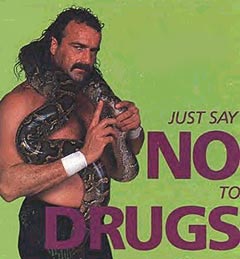 25. JAKE ROBERTS
Real Name - Aurelian Smith, Jr.
Hometown - Gainesville, TX
Debuted - May 13, 1975
Titles Held - AWN World Heavyweight; AWF Puerto Rican Heavyweight; NWA National Television; NWA World Television (Georgia, 2x); Mid-South Louisiana Heavyweight; Mid-South North American Heavyweight (2x); Mid-South Television; SMW Heavyweight; Stampede North American Heavyweight; NWA World Six-Man Tag Team (Texas, with Chris Adams and Gino Hernandez); WCCW Television
Other Accomplishments - Winner of PWI Most Inspirational Wrestler of the Year award in 1996; Ranked #100 of the 500 Best Singles Wrestlers of the PWI Years by Pro Wrestling Illustrated
Despite having a father, a half-brother and a half-sister all in the wrestling business as well, Roberts didn’t have it easy coming up in the wrestling business. He didn’t have the body or the look of a stereotypical wrestler coming up in the early ‘80s and he didn’t have the support of his estranged father, someone who could’ve pulled some strings and helped him out in the business. And it was only by accident that he came about creating his now legendary finishing move, The DDT.
Despite all the setbacks, Roberts made it in the wrestling business because he had “it.” You can’t explain what “it” is but whatever it was Roberts had it. He cut his teeth in World Class and Georgia Championship Wrestling but really started to gain a following when he worked in Bill Watts’ Mid-South.
But it was when he arrived in the World Wrestling Federation in 1986 that he really became a superstar. He started bringing a large python to the ring with him to accentuate his “Snake” moniker. The python, Damian, would become an integral part of his act, as once Roberts was victorious he would drape the snake around his fallen opponent. The act was really legitimized at WrestleMania 2 when Roberts’ opponent George Wells began foaming at the mouth as the snake wrapped around him.
He proved the dangerousness of the DDT when he dropped Ricky Steamboat on the arena floor with the move during their 1986 feud and gave Steamboat a legit concussion. In 1987 he embarked on a feud with Honky Tonk Man that saw one of the first instances of the double face/heel turn. His run against Honky reached its climax at WrestleMania III when Roberts had famed rocker Alice Cooper accompany him to the ring for the match.
It was Roberts’ run against “Ravishing” Rick Rude that really made him a star. At the time Rude was picking random women out the ring to kiss them after his matches. When he mistakenly picked Roberts’ wife Cheryl out of the crowd, as the kids would say, the sh!t was on. Rude poured heat on the fire by wearing airbrushed tights with Cheryl’s face on them, at which point Roberts stripped him “naked.” This became the textbook angle on how to do a “defending a woman’s honor” angle the right way.
After that feud Roberts was a made man in the company, and a top three or four babyface that could main event the B and C house shows. He moved onto a feud with Andre the Giant, based on Andre’s crippling fear of snakes. It was the perfect way to make Roberts look like Andre’s equal, despite their massive size differential. From there he spent most of 1990 working with “Million $ Man” Ted DiBiase, an old rival from their days in Mid-South.
The most fondly remembered feud of Roberts’ initial WWF run for yours truly was his blindness angle with Rick “The Model” Martel, which saw Roberts losing his vision thanks to being sprayed in the eyes by Martel’s “Arrogance” cologne. Most Internet experts soundly trash their blindfold match at WrestleMania VII, but from a psychology aspect I think it was the absolutely perfect way to blow off a vision loss angle such as this.
He then moved onto a rehash of the fear of snakes angle, this time with the gargantuan Earthquake. Only this time Earthquake got the upper hand by “squashing” the snake Damian. Roberts responded by bringing out a bigger snake he named Lucifer.
Looking back it was easy to see how useful and valuable Jake was to the WWF at this time. He was never without a long-term program or a steady house show opponent. He could work with fellow technical wizards like DiBiase and Martel. He could look equal against monsters like Andre and Earthquake, and he could provide necessary on-the-job training for someone like Rick Rude. He was so versatile in that regard.
During his last year in the initial WWF run he took a much-needed turn to the dark side, where he was really able to play up the vileness of his snake character. After showing the Ultimate Warrior the ways of the dark side as Warrior’s preparation for facing Undertaker, Roberts turned on him like the snake he is. He aligned himself with Undertaker as they then targeted “Macho Man” Randy Savage and Miss Elizabeth, even going so far to interrupt their wedding reception. The angle took a hard turn when Roberts brought out a devenomized cobra that legit bit Savage in the bicep, which was some heavy stuff for Saturday morning “Superstars” television show. Shortly into 1992, even Undertaker couldn’t stand Roberts’ vile ways and he save Elizabeth from an attack. If anyone could turn Undertaker into a good guy, it was “The Snake.” At WrestleMania VIII, Roberts put over Undertaker clean as a whistle and slithered out of the company.
He ended up in World Championship Wrestling for a brief time in late ’92, but new WCW booker Bill Watts didn’t like Roberts at all and his run was incredibly short-lived. His only pay per view appearance was a Coal Miner’s Glove match against Sting at Halloween Havoc ’92.
Roberts then worked in Mexico through 1993 and 1994 before making his return to the WWF at the Royal Rumble ’96. An albino python “Revelations” now accompanied him as Roberts talked about his newfound faith in Christianity, which was part work, part shoot. Apparently he had cleaned up his boozing and drugging ways, and he incorporated that into his character. With the new Bible-thumping character Roberts still had quite the following and made it to the finals of the 1996 King of the Ring, where he in part helped in usher in the “Attitude era.” After Stone Cold Steve Austin pinned Roberts to win the King of the Ring, Austin cut the promo of his life, mocking Roberts’ faith. He said, “You sit there, and you thump your Bible, and you say your prayers, and it didn’t get you anywhere. Talk about your Psalms, talk about your John 3:16 … Austin 3:16 says I just whipped your ass!”
He then faded more into the background and by early ’97, he was transitioned into more of a backstage role. Unfortunately he wasn’t happy with this new position and faded back into his old drug and alcohol habits, which in turn led to his divorce from Cheryl.
Sadly that was the last we would see of Roberts on a full-time national wrestling spotlight once again. He was an integral part of the 1999 documentary “Beyond the Mat.” Unfortunately Jake didn’t like his portrayal in the film and wasn’t even invited to the movie’s premiere. Later in the fall of 1999, Roberts made himself a wrestling punch line when he showed up at the independent pay per view event “Heroes of Wrestling” completely unfit to wrestle, much less talk or tie his shoes. His scheduled match with Jim “The Anvil” Neidhart was changed on the fly during the pay per view itself when it was obvious Roberts couldn’t perform.
By early 2001, Roberts moved to England, where the spent the first part of the new decade working for British independent groups. He came under fire for animal cruelty while living over there.
In the buildup to WrestleMania 21, Roberts appeared on RAW to hype up Randy Orton’s upcoming match with Roberts’ old rival The Undertaker. He also helped the company film a documentary about his life and career at the same time, which came out in the fall of 2005.
In 2007, in the wake of the Chris Benoit tragedy, WWE put out a notice to any and all current and former employees, offering any and all rehab services they need. Roberts took them up on the offer and entered into a 14-week voluntary drug and alcohol rehab program. Unfortunately the rehab didn’t seem to take, as on September 12, 2008, Roberts showed up for an independent gig completely out of gourd. His opponent, veteran indy wrestler JT Lightning, ended the match quickly and berated Roberts for his behavior. “Snake’s” camp went into PR mode immediately, claiming Roberts was drugged and didn’t remember any of the particular incident.
Roberts is on the short list of six or seven guys who never won a World Championship, but were more than deserving of such an honor. In fact, Roberts won no gold during his profitable WWF runs, but that’s more of a testament of his constant state of overness rather than his abilities. He didn’t need a belt to remain at the top of the cards. He had a hand in training such stars as Diamond Dallas Page and Raven and was able to impart his amazing psychology skills on numerous wrestlers, most notably Steve Austin and Undertaker.
Saying a wrestler is ahead of his time has become dangerously close to cliché, but with Roberts it’s true. It’s amazing what Jake “The Snake” could have done during the no holds barred atmosphere of the “Attitude” era of the WWF, or the injection he could have brought into the current dull brand expansion era. I shudder in excitement of what Paul Heyman could have done with Roberts if they would have ever crossed paths during the same heyday. He had a mind for the business that few could match, and was a “cool heel” before that was even a term in the wrestling lexicon.
So when you think about Jake “The Snake” Roberts, professional wrestler, try to look past the rampant drug and alcohol abuse and his rough personal life. Think about what he did inside those ropes. In an era of musclemen he stood by looking average. In an era of screaming promos, Roberts stood out for his subtlety and quiet prose. In an era of cartoon characters, Roberts stood out by looking real and human. And he made it look easy. followed by another fave that he heavily influenced. 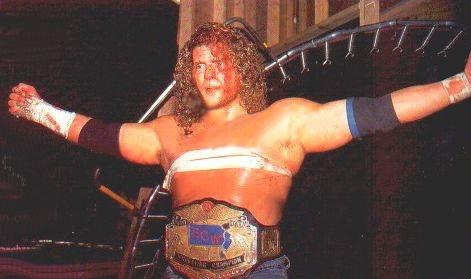 24. RAVEN
Real name - Scott Levy
Aliases - Johnny Polo; Scott Anthony; Scotty the Body; Scotty Flamingo
Hometown - Philadelphia, Pennsylvania
Debuted - February 20, 1988
Titles Held - ECW World Heavyweight (2); ECW World Tag Team (4 – 2 with Stevie Richards, 1 with Tommy Dreamer, 1 with Mike Awesome); EWF Heavyweight; HWA Tag Team (with Hugh Morrus); MEWF Mid-Atlantic Heavyweight; NWA Central States Heavyweight; NWA Pacific Northwest Heavyweight (3); NWA Pacific Northwest Tag Team (3 – 1 with Top Gun, 1 with the Grappler, 1 with Steve Doll); NWA Pacific Northwest Television; 3PW Heavyweight; NWA World Heavyweight; UXW Heavyweight (5); USWA Tag Team (with Brian Christopher); WCW Light Heavyweight; WCW United States Heavyweight; WCW World Tag Team (with Perry Saturn); WWF/WWE Hardcore (27)
Other Accomplishments - 2005 TNA King of the Mountain; Most reigns of anyone as WWF/WWE Hardcore champion; Final NWA Pacific Northwest Television champion
When Scott Levy began his wrestling career in 1988, he was very different from the man we are familiar with today. He first showed up in Memphis as Scotty the Body, a flashy young man who served two purposes – one, to work as Missy Hyatt’s boytoy, and secondly, to help Eddie Gilbert when he needed assistance.
His next stop was Florida, where things didn’t work out after an argument with Steve Keirn, who was part owner of the company due to the fact that he didn’t feel comfortable with jobbing to Keirn. A stop in All-Star Wrestling in Vancouver also fizzled. Scotty was over with the fans, but Al Tomko insisted on reserving the top spots for his sons. After Tomko started spreading false accusations about him having legal issues, Scotty left the territory and headed to Pacific Northwest.
Pacific Northwest was run by Don Owen and operated primarily out of Portland, Oregon. It was here that Scotty would find his first real success. Scotty the Body debuted as a red-hot heel, and he quickly began collecting belts. July 8, 1989 saw Scotty and Top Gun (David Sierra) defeat the Southern Rockers to win the titles. The reign didn’t last long as Scotty and Top Gun split and began feuding over the belts. Scotty defeated Top Gun on August 5 and named the Grappler his new partner.
However, they again had a short reign. After a rematch against the Southern Rockers, the title belts were held up and the Rockers regained the titles at the end of August.
In September, Scotty defeated Carl Styles to win the Pacific Northwest Heavyweight title. Again, the feud with the Rockers flared up and Rocker Rex King defeated him for the title on October 7. Scotty regained the belt a week later and would hold it until February of 1990 when he was defeated by Curtis Thompson. (Scotty would also result in Thompson’s loss of the title – on March 30, he had a rematch. Due to Scotty’s cheating to win the belt, it was vacated. Thompson would not regain the belt.)
March of 1990 saw Scotty defeat Ricky Santana for the television title. He would never be defeated and the title would be abandoned later that year.
After this, Scotty rethought his priorities and became a face. He began feuding with the Grappler and defeated him in June to win the heavyweight title for the third time. The belt was held up at the end of July following a rematch between the two, and the Grappler would regain the title on August 4.
1991 saw Scotty the Body departing Portland and heading to Dallas, Texas, where he became part of the original roster of the Global Wrestling Federation. Now known as Scott Anthony, he joined a stable called the Cartel and was allied with Cactus Jack, Makhan Singh, and Rip Rogers.
1992 saw Anthony leave Global for WCW, where his past came back to haunt him. Dusty Rhodes was the booker and knew him from Florida. Diamond Dallas Page lobbied hard for Anthony and Anthony was given a tryout match. Afterward, Eric Bischoff praised the quality of the match as the best tryout he’d ever seen.
Anthony was signed and renamed Scotty Flamingo. He became a part of the light heavyweight division and captured the Light Heavyweight title from Brian Pillman on June 20. He lost the belt to Brad Armstrong in July.
Flamingo spent the rest of his time in WCW feuding with Pillman, Armstrong, and Johnny B Badd. The November, 1992 Clash of the Champions featured a boxing match between Flamingo and Badd which Flamingo won.
Flamingo would leave WCW in early 1993, but not before having a match with a man he would meet again. In February, Flamingo faced off against the debuting Robbie V – who would become known later as Rob Van Dam.
Although Flamingo was picked up by the WWF, he wound up being sent back to the USWA while they prepared an angle for him. Here he allied with Brian Christopher during Christopher’s war against the Moondogs. The two captured the USWA tag team titles on March 22, and lost them back to the Moondogs a week later.
His next stop was the WWF, where he was renamed Johnny Polo and given the gimmick of a spoiled rich kid. Polo was a manager and began managing Adam Bomb briefly, before he was replaced by Harvey Whippleman. Later in 1993, Polo began managing the Quebecers (Jacques Rougeau and Pierre (Carl Oullette). In 1994 the Quebecers left the company and Polo found himself mainly working backstage as well as doing commentary. Polo left the company later in 1994.
Meanwhile, in ECW, Stevie Richards began promising a new personality. He came out at various times dressed as Scotty the Body, Scotty Flamingo, and Johnny Polo. He even went so far as to promise Joey Styles that he was bringing Johnny Polo into the company.
Finally, in January of 1995, Stevie’s promises came true. Johnny Polo debuted, but he wasn’t the Polo that fans were familiar with from WWF television. Now known as Raven, he wore clothes associated with the grunge movement in music and portrayed himself as a social outcast.
A defining feud was soon born as Raven attacked Tommy Dreamer, hinting at a long history between the two. Soon the truth came out when Stevie told Raven that he’d found someone named Beulah, a fact that enraged Raven.
Raven (the outcast) and Dreamer (the popular kid) had been foes at summer camp. Beulah McGillicutty had been the fat girl who’d been in love with Dreamer, but he’d rejected her because of her looks so she had wound up with Raven instead.
When Beulah debuted, she was gorgeous. Raven gladly welcomed her into his stable along with the Blue Meanie and his bodyguard Brian Lee.
In June, Raven and Stevie defeated the Pitbulls to become the ECW Tag Team champions. The Pitbulls regained the belts in September, and two weeks later Raven and Stevie regained the, only to lost them to Public Enemy in a three way match later in the night.
Raven’s next target was the ECW champion – the Sandman. Raven immediately began playing mind games with the Sandman as Raven convinced Sandman’s wife and young son to join him. On January 27, 1996, Raven’s plan was completed as he defeated the Sandman and won the world heavyweight title.
April of 1996 saw Dreamer winning a victory over Raven, although it wasn’t in a match. It had been revealed that Beulah was pregnant with Raven’s baby. At Hostile City Showdown Shane Douglas told Dreamer that Beulah was cheating on him and she was never pregnant. Beulah finally revealed that she’d been cheating with Kimona Wanalaya, Raven’s new valet. Kimona and Beulah then began kissing each other to confirm the truth. Dreamer thought a moment, kissed both women, and proclaimed to the cheering ECW crowd that he’d take them both.
This time period also saw one of Raven’s most controversial actions. In October of 1996, Raven was still warring with the Sandman. After Sandman’s son attacked his father, Raven directed his lackeys Stevie and the Blue Meanie to go under the ring. They pulled out a cross, and at Raven’s direction crucified the Sandman on it.
The response was immediate. Even the calloused Philadelphia crowd rejected the angle and Heyman sent Raven out later in the night to apologize. Also, Kurt Angle was backstage at the event, fresh off winning a gold medal at the Olympic Games. After seeing the angle, Kurt stormed out of ECW, promising to sue if his name was used in any way with footage of the angle. In the end, the footage never aired and was never seen until the WWE’s Rise and Fall of ECW DVD.
Later that month, Raven no-showed a title defense at Ultimate Jeopardy. In response, Heyman booked a new match – Stevie Richards and Brian Lee against the Sandman and Tommy Dreamer with Raven’s belt on the line. The Sandman pinned Richards to regain his title.
Raven wasn’t going to let this stand, and Sandman wasn’t going to make it easy for Raven to take the title away. The two finally faced off in December at Holiday Hell in a barbed wire match. After a brutal battle, Raven emerged as the victor and new world champion.
As Raven entered 1997, he debuted a new valet – Chastity – whose job was to keep Beulah neutralized when he battled Dreamer. However, a new threat was on the horizon for Raven as Terry Funk made his return to the promotion. At ECW’s first PPV Barely Legal Funk defeated Raven to end his second world title reign.
Raven found his attention turning from Funk and once more focusing squarely on Dreamer. In June, Raven and Dreamer battled one last time in a match where the loser would leave ECW. Dreamer finally defeated Raven for the first time in their feud and Raven was sent packing.
Raven’s next stop was in WCW. On June 30th, he debuted by sitting in the front row at Nitro. He was acknowledged as a world champion from another company, but ECW was never named.
At the August 21 Clash of the Champions, Raven destroyed Stevie Richards and returned to the front row. During this time, he also began assembling a group he called the Flock. Stevie was the first to join Raven. At the same time, WCW also began building a feud between Raven and Diamond Dallas Page.
By October, the Flock had gained its first new member in Perry Saturn. Next to join was Sick Boy (Scott Vick), and he was immediately followed by Billy Kidman. They continued to simply sit in the front row week after week.
In November Raven faced Scotty Riggs in a match (No DQ, since Raven wasn’t under a WCW contract). Raven tripped Riggs and sent him face first into a steel chair. An eyepatch-wearing Riggs then became the next member of the Flock. Van Hammer followed him. The final members became sign-carrying Lodi, Reece, and Horace Hogan. Finally, Raven signed a WCW contract with clauses that stated his matches were always hardcore (known as “Raven’s Rules”) and he only had to wrestle when he wanted to.
The Flock began collecting gold as well. Saturn defeated Disco Inferno for the Television title. At Spring Stampede 1998 Raven defeated Page to win the WCW United States championship. Unfortunately, the reign would be short as he was defeated by Goldberg the next night.
The loss of his belt deeply affected Raven. He blamed the Flock – especially Saturn for the loss. This led to a match between Raven and Saturn at Fall Brawl, where (with Kidman’s help), Saturn won and freed the Flock from Raven’s control.
With the Flock gone, Raven plunged into a deep depression. He would refuse to wrestle matches. Finally he had an opportunity to face Chris Jericho for the Television title. When Raven lost the match he left the ring and vanished from WCW programming.
Raven reappeared in videos where it was revealed that he’d returned home to his rich family. Chris Kanyon tracked him down in Florida and eventually convinced him to return.
Raven returned in early 1999. He now had a valet – Chastity (who was now called his sister). Things wouldn’t last long as he soon found himself feuding with Hardcore Hak (ECW’s Sandman) and Chastity turned her back on him to ally with Hak.
After that, Raven began teaming with Perry Saturn again. In May, the two of them captured the WCW World Tag Team titles in a three-way match against the team of Chris Benoit and Dean Malenko and the team of Billy Kidman and Rey Mysterio Jr. This also didn’t last as they lost the belts to Diamond Dallas Page and Bam Bam Bigelow on May 31. Actually, Saturn lost the belts. Raven had been attacked by the so-called Triad to open the show and was put out of commission.
Raven returned again in August, now allied with Vampiro and the Insane Clown Posse as the Dead Pool. Backstage, however, things were reaching a boiling point. It all blew up on August 23. During a backstage meeting, Bischoff began calling wrestlers by name in front of the entire locker room. Finally Bischoff brought up Raven’s name and said that if he was unhappy he could have a release. Raven immediately left the meeting and called his lawyer to get the ball rolling. Raven was done with World Championship Wrestling.
However, there was a catch. Raven’s no-compete clause in the release stated that he couldn’t jump to the WWF. Instead, he gave Paul Heyman a call. On August 26, 1999, ECW was taping their TV show for TNN. The focus of the show had been the Dudley Boyz, who were making their final appearance before jumping to the WWF. On this episode, they had won the ECW Tag Team titles and were promising to present them to Vince McMahon as a trophy. Suddenly Tommy Dreamer came out and vowed to save the belts. Dreamer was in trouble when a familiar figure entered through the crowd. The crowd exploded as Raven helped Dreamer defeat the Dudleys to win the belts.
Dreamer and Raven held the belts until January, when they were defeated by the Impact Players (Justin Credible and Lance Storm). Shortly thereafter, the former foes would choose new partners and try to recapture the belts. Dreamer chose Masato Tanaka and Raven’s partner was Mike Awesome. Tanaka and Dreamer won the titles on February 26, and they were defeated by Raven and Awesome on March 4. This reign would not last long, as on March 8’s Living Dangerously the Impact Players would defeat both Raven and Dreamer’s teams to regain the belts. This would be Raven’s farewell to ECW.
In June, Raven began working to secure a WWF return. Although management was doubtful given Raven’s history, they finally agreed. Raven debuted in September at Unforgiven when he helped Tazz defeat Jerry Lawler in a strap match.
After a brief period where he worked with Tazz, Raven soon returned to his roots and entered the hunt for the Hardcore title. On December 20, he defeated Steve Blackman to win the title. Since the title was defended under 24/7 rules, that stated that anyone could pin the champion anywhere and at any time, as long as there was a referee there to make the count.
With the 24/7 rule in mind, Raven decided he needed someone to watch his back. In January, a woman dressed in black like a ninja began interfering in his matches to ensure that he retained the belt. On March 11, the ninja was revealed as former DX member Tori, who almost immediately vanished. By April, Raven had racked up eleven Hardcore title reigns.
That summer the infamous Invasion began. Raven mostly stayed out of the invasion until Paul Heyman reunited the ECW alumni (who then joined WCW as the Alliance). However, Raven wasn’t feuding with major WWF superstars like Stone Cold Steve Austin or the Rock. His best-remembered feud from this period was a feud started by his manager, Terri Runnells. Terri had been dumped by Perry Saturn for a mop named Moppy, so she enlisted Raven to get revenge. Finally Raven kidnapped Moppy and fed her into a wood chipper while he and Terri laughed. He also spent time during this period tag-teaming with Justin Credible.
However, after the Invasion ended, Raven found himself banished from WWF programming due to a stipulation in the final Survivor Series match (which stated that the losers would be fired). Raven was reassigned to Les Thatcher’s Heartland Wrestling Association in Ohio. While there, he wrestled and also helped with the booking.
Raven returned following the first draft extension in March of 2002, and his first action was to defeat Maven to regain the Hardcore title. However, after losing the title to Bubba Ray Dudley, Raven decided to step back and became a commentator on Sunday Night Heat. He wound up quitting to return to Raw, only to lose a “loser leaves Raw” match against Tommy Dreamer on June 24, which sent him right back to Heat.
Raven began a new storyline based on the seven deadly sins and was given creative control over it. However, the angle was dropped and Raven was brought back to Raw, only to be released on January 20, 2003.
Two days later, Raven debuted for TNA by attacking Jeff Jarrett and stealing the NWA World title belt. Raven began demanding a title match against Jarrett, claiming it was his destiny to win the title.
In March, Raven debuted his newest brainchild – the Clockwork Orange match. In this match, poles were erected at the ring’s corners and wires were run between the poles. Weapons were then attached to the wire.
In April, Raven reformed a stable under the name of the Gathering. His first converts were Julio Dinero and Alexis Laree (WWE’s Mickie James). CM Punk also soon joined.
Punk’s inclusion is ironic because Raven had also returned to the independent scene. While Raven led the Gathering, he was also feuding with CM Punk in Ring of Honor. Punk finally defeated Raven in a steel cage in November to end the feud.
On April 30, Raven and Jarrett met in a title match that had been heavily hyped for a month. Jarrett wound up winning the match.
Raven and the Gathering then began feuding with Father James Mitchell and his Disciples of the New Church. On September 17, Raven lost to Shane Douglas in an infamous hair vs. hair match. After being defeated by Douglas with help from Vampiro, Raven’s head was shaved. However, Mitchell applied too much pressure to the clippers and instead dug them into Raven’s scalp, drawing blood with every pass.
After the Gathering was defeated in a dog collar match (which also saw Punk, Raven, and Dinero hung from the rafters of the TNA Asylum) Raven vowed to destroy every member of the New Church until he got his hands on Mitchell.
Sinn was first. Raven took him out with one punch after wrapping his fist in a chain. A week later he defeated Slash in a dog collar match, and followed that up with a win over Vampiro in a Blood Gallows of Retribution match by hanging Vampiro. Finally Raven defeated Mitchell in a last man standing match to end the feud.
New problems arose on December 17th. Raven was fighting Abyss when Punk and Dinero turned on him and nailed him with chairs, giving Abyss the win. As if that wasn’t bad enough, the Gathering soon revealed their new manager – Father James Mitchell.
Raven needed backup, and he once again found it by turning to his past. Terry Funk and Sabu soon allied with Raven, and they were able to defeat the Gathering.
Afterward, Raven began demanding another title shot and soon found himself in a feud with Chris Harris to determine the #1 contender. The feud even saw Harris preventing Raven from winning the NWA World title on more than one occasion. However, the feud finally died away as Harris was quietly reunited with James Storm as America’s Most Wanted.
Raven next set his sights on old friend/foe Sabu. Raven had been trained by the Sheik, Sabu’s uncle. According to the storyline, the Sheik had made Sabu and Raven promise him that they would never fight each other. Raven battled with Sabu and his new friend Sonjay Dutt until the feud was dropped following Sabu suffering a back injury that led to a viral infection that would sideline him for over a year.
From there, Raven would have a brief feud with Jeff Hardy.
At Slammiversary 2005 Raven would achieve his destiny. He defeated AJ Styles, Sean Waltman, Monty Brown, and Abyss in a King of the Mountain match to win the NWA World championship.
Raven began feuding with Abyss over the title, but that feud soon picked up with Jeff Jarrett and Rhino also wanting shots at the champion. Sabu and Raven patched up their differences and battled their three foes until September 15, 2005. On that night’s Border City Wrestling show America’s Most Wanted joined forces with Jeff Jarrett and helped Jarrett take the title away from Raven.
Raven’s rage over losing the belt soon put him at odds with Director of Authority Larry Zbyszko. After being thrown out of the building for several weeks in a row, Raven had had enough. Raven grabbed a microphone and began talking about how Larry was mistreating him. Larry rebutted by offering Raven a release and telling him he’d make his life a living hell until he signed it.
At Genesis, Raven defeated Larry’s hand-picked opponent PJ Polaco (who was better known as Justin Credible. Turning Point saw Raven put Chris K (Kanyon) away. Finally, at Final Resolution, Sean Waltman defeated Raven in a Clockwork Orange House of Fun match to force Raven to leave TNA.
In actuality, Raven was suffering from a thyroid condition and was written out of the show to allow him to receive medical treatment.
Raven returned at April’s Lockdown and attacked as Larry was being put on probation in preparation for June’s debut of Jim Cornette as the new management figure. Finally, at July’s Victory Road, Raven defeated Zbyszko in a hair vs. hair match, sending Larry out of TNA.
In November, Raven reformed the Flock. Now known as Serotonin, the group was made up of Kaz (Frankie Kazarian), Martyr (Maverick Matt AKA Matt Bentley AKA Michael Shane), and Havoc (Johnny Devine). The group never caught on and after struggling for months it was dropped.
Raven’s final match with TNA was at January 2008’s Turning Point where he and Abyss defeated Black Reign and Rellik in a thumbtack match. Raven was released from TNA in March of 2008.
Raven has not been idle in the months since. He has continued to wrestle on the independent scene, as well as opening his own wrestling school.
Raven also recently made headlines again. When the WWE released their second quarter report, a mention was buried in it that Raven and other former WWE wrestlers were suing the company, challenging the WWE’s position that their wrestlers are classified as “independent contractors” instead of “employees.” The potentially industry-changing lawsuit is pending.
Love him or hate him, you have to admit that Raven makes an impact wherever he goes. He has shown time and again that he has a keen mind for the wrestling business that can benefit a company he works for (when he is permitted to use it).
The Raven character itself was groundbreaking. To begin with, Raven’s debut referenced his former identities – a major kayfabe no-no. Then Raven upped the stakes in every feud he was in by stealing the Sandman’s family or breaking Tommy Dreamer’s fingers. When Raven debuted in WCW, although he was no longer as edgy as he’d been in ECW, he was still unique among the WCW/NWO battleground.
Raven himself is unique in wrestling as well. He is the only man to hold titles in WCW (when it was still self-owned), the WWF, TNA, and ECW. Raven has been able to reinvent himself to stay relevant in wrestling for over a decade. Raven has definitely earned his place on this list of the top 100 wrestlers of the modern era.
|
|
|
|
|
Joined: Jun 2002
Posts: 19,546 Likes: 1
living in 1962 15000+ posts
|
|
living in 1962 15000+ posts
Joined: Jun 2002
Posts: 19,546 Likes: 1 |
Joe's gonna what? 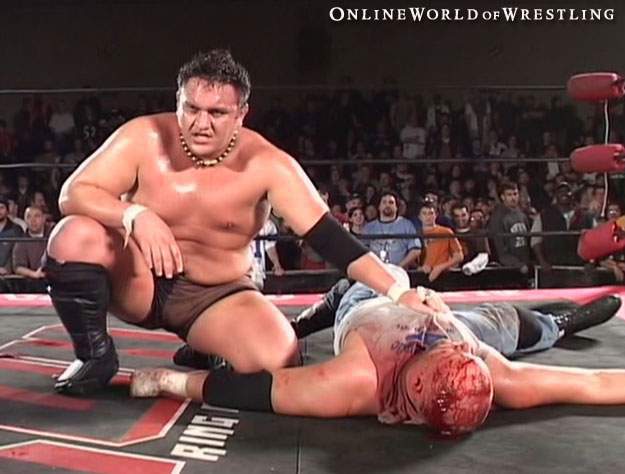 Real name - Joe Seanoa
Aliases - King Joe
Hometown - Los Angeles, California
Debuted - September, 1999
Titles Held - Ballpark Brawl Natural Heavyweight; NWA International Tag Team (with Keiji Sakoda); PWA Pure Wrestling; ROH Pure; ROH World; TNA World; TNA World Tag Team; TNA X-Division (3x); TWE Heavyweight; UPW Heavyweight; UPW No Holds Barred (2x); UIWA Tag Team (2x)
Other Accomplishments - Winner of 2006 EWF Xtreme 8 tournament; Winner of 2004 IWA-Mid South Revolution Strong Style tournament; Ranked #4 by Pro Wrestling Illustrated on the PWI 500 list in 2006; Winner of PWI Feud of the Year award for 2007 (vs. Kurt Angle); Winner of PWI Most Popular Wrestler of the Year award in 2006; Recipient of 5 star match rating by Wrestling Observer Newsletter in 2004 (vs. CM Punk – October 16, 2004); Recipient of 5 star match rating by Wrestling Observer Newsletter in 2005 (2x, vs. AJ Styles and Christopher Daniels – September 11, 2005 and vs. Kenta Kobashi – October 1, 2005); Winner of Wrestling Observer Newsletter’s Best Brawler Award for 2005 and 2006; Winner of Wrestling Observer Newsletter’s Match of the Year award for 2005 (vs. Kenta Kobashi – October 1, 2005); Winner of Wrestling Observer Newsletter’s Most Outstanding Wrestler award in 2005; TNA Triple Crown Champion; Winner of 2005 TNA Super X Cup Tournament; Winner of 2007 TNA Turkey Bowl match; Winner of 2008 TNA King of the Mountain match
“Joe’s gonna kill you! Joe’s gonna kill you!”
That is the classic battle cry Samoa Joe’s fans belt out when they know it’s time for their hero Joe to get to business. Samoa Joe, 29, has seen a lot and performed for a lot of people. He is no stranger to performing as at the tender age of five years old he and his family’s Polynesian dance troupe performed as part of the 1984 Summer Olympics Opening Ceremony. From there Joe fine-tuned himself into a talented athlete and was a top high school football star and a California State Junior Judo Champion.
But it was in 1999 when Joe began wrestling that he found his calling in life. He trained out in California and was a star pupil in the then-WWF developmental affiliate Ultimate Pro Wrestling, where he worked with fellow future star John Cena, among others.
Through 2001 and 2002 he split his time between California indies like UPW and Pro Wrestling Guerrila and as Japan’s ZERO-ONE promotion, picking up various championships and continually honing his craft.
Don’t let the name Samoa Joe fool you; he isn’t some barefooted, hardheaded caricature. This guy is the real deal.
But it was in 2002 when he joined Ring of Honor as Christopher Daniels’ hired assassin as part of the “The Prophecy.” He quickly rose through the rank and file of ROH, and punched his ticket into Ring of Honor lore on March 22, 2003 when he defeated Xavier for the ROH Heavyweight Championship.
Joe embarked on star-making and record-breaking title reign, elevating the ROH Championship into a legitimate World Championship along the way. He defeated and defended against all of Ring of Honor’s top stars and legends, perhaps most notably his three defenses against CM Punk that earned virtually universal praise from wrestling fans and analysts worldwide. Finally after a twenty-one month championship reign, he dropped the belt to Austin Aries on December 26, 2004. Even in defeat Joe was cemented as a legend among Ring of Honor lore.
He rebounded quickly and soon picked up the ROH Pure Championship and held it for over three months in 2005. In October 2005, Joe had a once-in-a-lifetime match against Japanese legend Kenta Kobashi that earned many critics “Match of the Year” for 2005.
Meanwhile, in the summer of 2005 Joe also began working concurrently at TNA Wrestling. He debuted at the Slammiversary PPV in June 2005 to much fanfare from commentator Mike Tenay. Joe quickly destroyed the TNA X-Division, racking up an impressive undefeated streak en route to challenging for the X-Division championship in a three-way dance against AJ Styles and champion Christopher Daniels at the “Unbreakable” PPV in September 2005. Styles won the X-Championship, but Joe was not pinned and thus kept his undefeated streak alive.
Through 2006 Joe continued to divide his time between Ring of Honor and TNA, playing much different characters and carrying much different agendas. In Ring of Honor, he acted as one of ROH’s biggest defenders in their wild and heated inter-promotional war against Combat Zone Wrestling. He also continued to put on five-star quality matches against opponents like “American Dragon” Bryan Danielson and Takeshi Morishima.
Over in TNA, Joe, Styles and Daniels revolutionized the X-Division through the first part of 2006. They put on truly amazing and entertaining matches between all three combinations. Along the way he dropped the X-Title to Daniels in a three-way Ultimate X match at “Destination X” in March 2006, without getting pinned once again and thus kept his undefeated streak alive. Joe won the X title back from Daniels in April, but dropped it a couple of months later in another three-way bout, this time with Senshi pinning Sonjay Dutt, allowing Joe’s streak to continue. Joe then spent the rest of 2006 climbing the ranks of TNA, working with the heavyweight main event talent like Sting, Jeff Jarrett and Scott Steiner.
By the fall of 2006, Joe finally reached superstar status when he began clashing with new TNA arrival Kurt Angle. The pair butted heads through the fall until their first match-up at “Genesis” in November 2006. Angle won their first meeting, ending Joe’s eighteen month undefeated streak. The rivalry was TNA’s hottest ever and it showed in pay per view buy rates. Joe picked up the victory in their rematch the next month at “Turning Point.” Angle finally won this first chapter of their epic feud with a 3-2 Iron Man win at “Final Resolution” in January.
Also early in January 2007, Joe announced to Ring of Honor that after March 4 he would no longer be a full-time active member of the roster. The Ring of Honor cards through January and February were billed as part of the “Samoa Joe Farewell Tour.” His final match as part of the full-time roster was a victory over long-time ROH rival Homicide.
Joe then concentrated fully on his TNA requirements, as he was now considered a legitimate main event level star for TNA. Joe picked up his second X-division Championship on the July 12 Impact and went on to be a part of the “Match of Champions” at Victory Road. He teamed with TNA World Champion Angle to beat Team 3-D to win the TNA Tag Team Championships. From there Joe and Angle renewed their feud as they fought over all of the company’s belts. At Hard Justice in August, Joe lost his X-Title and both Tag belts to Angle, and faded into the background for a while feuding with guys like Christian Cage and Robert Roode.
Joe then formed an uneasy alliance with Kevin Nash, who mentored Joe in the ways of being a true main event superstar. In the main event of Turning Point in December 2007, Joe was supposed to team with The Outsiders against The Angle Alliance, but Scott Hall no-showed and Joe cut an impassioned live promo bemoaning the old guard and calling for a new guard of talent to emerge. Joe spent the first part of 2008 teaming with Nash, Christian Cage and others against Kurt Angle and his Alliance.
It all built to the next chapter in the Joe and Angle rivalry, a Six Sides of Steel cage match between the two men for the TNA World Championship at LockDown in April 2008. The build for this match was fantastic, as it showed both men in legitimate training footage preparing for the match MMA-style. It was the best build for a match the company had done in years. And finally Joe’s dream came true, as he beat Angle clean in the middle of ring to become TNA World Heavyweight Champion. Joe went on to defend the belt against a variety of opponents like Scott Steiner, Kaz, Booker T, Christian Cage and Kurt Angle throughout the spring and summer of 2008.
Along the way as Joe was Champion he remained in an uneasy alliance with Kevin Nash. Ultimately, to the surprise of no one, Nash finally turned on Joe during his World Title defense against Sting at Bound For Glory IV, causing him to lose his belt. Joe, along with old rival and friend, AJ Styles, began a youth movement in TNA against Nash, Angle, Sting, Steiner and Booker T, who called themselves “The Main Event Mafia.”
Currently Joe and AJ, along with Rhino and Team 3-D, are leading the “TNA Frontline” against The Mafia in a war that has been carrying the company since the fall of 2008.
Samoa Joe is one of the new-age look of wrestlers who doesn’t look like the muscle bound monsters of the ‘80s and ‘90s. He is a naturally gifted athlete who moves and flies like a cruiserweight yet has all the power and strength that allows him to put on heavyweight main event clashes. He is one of the most consistent performers in the ring and can put on top quality matches with a variety of opponents, big or small, fast or slow. His Ring of Honor matches with CM Punk and Kenta Kobashi are stuff of legend and his rivalry with Kurt Angle in TNA is what the company should use as a template on how to book all of their feuds.
He is vastly underrated on the microphone and his physical appearance often deters new fans from buying into Joe’s talents and mystique. But make no mistake about it; Joe is one of the absolute best in-ring performers the industry has seen in a long time. He has the support of legends like Bruno Sammartino the respect of his modern day peers.
Samoa Joe is one of the main reasons that Ring of Honor is where it is today, and he is one of the few legitimately unique talents that TNA is properly showcasing on a national stage. His unique charisma, undeniable in-ring talent and overall “it” factor makes Joe one of the most engaging performers of the twenty-first century.
He’s already won over virtually every fan who’s seen him compete in the ring, and he’s not even 30 years old. It’s kind of scary where he could end up and what this guy could do in the future as he continues to evolve and work with world-class talent.
Don’t let the name Samoa Joe fool you; he isn’t some barefooted, hardheaded caricature. This guy is the real deal. 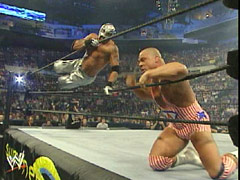 Real Name - Oscar Gutierrez
Aliases - Rey Mysterio Jr.; Colibri
Hometown - San Diego, California
Debut - April 30, 1989 (at the age of 15!)
Titles Held - WWE World Heavyweight; WWE Tag Team (4 - 1 with Edge, 1 with Rob Van Dam, 1 with Eddie Guerrero, 1 with Batista); WWE/WCW Cruiserweight Championship (8; 5 in WCW, 3 in WWE); WCW World Tag Team Champion (3 - 1 with Billy Kidman, 1 with Juventud Guerrera, 1 with Konnan); WCW Cruiserweight Tag Team Champion (with Billy Kidman); AAA Mexican National Trios Champion (with Octagon and Super Muneco); AAA Mexican Welterweight Champion; WWA Lightweight Championship (3); WWA Tag Team Champion (with Rey Misterio); WWA Welterweight Champion (3); WWC World Junior Heavyweight Champion; IWAS Tag Team (with Konnan)
Other Accomplishments: Won 2006 Royal Rumble; Member of AAA Hall of Fame - Class of 2007; Member of Tijuana Hall of Fame - Class of 2006; Ranked #4 singles wrestler in PWI 500 in 1999; Won Wrestling Observer Newsletter Awards for Rookie of the Year in 1992, Best Flying Wrestler from 1995-97 and 2002-04, and Most Outstanding Wrestler in 1996; was also part of their match of the year in 2002 (with Edge vs. Chris Benoit and Kurt Angle for the WWE Tag Team Championship at No Mercy on October 20, 2002)
It takes a remarkable talent to become a top level guy in WWE when you’re less than six feet tall. Rey Mysterio has joined a select pantheon of guys to make it to the top of the mountain without having “the look” that Vince McMahon typically builds his company around, which includes Bret Hart, Shawn Michaels, Chris Jericho, Chris Benoit, and his late friend Eddie Guerrero. That alone would guarantee him at least a spot on this list. It’s the career he had before he became the WWE’s “biggest little man” that has him in some pretty heady company in our books.
Rey began his career in his hometown of San Diego. He trained under his uncle, the original Rey Misterio, and made his debut in a small church in Tijuana, Baja California, Mexico against Psicosis, according to legend (or at least his Wikipedia page; same difference, really). It’s apt that his first match was against Psicosis, as they would have an amazing chemistry during matches that took place all over the world over the years, from Japan to ECW to WCW, although their rivalry did not continue in WWE in any way to speak of (outside of their match at the first One Night Stand). The fact that his debut was at 15 is also noteworthy because, come on, he was 15! That is, aptly, around the age when I became a huge mark for him in WCW. According to this article, Rey’s parents had to sign a waiver claiming all responsibility for any injury he might have in the ring for that to work out. Given all the knee surgery he’s had in his career, I hope that they’ve stopped having to live up to that obligation.
By the time he was 18, his uncle bestowed the family stage name on him, and he became Rey Misterio Jr. while wrestling for the lucha libre promotion AAA. He kept that suffix until he came to WWE. While in AAA, he had a rivalry with Juventud Guerrera, a man who would go on to owe him thousands of dollars. They’d be tag team champion partners and rivals in WCW, too, but I find the debt more amusing, especially since Rey showed up at an AAA show to yell at “the Juice” about it. I like to assume that he was wearing his mask at the time. It’s worth noting that luchador impresario and occasional wrestler Konnan (who is part of this list) is the guy who recruited him for AAA when it was opening up, since it was Konnan who wound up bringing Rey and a legion of other luchadores to WCW.
In a round about way, that leads us to 1994, when Rey made his American PPV debut by appearing on When Worlds Collide. He teamed up with Latin Lover and Heavy Metal to take on Fuerza Guerrera, Madonna’s Boyfriend (the late Louie Spicolli), and Psicosis. I told you they wrestled each other a lot. That was a AAA show which was co-promoted by WCW. Konnan was even in the main event! Depending on your perspective, this can be seen as Eric Bischoff’s first step to infusing the luchadores in to his product to help differentiate it from what the WWE was putting out during the Monday Night Wars or a footnote in the business in general and Rey’s career specifically; if you’re Paul Heyman, it’s probably the latter.
You see, in between showing up on a card promoted by WCW and debuting on Nitro, Rey had the seemingly requisite run in ECW that every top worker in the late 90’s had. With Konnan facilitating the deal, he wrestled long time rivals Guerrera and Psicosis in 1995, which just happened to be ECW’s peak as a promotion. This is generally where Eric Bischoff is credited/blamed for getting/stealing the idea to use luchadores (again, especially if you’re Heyman), which totally ignores that PPV I just mentioned. But that’s pretty irrelevant to the fact that Rey and his opponents put on amazing high flying exhibitions in ECW before they did the same thing (minus the chair tossing, crowd diving antics) for an audience of millions during WCW’s glory days.
Rey made his debut for that audience in 1996, at the Great American Bash, against fellow ECW alumnus Dean Malenko, with his last name changed to Mysterio. Malenko won that match to retain the Cruiserweight Title, but Rey would go on to defeat him for the belt on Nitro the following month, picking up a win over that damn Psicosis again at Bash at the Beach in between. His work at those shows is generally overshadowed by that whole nWo thing, especially since his being lawn darted in to the side of a trailer by Kevin Nash factored so heavily in to that angle. But given his status in WWE, and how much the entire nWo has disintegrated since WCW died, I think he’s got the last laugh there. Especially since these matches are the ones getting on DVDs. At any rate, during his four month first reign he would defeat that mooching Juventud, unifying the Cruiserweight Title and the WWA Welterweight Championship, before dropping the belt back to Malenko.
Over the next year, he’d go on to work with other cruiserweight luminaries like Guerrera, Psicosis, Malenko, and Ultimo Dragon. He also spent time trying to make Prince Iaukea not suck, but that’s best ignored. It’s his title vs. mask match at Eddie Guerrero at Halloween Havoc that’s the most fondly remembered to this day, however. It may have been overshadowed by Hart/Austin at Wrestlemania and the first Hell in a Cell during the same year (I say that partially because I wasn’t following wrestling at the time), but it was certainly a match of the year contender, and still holds exceptionally well to this day. Rey picked up the victory and established a rivalry with Eddie that they would reprise years later in WWE, comprising the last prolonged feud of Eddie’s career and life.
Rey divided his time in 1998 between trading the Cruiserweight title with Chris Jericho during his star making run as an obnoxious, loophole abusing heel and being embroiled in a rivalry with Eddie and Juvie in the LWO stable, a group of luchadores Eddie put together so he wouldn’t be left out of having his own ego enhancing stable, I guess. Look, it was WCW in 1998; everybody had a “me too” nWo knock off stable, even Ultimate Warrior. This could be why only Goldberg wound up really getting over. Rey was an unwilling member of the stable (he only joined because Eddie beat him in a match via Juvyference), and wound up teaming up with then Cruiserweight Champion Kidman against them as a result. That’s a partnership that lasted through WCW’s final days and led to tag title runs in two different weight classes, as well as a friendly rivalry over the Cruiserweight title.
It was his connection the LWO that led to him losing his mask at Superbrawl, oddly enough. From my vague recollections, ignoring the amazing research powers of the internet because hell, it’s WCW in the late 90s and I can’t be bothered, it went something like this: Kevin Nash was being a cruiserweight bully and disbanding the LWO on pain of death because the NWO had just reunited, due to Bischoff being creatively bankrupt and handing the book over to Poochie, and thus all of these other stables needed to die. Rey was the only one of the group who refused to take off his LWO shirt, despite not ever wanting to be in the stable and actively undermining it every chance he got. This somehow led Rey teaming up with Konnan in a hair vs. mask match against Lex Luger and Kevin Nash.
Rey’s team lost, and Nash showed up with the mask next night, getting in one of his requisite funny lines about it not fitting while calling Rey out for a match. An odd thing happened, though; Rey blocked a Jackknife Powerbomb with punches and landed on top of Nash, scoring the pin. This kicked off a short lived “giant killer” gimmick for Rey Rey, as he went over the likes of Scott Norton and Bam Bam Bigelow before Nash got his win back at the next PPV. As part of a pretty major push, he’d win the Cruiserweight Title from Kidman and even defeat then WCW World Champion Ric Flair via dq on the Spring Break Nitro, knocking him in to the pool that surrounded the ring at the close of the show.
He and Kidman would be go on to be drawn in to the already excellent feud between the IV Horsemen of Benoit and Malenko and Raven and Saturn over the tag titles, winning them from the Horsemen on Nitro before dropping them to the ECW expats. From there, he was briefly drawn in to Randy Savage’s feud with Kevin Nash over the World Title (on the shockingly logical basis for Savage that Rey had beaten Nash and thus knew his weaknesses) before joining old pal Konnan in the No Limit Soldiers stable, an attempt to get some crossover heat from then popular rapper (and future terrible ballroom dancer) Master P. This was a feud in which WCW did what it did best; waste millions of dollars by not understanding their audience. You see, the No Limit Soldiers were hip hop loving baby faces, fighting a surly group of rednecks led by Curt Hennig. Guess who the predominately Southern WCW fan base cheered for?
The one good thing that debacle did, besides give the world Hennig’s pretty hilarious “I hate rap” entrance music, was lay the foundation for the Filthy Animals stable. After P. left WCW in order to drop off the face of the Earth (or at least far out of my consciousness), Konnan and Rey kept teaming. Eventually, Rey’s old buddy Kidman, his on and off screen girlfriend Torrie Wilson, and everyone’s old rival Eddie Guerrero joined the group. Rey would spend the rest of his time in WCW (and the rest of WCW’s time on this mortal coil) in the group.
They got a pretty solid push under the old WCW brain trust, and that only increased when Vince Russo came aboard. Admittedly, it was a trade off; while they’re prominence on Nitro increased, so did the incoherence of their face/heel status. They were involved in a ongoing feud with the fully heel Revolution stable of Malenko, Saturn, and Shane Douglas, but they also buried baby face Ric Flair in the desert during Russo’s first PPV, which wound up being a symbolic burial for Flair as well, as he wouldn’t appear on WCW TV again until Kevin Sullivan was booking things. These kinds of shades of gray worked in WWF, but it came across as more crap being flung at the wall at high velocity by Russo in WCW. Still, they were a fun group, and they got over as much anyone did in WCW. I’ll let Kyle David Paul explain, as he did in that Konnan profile I linked to:
The Filthy Animals were a great idea. …They were neither heels nor faces, instead pranksters with chips on their shoulders. Dressed mostly in street clothes, they felt authentic and modern at a time when we saw WCW returning to pre-nwo styles of programming.
Rey involvement in the first (and strongest) line up the group fielded did get him another tag title reign, this time with Konnan, but injuries sidelined him for most of Russo’s first run holding the book. By the time he came back, Russo and Bischoff were both back and the Millionaire’s Club/New Blood feud was going on. The new incarnation of the Filthy Animals, comprised of Rey, Konnan, Juvy, and Disco Inferno, initially sided with the heel New Blood (basically the entire mid card), but Rey came across more as someone hanging with the wrong crowd than a full on heel. It didn’t help that Russo’s “drunk in a Ferrari with no brakes” pacing meant that, despite the fact that he got on TV regularly and was involved in feuds with the likes of the Misfits in Action and Kronik, he didn’t get to wrestle too much.
Still, Rey got another tag title run out of the deal, this time a transitional run of a night with Juvy. When things finally calmed the hell down a little in the fall, he and the Animals became faces. They feuded with the Natural Born Thrillers, a group of Power Plant Trainees that included Sean O’Haire and Chuck Palumbo, over the tag titles before moving on to a feud with former stable mate the Disco Inferno and his heterosexual (presumably) life partner Alex Wright. Juvy was fired for attacking a cop while high (making me wonder why the hell he’d lend the guy a credit card) and eventually replaced by Kidman in the group, who had crashed back to the mid card after a depressingly one sided feud with Hulk Hogan.
In WCW’s twilight, the Animals would feud with Lance Storm’s Team Canada, Rey would have a Cruiserweight title match with future nemesis Chavo Guerrero at WCW’s penultimate PPV, and he and Kidman would be involved in a tournament for the newly formed Cruiserweight Tag Titles. They lost in the finals to Elix Skipper and Kid Romeo at WCW’s final PPV, the show with the most darkly ironic name in the company’s history, Greed. They became the last champions in the belts sadly short history by winning a rematch on the final Nitro, a title change which was pretty much immediately ignored because Vince McMahon was involved in all of the post match vignettes, having just bought the company and all.
Rey sat out the remainder of his WCW contract in lieu of jumping directly to the WWE, which meant he had the good fortune of missing the Invasion angle. He worked a few indie dates during this time, sans mask, including this match with Eddie Guerrero and CM Punk for IWA Mid South.
[youtube]http://youtube.com/watch?v=S0KEYRyZ0H4&feature=related[/youtube]
Like every WCW mainstay but Sting, Rey eventually signed with WWE. His debut was hyped with some pretty damn cool vignettes for weeks in advance, and he made his debut on Smackdown, a show he’s become synonymous with by being one of the few guys in the split brand era to stay on one show for his entire WWE run (at least to date). Fittingly, his debut match was against Chavo, and he picked up the win, debuting the 619 as his signature move (he’d used it as a taunt in WCW).
He’d go on to team up with future world champs John Cena and Edge in feuds against the Un-Americans of Chris Jericho, Christian, Test, and Storm, leading to a great moment when Rey dove off the top of a steel cage on to them, and also the really cool in hindsight moment where the triumphant babyfaces posed together. They also had a match with Team Awesome (Angle, Benoit, and Eddie) to kick of Rey’s first major WWE feud[youtube]http://youtube.com/watch?v=eFdOa0F7xOQ[/youtube].
Rey made his PPV debut against Angle at Summerslam ‘02, losing in one of the best PPV openers I’ve ever seen. I mean, it was no Owen/Bret, but it’s pretty indicative of the stacked card they had that year. He’d go on to be a member of the fabled Smackdown six during Paul Heyman’s run booking the show. The idea there was simple; put some combination of Edge, Mysterio, Angle, Benoit, and Los Guerreros in matches together every week. It was beautiful, and led to the last really great run of wrestling on TV. It also helped distract people from Big Show’s awkward transition from world’s largest jobber to a world champ and Dawn Marie having sex with Torrie Wilson’s dad until he died. That’s how great it was. Those six comprised the three teams who traded the WWE Tag Team Championship with each other during its infancy, leading to that match of the year at No Mercy and a great 2/3 falls rematch where Edge and Rey won the belts on Smackdown. They eventually dropped them to Los Guerreros at the Survivor Series.
After the Smackdown six ran its course, Rey was put on the shelf by A-Train (known today as Tomko’s hairy partner in Japan) to set up a feud with Edge. That is also around the time when Smackdown began to go down hill. Rey returned at the first split brand Royal Rumble, but didn’t do anything of consequence until he began a feud with Matt Hardy. Hardy was in the middle of his Mattitude gimmick, and was an incredibly fun heel. They had a disappointing match at Wrestlemania, Rey’s debut at there, which was cut down to nothing on a four hour show for reasons that continue to escape me. They had a better match for the belt on Smackdown months later in San Diego, with Rey earning his first WWE Cruiserweight Title Reign, but not before being a sacrificial lamb for the Big Show, a role he reprised this year. It did involve a pretty cool image of Show picking him up while on a stretcher and whacking a steel post with him, though.
Rey would go on to float around the card for much of the next year and change, feuding with Tajiri, Chavo, and Spike Freakin’ Dudley over the Cruiserweight title. He also teamed with the similarly directionless RVD to form a pretty good tag team during a pretty bad time in Smackdown’s history, helping to at least end the reign of Rene Dupree and Kenzo Suzuki, who make Deuce and Domino… well, Deuce and Domino are still pretty lame by comparison there, but Kenzo and Dupree were pretty bad.
Rey finally got something with some meat to it when he chose Eddie to sub for an injured RVD as his tag partner in a match against the Basham Brothers at No Way Out in 2005. They won the WWE Tag Team Championship and went on to have the first partner vs. partner match in Wrestlemania history at that year’s show. It was a match that typified their months long feud; Rey won, it was good, but not up to what you’d expect from them, especially if you had images of their Halloween Havoc encounter in your mental hard drive. Still, it was a good, heated feud, and more importantly for Rey, helped establish him as a major player, as he won the vast majority of the matches against the former world champ and top face on the show before losing the final blow off on the first Friday Night Smackdown. It also included a tasteless angle involving the paternity of Rey’s son, which led to the first and hopefully only ladder match over the custody of a child. That set a trend of Rey being involved in tasteless angles that included Eddie Guerrero that would define the biggest push of his career.
After feuding with another main eventer, JBL, Rey became embroiled in the Raw vs. Smackdown feud. He teamed up with Matt Hardy against the Bizarro Dream Team of Snitsky and Chris Masters in his hometown at Taboo Tuesday and was set to be part of Team Smackdown with Eddie at the Survivor Series. Tragically, Eddie died two weeks before the show. The inter promotional match went off pretty much how you’d expect, with Eddie’s sub Randy Orton continuing his sole survivor streak, but Eddie’s death and Rey’s push to the top of the company became intertwined, and Orton came along for the ride for good measure.
The biggest example of this came on a special edition of Smackdown when Rey took on the Big Show. Rey came out in one of Eddie’s low riders during his entrance. Nice tribute, right? Unfortunately, you can see how the whole thing ended here.
[youtube]http://youtube.com/watch?v=j2jL_AXwO2s[/youtube]
Orton would be preoccupied with Undertaker for the next month, while Rey would go on to get a fourth WWE Tag Title reign with his fourth different partner (and seventh between WCW and WWE), then World Champ Batista. After Eddie’s death, Batista decided to work through the injury that would have seen him drop the belt to Eddie the day he died. Putting him in a tag team was a way of covering for those nagging injuries. Of course, having Mark Henry attack him at the end of a tag title match pretty much defeated that purpose. It was supposed to set up a feud for the World Title at the Rumble, but wound up leaving Batista legitimately injured and forced to relinquish the belt. He and Rey also dropped the tag titles to MNM in the process.
And thus Rey’s path to the title was open, although it wasn’t obvious at the time. Kurt Angle wound up jumping to Raw and keeping the belt warm for Randy Orton, who was slated to win the title from Batista at Wrestlemania that year. Angle simply subbed for him through feuds with Henry and ‘taker on the way there. A funny thing happened backstage when Orton threw one of his bi-annual tantrums, though:
Randy Orton was originally meant to win the title at WrestleMania 22 before his poor discipline soured management on the decision. Vince McMahon decided to go with Kurt Angle instead, then Pat Patterson suggested they go with Mysterio due to his Eddie Guerrero connection and the ‘feelgood factor’. Since Vince was reluctant to put the title on someone of Mysterio’s size, he put the decision to the vote with the rest of the creative team and they did indeed choose Mysterio.
Thanks Iain! And Dave Meltzer.
So, Rey went on to win the Rumble after entering second, a shocker given that HHH and Orton were the expected winners by pretty much everyone (or at least me; I’m not sure what the sheets were predicting and the net was parroting at that point), and they were all in the final three. Rey dedicated the win to Eddie after riding his low rider out to the ring during his entrance again. It set up a defining theme of his main event push; it was more about Eddie than him, which is what made it so bittersweet, even for a guy who considers himself one of Rey’s biggest fans. He certainly has the talent to get over on his own (and did) and there was a perfectly good underdog story there without making it about Eddie’s ghost.
Orton and Rey went on to feud over the title shot, with Orton going as far as telling Rey Eddie was in hell during the build up to their match at No Way Out. Orton won the match by cheating, and it seemed like that was that as far as Rey Mysterio as a main eventer went. However, Teddy Long went on to award Rey a spot in the title match between Orton and Angle. Which is another thing that bothered me at the time; when the Rock was in a similar situation, he won his shot in the main event back from Big Show. I realize they wanted to play up Rey’s underdog status, but they went so far as to book him that way that he never seemed to actually go over anyone.
One pretty big exception was when he pinned Orton at ‘Mania, winning his first world title. Just to make the moment more poignant and/or so we didn’t forget about the Eddie connection, he celebrated with Chavo and Eddie’s widow, Vickie. It was a fairly short match by World Title, ‘Mania main event standards, which showed Smackdown’s place in the pecking order, if nothing else (although they were higher on the card than Batista and Undertaker would be a year later in their title match). That said, it was spirited match, and did at least pay off the Orton/Mysterio feud with the good guy getting a win.
Unfortunately, that was pretty much the only clean win Rey got as a champion. From there, he jobbed early and often, from being saved from losing the belt to Angle by Henry to being more or less buried in the build up to a title match at Judgment Day with JBL, jobbing three consecutive weeks to Henry, the Great Khali, and Kane (in what was pretty much a commercial for See No Evil). Rey did retain the title at that show, but that was via a combination of JBL having to go on what turned out to be a long hiatus from the ring in real life and Chavo helping him onscreen.
After being involved in the ECW revival, which involved jobbing to RVD on the WWE vs. ECW show (which was sadly the peak of the ECW revival, a week before the actual show debuted) and having a fun, if brief, no contest with Sabu (which was your big hint that this wasn’t the old ECW) at One Night Stand , Rey wound up jobbing one last time while champion, dropping the belt to King Booker at the Great American Bash after Chavo turned on him.
That set up a big feud between the two over Eddie’s legacy. So yeah, they kept going there. During the course of their series of matches, Vickie Guerrero turned heel for the first time. Outside of milking a man’s untimely death, it did lead to a memorable “I Quit” match that allowed Rey to take some time off for long needed knee surgery that was delayed for months during his main event push. It also made their rivalry more personal and less about who Eddie loved more, which was a welcome change of pace.
As these things are designed to do, that segued to Rey’s big comeback at Summerslam the following summer. That, in turn, pretty much leads us to where he is now. After triumphing over Chavo on PPV and in a rematch of their “I Quit” encounter (which served to shuffle Chavo of screen this time, to serve his suspension for being involved in the Signature Pharmacy scandal), Rey moved on to the main event for a short period of time, getting a World Title shot against Batista and the Great Khali. He feuded for a couple months with Finlay before heading back to the main event to challenge Edge for the World Title, with a short feud with MVP in between. While it was doubtful Rey was going to recapture the title with Edge vs. Undertaker set in stone for ‘Mania, a torn bicep made the question moot and put him on the shelf for his second straight ‘Mania. He was used to help kickstart the Big Show/Floyd Mayweather match, but his role was pretty much forgotten when crowd reaction demanded Show turn face.
For someone who’s generally thought of as a high flyer, Rey’s had a pretty versatile career. He helped bring the eye popping lucha libre style to a mainstream audience via his performances in WCW, but that’s only part of his legacy. He’s been a great utility player, doing everything from being a tag wrestler to putting on “David vs. Goliath” matches with a host of big men. After years of accumulated wear and tear, he’s adapted his style. He’s no longer a hurricanrana machine who can invent moves as he goes along, but he’s adapted to his decreased speed and the omnipresent WWE style while still being an exciting, dynamic performer. He’s also carved out a niche for himself, being the only prominent masked wrestler in the U.S. (yeah, nuts to you, Shark Boy), and become a merch moving machine, behind only John Cena, DX, and Stone Cold in the WWE pantheon of guys who move t-shirts and other licensed paraphernalia.
Most of all, though, he stands as the biggest success story of all the guys who made the transition from WCW to the WWE after the buyout. Other than Booker T., he’s the only guy to ascend to the World Title from that position and earn a spot as a top level guy in the company. The fact that he’s still there while Booker fights Robert Roode at Universal Studios gives him the edge, I think. In fact, Rey’s ability to be one of the most beloved baby faces in the WWE despite being weak on the mic and 5′6 is nothing short of amazing, and perhaps the best reason why he’s cracked our top 25. If he can overcome the injuries that have sidelined him lately and keep from lending Juvie any more money, he may find himself in the top 25 of a similar list once again.
|
|
|
|
|
Joined: Jun 2002
Posts: 19,546 Likes: 1
living in 1962 15000+ posts
|
|
living in 1962 15000+ posts
Joined: Jun 2002
Posts: 19,546 Likes: 1 |
 21. ANDRE THE GIANT
Real Name - Andre Roussimoff
Aliases - Butcher Roussimoff; Giant Roussimoff; Monster Roussimoff; Eiffel Tower; Monster Eiffel Tower; Jean Ferre; Geant Ferre, Giant Machine
Hometown - Coulommiers, France
Debuted - 1970
Titles Held - NWA Australian Tag Team (with Ron Miller); NWA Florida Tag Team (with Dusty Rhodes); IPW World Tag Team (with Michael Nader); NWA United States Tag Team (with Dusty Rhodes); WWF World; WWF World Tag Team (with Haku)
Other Accomplishments - Winner of PWI Most Popular Wrestler of the Year award in 1977 and 1982; Winner of PWI Match of the Year award in 1981 (vs. Killer Khan); Winner of Wrestling Observer Newsletter Feud of the Year award in 1981 (vs. Killer Khan); Winner of PWI Most Hated Wrestler of the Year in 1988; Winner of PWI Match of the Year award in 1988 (vs. Hulk Hogan); Recipient of PWI Editor’s award in 1993; Inducted to WWF Hall of Fame in 1993; Member of Stampede Wrestling Hall of Fame; Inducted to Wrestling Observer Newsletter Hall of Fame in 1996; Ranked #3 of the Top 500 Singles Wrestlers of the PWI Years by Pro Wrestling Illustrated in 2003
Andre was a man born with acromegaly, a disease that essentially causes extremities enlargement through a release of excess growth hormone. As he continued to grow larger than most normal men he became a sight to behold. In the 1960s he was discovered by Lord Alfred Hayes and was trained to be a wrestler in France. In the early ‘70s, French-Canadian Edouard Carpantier brought Andre to North America, but his size caused him to run out of plausible opponents in a hurry.
Once the McMahon family got a hold of him in the mid ‘70s, they transferred him into a traveling attraction, never staying in one spot too long so as to not wear out his welcome. He specialized in 2 or 3-on-1 handicap matches and battle royals that showcased his size and ability in a spectacle setting.
By the time Vince McMahon, Jr. began his national expansion in the early ‘80s he kept Andre as an exclusive North American property of the World Wrestling Federation, while allowing him to continue his international commitments. He was one of the company’s top babyfaces through the first half of the ‘80s, having memorable feuds with Killer Khan (that was highlighted by a Mongolian Stretcher match) and the “true giant of wrestling” battle with Big John Studd that was highlighted by the WrestleMania I bodyslam match. He followed that up with a big win at WrestleMania 2 in the NFL-WWF co-branded twenty man battle royal, last eliminating Bret Hart.
But it was in 1987 when things really got good. After he turned on Hulk Hogan for essentially being a glory hound, the stage was for the biggest match in wrestling history – Hulk Hogan versus Andre the Giant for the WWF World Heavyweight Championship. When people say this was the biggest match in history, for once it wasn’t hyperbole. Hogan and Andre legit sold out Pontiac Silverdome to a tune of anywhere from 79,000 – 93,173 fans (depending on who you ask or believe.) Andre did the honors for Hogan that night, taking the pin after a bodyslam and a legdrop. The match itself was atrocious, but for historical purposes it is a must-see. Andre had successfully passed the torch to Hogan. His health was quickly deteriorating, and he was ready to fade into a part-time spot.
He spent the rest of ’87 and into ’88 feuding with Hogan. He and Hogan captained five man teams at the inaugural Survivor Series on Thanksgiving night 1987. Andre was the sole survivor in that ten man elimination match, that led to him receiving a WWF Championship rematch live on NBC in February ’88. Thanks to the “twin Hebner referees” and a fast count, Andre won the belt. He immediately surrendered the belt to “Million $ Man” Ted DiBiase, which then caused the belt to be vacated and put up in a tournament at WrestleMania IV. Andre and Hogan had another rematch in the quarter finals of the tournament, but were both disqualified. Andre continued to feud with Hogan through the first half of ’88 before transitioning into feuds with other top card babyfaces like Randy Savage, Hacksaw Jim Duggan and Jake “The Snake” Roberts. He also was called upon to put over The Ultimate Warrior during the second half of ’89 through a series of 30 second long house show matches. By this point his health had gotten so bad that he could no longer work a full match and these short spots were done for both men’s benefits.
His last hurrah in the WWF was when he and Haku won the WWF World Tag Team Championship from Demolition in early 1990. It allowed Andre to still seem like an active competitor without having to work much of a match, and the title reign was probably a little “thank you” from the company for all of Andre’s years of service. After he and Haku dropped the belts back to Demolition at WrestleMania VI, Andre turned on his manager Bobby Heenan and his partner and left the ring a babyface. It was the last time he would wrestle in a WWF ring.
Andre made appearances with the WWF through 1990 and ’91 as face on-air personality. He traveled to Japan in 1992 and briefly teamed Shoechi “Giant” Baba as a superstar tag team. His last public appearance was a brief interview on the WCW Clash of the Champions XX special held on the September 2, 1992.
He died on January 27, 1993, in a Paris, France, hotel room while there for the funeral of his father. He was 46 years old.
Because of his illness he knew his time wouldn’t be long on this earth so he lived every day to the fullest; eating, drinking, laughing and being around the people he cared about the most, as he knew any day it could come to an end. His size and the pain it caused him physically and mentally definitely wore on him, but outwardly he just wanted him and those around him to always be having a good time. Andre was and is a true pioneer in the wrestling business, especially now in a time when phrases like “legend” and “Hall of Famer” get thrown out with reckless abandon. He was the first member of the WWF Hall of Fame, inducted posthumously in 1993, and set the bar high (pardon the pun) for what it means to be Hall of Fame worthy. He is and always be the prototype and measuring stick for any “super heavyweight” wrestler who comes down the pike. Who else could get away with being called “The Eighth Wonder of the World?”
 20. DYNAMITE KID
Real Name - Thomas Billington
Hometown - Manchester, England
Debuted - December 24, 1975
Titles Held - All Japan All Asia Tag Team (with Johnny Smith); British Welterweight ; British Lightweight; European Welterweight ; NWA Pacific Northwest Heavyweight; NWA Pacific Northwest Tag Team (With the Assassin); NWA International Tag Team (4x - 1 with Sekigawa, 1 with the Loch Ness Monster, 1 with Kasavudo, 1 with Duke Myers) ; Stampede British Commonwealth Mid-Heavyweight (5x); Stampede International Tag Team (2x, with Davey Boy Smith); Stampede North American Heavyweight; Stampede World Mid-Heavyweight (4x); WWF World Tag Team (with Davey Boy Smith); WWF Junior Heavyweight
Other Accomplishments - Winner of Wrestling Observer Newsletter Best Flying Wrestler award in 1984; Winner of Wrestling Observer Newsletter Best Technical Wrestler award for 1984 (tied with Masa Saito); Winner of Wrestling Observer Newsletter Match of the Year award for 1982 (against Satoru Sayama); Winner of Wrestling Observer Newsletter Most Underrated Wrestler award in 1983; Winner of Wrestling Observer Newsletter Tag Team of the Year award in 1985 (with Davey Boy Smith); Inducted to the Wrestling Observer Newsletter Hall of Fame in 1996; Member of the Stampede Wrestling Hall of Fame; Ranked #5 by Pro Wrestling Illustrated on the 2003 list of the Top 100 Teams of the PWI Years (with Davey Boy Smith)
By most accounts he was a miserable, mean-spirited prick to those outside the ring, but by all accounts he was one of the best athletes to ever step foot inside the ring. He is regarded by virtually anyone who matters as a top five in-ring performer of all time. That’s a lot of praise for a guy who hasn’t been in the ring regularly for over fifteen years.
Just back in April I finally got a chance Dynamite’s autobiography Pure Dynamite. It has been out for years, and was published before the glutton of WWE-created books made it the cliché thing to do, so by the time I finally got a chance to delve into it, all the horror stories and juicy details had already been spread across the Internet. So I already had an idea of what I was getting to into. It turns out he can be an ass in real life, but there aren’t many who worked any harder than he did when he was inside that ring. He literally gave his body to the industry. And even though it was through his own doing from a combination of steroid and drug abuse and his insistence to take unnecessary bumps night in and night out, it’s a fact that shouldn’t be forgotten.
Dynamite Kid grew up in England; a typical hothead youth who would get into playground fights that eventually led to him taking up boxing and wrestling in high school. By 1975 he had made his debut as a professional under the guidance of Ted Betley. He picked up local Championships in his early days, but his career really took off in 1978 when he moved to Calgary, Alberta, Canada to work for Stu Hart.
He spent his time working closely with the Hart brothers, especially Bret, who became essentially his contemporary. Stu Hart had established a working relationship with New Japan Pro Wrestling in 1980 that allowed Dynamite and Bret to make tours of Japan on a regular basis. It was there where Dynamite really poured the cement for his legacy. He began working with a young Japanese wrestler named Satoru Sayama, who would become known as Tiger Mask. The pair absolutely revolutionized the junior heavyweight style of wrestling, putting on matches that were unheard for that time. Dynamite’s pride and stubbornness wouldn’t allow him to have a bad match, and Sayama was right there to keep up with him. Twenty years later these matches are still regarded as classics.
Soon Dynamite’s young cousin Davey Boy Smith came up in the business and began working with Dynamite in Canada and Japan. By 1984, Stu made an agreement with the World Wrestling Federation that would allow his best talent, namely Dynamite, Davey Boy and Bret Hart work for the company. It wasn’t long before Dynamite and Davey, now known as The British Bulldogs, were tearing up the bottom of the cards with matches against Bret and Jim Neidhart, now called The Hart Foundation. Their talent couldn’t be ignored and soon the teams were fighting over the WWF World Tag Team Championships.
Unfortunately Dynamite suffered a serious injury in late ’86 that caused him take some time off while Davey Boy defended the Titles on the house show loop with various partners. When the canned TV squashes had run out, Dynamite had to make his return to drop the belts to The Hart Foundation. He was still in such bad shape that Davey literally had to carry him to the ring. The pair returned later in 1987, now with the addition of a real life bulldog Matilda as their mascot. They never reached the heights they had gained before, and Dynamite’s backstage behavior and antics earned him more than his share of enemies. His now infamous fist fight with Jacques Rougeau led to the Bulldogs leaving the WWF immediately after Survivor Series ’88. The story goes that The Rougeaus were eliminated first from the big ten team elimination match that night, and The Bulldogs were kept in until the final four teams so that no altercation would happen between the two pairs.
Dynamite and Davey went back to working for both Stampede in Canada and All-Japan. It turned sour when Davey abruptly pulled the duo from the 1990 All-Japan World Tag League so he could head back to the WWF as the now trademarked “British Bulldog” Davey Boy Smith. Dynamite kept working in Japan, teaming with Johnny Smith as The British Bruisers, but his relationship with Davey from that point on was unequivocally ruined.
Soon Dynamite’s combination of steroids, recreational drugs and high-impact wrestling style caught up with him and he retired from full-time active competition in 1991. His final match was at a Michinoku Pro event in 1996 called “These Days.” He teamed with Dos Caras and Kuniaki Kobayashi against The Great Sasuke, Mil Máscaras, and his greatest rival, the original Tiger Mask. By all reports Dynamite looked like death in that match, and in his book he admits that knew he was only booked for the match for his name recognition, and not his wrestling ability. That was a big shot to the ego of a man who prided himself on putting on the best match of the card every night he was out there.
By 1997 he was confined to a wheelchair, due to complications from back surgery he had in 1996. His autobiography Pure Dynamite was published in 1999 and reissued in 2001 as a paperback. He has only been back to a WWE event one time; he made an appearance backstage at one of the company’s UK-only pay per views from the late ‘90s. It was evident that the stars of today had great admiration and respect for him, including Mick Foley, a man who Dynamite absolutely punished in a squash match back in the late ‘80s.
Today he is remembered for revolutionizing the light-heavyweight, aerial style that so many wrestlers have patterned their style after. He is also known for his cruel backstage “ribs” and his angry demeanor. His work and style have influenced so many men that have come after him, probably most notably the late Chris Benoit.
Dynamite Kid is a guy who has lived hard and worked hard and has offered no regrets. He has become a huge credit and influence to the industry and also the living embodiment of what not to do in the industry. Bret Hart even calls him “pound-for-pound, the greatest wrestler who ever lived.” So let’s not remember Dynamite for the bad attitude or the fist fights or the steroids; remember him for what he did inside those four posts. Dynamite gave his body to entertain the fans, at least we can do is say thank you.
|
|
|
|
|
Joined: Jun 2002
Posts: 19,546 Likes: 1
living in 1962 15000+ posts
|
|
living in 1962 15000+ posts
Joined: Jun 2002
Posts: 19,546 Likes: 1 |
 19. MICK FOLEY
Real Name - Mick Foley
Aliases - Cactus Jack Manson; Mankind; Dude Love; Jack Foley
Hometown - Long Island, New York
Debuted - June 1986
Titles Held - CWA Tag Team (with Gary Young); ECW World Tag Team (2x, with Mikey Whipwreck); MSW North American; GLCW Heavyweight; IWA World Tag Team (with Tracy Smothers); NWL Heavyweight; OMW North American Heavyweight; SCW Tag Team (with the Blue Meanie); USWA World Tag Team (with Scott Braddock); WCWA World Light Heavyweight; WCWA World Tag Team (2x – 1 with Scott Braddock, 1 with Super Zodiac II); WCW World Tag Team (with Kevin Sullivan); WWF Championship (3x); WWF/WWE Hardcore title (3x – 1 time co-holder with Edge); WWF Tag Team (8x – 1 with Steve Austin, 1 with Chainsaw Charlie (Terry Funk), 2 with Kane, 1 with Al Snow, 3 with the Rock)
Other Accomplishments - New York Times bestselling author; Winner of PWI Match of the Year award in 1998 (vs. Undertaker – June 28, 1998); Winner of PWI Match of the Year award in 1999 (vs. the Rock – January 24, 1999); Winner of PWI Most Inspirational Wrestler award in 1993; Ranked #46 out of 500 Best Wrestlers during the PWI Years by Pro Wrestling Illustrated; Winner of 1997 Slammy award for Loose Screw; Winner of Wrestling Observer Newsletter’s Best Brawler award from 1991-2000; Winner of Wrestling Observer Newsletter Best Interview award in 1995, 2004, and 2006; Winner of Wrestling Observer Newsletter’s Feud of the Year award in 2000 (vs. Triple H), Member of Wrestling Observer Newsletter Hall of Fame (Class of 2000)
Mick Foley was born in Bloomington Indiana, but lived there for only a short time before his family relocated to Long Island. While there, he lived a normal childhood, although as he grew up he grew more and more interested in wrestling. While in college, he hitchhiked to Madison Square Garden to see the WWF show headlined by Jimmy Snuka vs. Don Muraco in a cage.
After being spurned by a girl he’d had a crush on (who thought his name was Frank), Foley and his friends began making home movies. The first was a comedy called “The Legend of Frank Foley.” The second was one that would foreshadow Mick’s future career.
“The Loved One” featured Mick as a wrestler named Dude Love who was managed by the Grand Lizard as he prepared to face Big Dick Zuck for the WWF championship. The match culminated with Mick climbing onto a friend’s roof and jumping off. He missed, Big Dick hit his finisher (the Sodomizer) and Dude vanished into the woods, never to be seen again.
The video started circulating among the wrestling community and a copy finally made its way to Dominic DeNucci. DeNucci offered to train Foley to wrestle – an offer Foley eagerly accepted.
DeNucci was also responsible for Foley’s first television exposure. As a former WWWF tag team champion, DeNucci would provide some of his talent to the WWF. They would appear on television in squash matches. Wrestling under the name of Jack Foley, Mick made his WWF debut.
Under the name of Cactus Jack Manson, Mick wound up going to Memphis’s Continental Wrestling Association (a forerunner to the USWA). While here he became part of Robert Fuller’s Stud Stable and began tagging with Gary Young. Foley’s first taste of gold came on October 24, 1988. During a match between the Rock N Roll RPM’s (Mike Davis and Tommy Lane) and Bill Dundee and Todd Morton, the belts were held up and a tournament was held to crown new champions. Cactus and Young defeated Dundee and Morton in the finals to become the new CWA tag team champions. They held the belts for about two weeks before they were defeated by Robert Fuller and Jimmy Golden.
November saw Cactus being sent south. The CWA (now known as the USWA) was purchasing World Class Wrestling Association from the Von Erichs and quite a bit of CWA talent was sent to WCWA to help rebuild the company. Other names that were sent down included Billy Joe Travis, Jeff Jarrett, Tony Falk, and new booker Eric Embry.
In WCWA, Jack became part of General Skandor Akbar’s Devastation, Incorporated. It didn’t take long for Cactus to win gold, either. On December 30 he defeated Eric Embry for the WCWA World Light Heavyweight championship. Embry regained the belt five days later.
The following May saw Cactus and Super Zodiac II (a masked Gary Young) defeat Jeff Jarrett and Kerry Von Erich to win the WCWA World Tag Team titles. They lost the belts to Jarrett and Mil Mascaras on June 9.
Cactus regained the tag belts with new partner Scott Braddock on August 4. This reign is notable for the fact that the belts were renamed the USWA World Tag Team titles. Cactus and Braddock lost the belts to Jarrett and Matt Borne a week later.
Not long after Cactus left the USWA, had a quick stop in the Continental Wrestling Federation, another quick stay in WCW, and settled down in Herb Abrams’s UWF. While there he formed a tag team with Bob Orton that feuded with Don Muraco and B. Brian Blair.
Later in 1990 Foley left the UWF and began working for Tri-State Wrestling. Two years later, Tri-State would be sold to Tod Gordon and renamed Eastern Championship Wrestling (which would become Extreme Championship Wrestling in 1994). Foley began feuding with Eddie Gilbert and the feud culminated in a best of three series that took place at Tri-State’s 1991 Summer Sizzler supercard. Cactus defeated Eddie in a falls count anywhere match, then Gilbert evened the score by beating Cactus in a stretcher match. The series ended in a double DQ during a cage match.
Cactus had gained notice for his brawling style while in Tri-State. While there he had competed in falls count anywhere matches, cage matches, stretcher matches, and even a barbed wire match (again facing Eddie Gilbert). The notoriety served him well as he was soon offered a contract with WCW.
Cactus debuted for WCW in September of 1991 by jumping Sting. He feuded with Abdullah the Butcher and Van Hammer before facing Sting at 1992’s Beach Blast.
In early 1993 Cactus began battling Vader. After Jack suffered a knee injury, he and Vader planned a way that he could vanish due to injury. During a TV taping Vader powerbombed Cactus on the concrete floor of the arena. This left Foley with not only an injured knee but also a legitimate concussion.
Cactus returned through a series of vignettes that have come to be known as the Lost in Cleveland series. The idea was that Cactus had vanished after the powerbomb and a news reporter was searching for him. She found him living with homeless people and afflicted with amnesia. The angle bombed (not surprisingly) and was dropped.
Cactus returned in the fall and jumped right back into his feud with Vader. The two finally crossed the line at the 1993 Halloween Havoc, where they battled in a Texas Death Match. The match (which Vader won after shocking Cactus into unconsciousness with a cattle prod) was so violent that WCW executives reportedly made the decision that the two would never again face each other on pay-per-view.
In March of 1994 Cactus suffered one of his most famous injuries while touring in Germany. Cactus was once again facing Vader when his head got tangled in the ropes. Foley legitimately began choking as (unbeknownst to him) WCW ring technicians had tightened the ropes earlier in the night. While fighting for his life, Foley managed to slide his head free and drop to the floor with the price being that his right ear was torn off his head.
At May’s Slamboree Cactus and Kevin Sullivan teamed together to win the WCW tag team titles from the Nasty Boys. They would lose the belts to Pretty Wonderful (Paul Roma and Paul Orndorff) at Bash at the Beach.
During this period, ECW was co-promoting with WCW and Cactus was right at home. Cactus began working with young Mikey Whipwreck and the odd duo won the tag team titles from Public Enemy in August. Public Enemy regained the gold at November to Remember.
Late 1994 also saw Cactus head to Jim Cornette’s Smoky Mountain Wrestling, where he began feuding with Boo Bradley (better known as Balls Mahoney). Cactus worked to cause problems between Bradley and Chris Candido by making allegations toward Candido about Bradley’s manager Tammy Lynn Sytch (Sunny).
1995 saw Cactus head to Japan, where he began competing for IWA. It was during this time that Foley entered the IWA King of the Death Match tournament. In the finals he defeated Terry Funk.
During this time Cactus also headed back to ECW where he began denouncing hardcore wrestling and feuded with Tommy Dreamer while allying himself with Raven. As part of the gimmick, Cactus sang the praises of the WWF and WCW, even trying to get Dreamer to call Eric Bischoff for a job.
December saw Mikey Whipwreck defeat 2 Cold Scorpio to win the tag team titles. Cactus Jack immediately nominated himself as Whipwreck’s partner. They held the belts until February when they were defeated by the Eliminators.
In April, Cactus wrestled his final match in ECW due to the fact that he had signed a contract with the WWF. Cactus was defeated by Mikey Whipwreck and then joined in the ring by Stevie Richards and the Blue Meanie. While the crowd cheered, the three danced and performed a Fargo Strut.
Later in the year Mick debuted in the WWF as Mankind – a demented man who wore a leather mask and enjoyed pain. Mankind almost immediately began feuding with the Undertaker. At the 1996 King of the Ring Mankind faced Undertaker and (thanks to an accidental shot from Paul Bearer) Mankind advanced in the tournament, finally losing to Hunter Hearst Helmsley in the finals. After feuding with Helmsley, Mankind was set to face the Undertaker in a boiler room brawl at Summerslam. The goal of the match was to reach the ring and take the Undertaker’s urn from Paul Bearer. Undertaker reached the ring first but Bearer refused to give it to him, handing Mankind the victory.
Mankind and “Uncle” Paul continued to run roughshod over the WWF. At the Mind Games PPV Mankind faced Shawn Michaels for the WWF title. In Your House: Buried Alive saw Undertaker defeat Mankind in a Buried Alive match only for Bearer to immediately debut the masked Executioner (Terry Gordy) who helped Mankind bury Undertaker anyway. The feud culminated at In Your House: Revenge of the Taker where Undertaker won and Bearer vanished from television.
Mankind conducted a series of interviews Jim Ross to further get the character over and then he saw an opportunity. Steve Austin and Shawn Michaels had won the tag team titles from Owen Hart and the British Bulldog. Michaels was injured and unable to compete, so Mankind tried to replace him. Austin put his foot down and refused to work with Mankind.
The night of Austin’s (solo) title defense against Owen and the Bulldog, Foley showed up in a new guise as Dude Love made his debut. Austin and Dude held the belts until Austin suffered a neck injury at Summerslam.
Dude began a feud with Greenwich snob Hunter Hearst Helmsley that was set to culminate in a falls count anywhere match. In a great piece of video work, Dude and Mankind appeared on the Titantron, discussing which of the two should face Helmsley. The answer? Neither. Cactus Jack had finally made his WWF debut and he won the match by piledriving Helmsley through a table.
Terry Funk soon joined the WWF under the guise of Chainsaw Charlie and he and Cactus began feuding with the New Age Outlaws. This culminated in Chainsaw and Cactus winning the tag team titles at Wrestlemania. The next night, however, both men were assaulted by the rejuvenated D-Generation X and the Outlaws reclaimed their belts. Cactus closed the book by telling the fans it would be a long time before they saw him again.
This led to a feud where Dude Love joined Vince McMahon’s corporation and began challenging Austin for the WWF title. At Over the Edge the Undertaker kept things fair in Love’s title match. Because of this Dude lost the match and was immediately fired by McMahon.
This led to the return of Mankind and the renewal of his feud with the Undertaker. This time the feud is best remembered for the brutal Hell in a Cell match at the 1998 King of the Ring. Both men suffered severe injuries as the Undertaker broke his ankle and Foley suffered a concussion, lost two teeth (one of which wound up embedded in his nose), dislocated his shoulder, broke ribs, and suffered puncture wounds from thumbtacks. After the match, Vince McMahon personally asked Foley to never do anything like it again.
As a result, Mankind underwent a transformation to a kind of clueless goof. This first appeared when McMahon decided to create the Hardcore championship, which he promptly awarded to Mankind. In addition, at Survivor Series, it appeared that Mankind was McMahon’s personal choice to win the tournament for the vacant title. In actuality it was the Rock.
Mankind decided to cheer his “friend” McMahon up while he was hospitalized. Mankind appeared in McMahon’s hospital room with Yurple the Clown and Mr. Socko – a sweatsock with a face drawn on it that Foley wore as a sock puppet.
This pushed Mankind to the top of the card as the fans overwhelmingly got behind him. On January 4, 1999 Mankind finally defeated the Rock to win the world title. On Nitro, Tony Schiavone commented about the win and in response WCW fans changed the channel in droves to be able to see the win.
Mankind and the Rock spent the next few months trading the title back and forth. Finally the two patched things up and wound up winning the WWF tag team titles from Big Show and the Undertaker on August 30. A week later the Big Show and Undertaker reclaimed the belts (with help from Triple H).
The so-called Rock N Sock Connection defeated Big Show, Mideon, and Viscera on September 20 to regain the gold only to lose it three days later to the reformed New Age Outlaws.
On October 14 the Rock gave in to Mankind’s begging for one last match – that turned out to be a title match against the Outlaws. The Connection won the belts again. On Smackdown, however, Mankind found a copy of his book that he’d given the Rock in the trash. Mankind refused to tag in and as a result the Connection lost the tag team titles to Hardcore and Crash Holly.
Finally Mankind began feuding with Triple H and this triggered a return to Cactus Jack. At the 2000 No Way Out Triple H won a hell in the cell match which meant Cactus’s retirement.
Foley returned at Wrestlemania for a one time shot and lost the match.
Foley spent the rest of the year as the WWF commissioner with assistant commissioner Debra. In December Commissioner Foley was fired by McMahon and vanished.
Foley spent a great deal of 2001 making sporadic appearances before returning as commissioner toward the end of the year. In November Foley and McMahon had a real-life falling out and Foley was granted his release.
Foley began returning again in 2003. He would only make sporadic appearances, primarily as a referee.
In 2004 the Rock N Sock Connection reunited to feud with Evolution. After losing at Wrestlemania the Rock departed again and Foley continued feuding with Randy Orton. The feud ended at Badd Blood after Foley won a hardcore rules match.
After a couple more quick appearances, Foley returned full time in 2006 where he began feuding with the newly-rejuvenated ECW in an angle reminiscent of his anti-hardcore gimmick from 1995.
After the second One Night Stand, Foley began feuding with Ric Flair over comments that both had made in their books. At Summerslam Foley lost a match to Flair when McMahon threatened Foley’s friend Melina. Melina later betrayed Foley and McMahon fired him.
Foley spent much of 2007 making more referee appearances until 2008 when he became the new color commentator on Smackdown. In August problems again arose between McMahon and Foley that resulted in Foley leaving the company once more.
In September Foley made his debut for TNA. On October 23rd it was announced that Foley was now a “majority shareholder” of TNA, which meant that Foley would be returning to an authority role.
At 2009’s Genesis Foley returned to the ring by tagging with AJ Styles and Brother Devon against Kip James, Scott Steiner, and Booker T.
Mick Foley has definitely become a legend in this business. He’s always had the skills – after all, he won the PWI Best Brawler award every year for nearly a decade (only stopping because he ended his full-time wrestling career).
But more than for Foley’s wrestling skill, his charisma on the microphone has won him over. After Mankind returned following Dude Love’s departure in 1998 the new Mankind won legions of fans for his personality. After all, how many people could use a magic marker to draw a face on a sock and make it a viable weapon?
Foley’s charisma has also enabled him to work in other areas besides just as a wrestler. He’s worked as an authority figure in both WWE and TNA. He worked as a broadcaster for WWE. And his charisma (paired with the Rock’s) provided Raw with its highest rating ever (for a segment called Rock, This Is Your Life).
One reason that wrestling fans love Foley is because he’s one of us. He was just a kid from Long Island who loved wrestling. The difference is that he loved it so much he was willing to do whatever it took to be part of it. That drive pushed Foley to the top of the WWE and made him a legend.
Foley has proved it time and again – he is definitely one of the top 100 wrestlers of the modern age.  18. DUSTY RHODES
Real Name: Virgil Runnels
Aliases: The Midnight Rider
Hometown: Austin, TX
Debut: 1968
Titles Held: NWA Central States Heavyweight; NWA Central States North American Tag Team (with Dick Murdoch); NWA Florida Bahamian; NWA Florida Brass Knuckles (2x); NWA Florida Global Tag Team (with Magnum TA); NWA Florida Heavyweight (10x); NWA Florida Southern Heavyweight (7x); NWA Florida Tag Team (4x – 1 each with Dick Murdoch, Dick Slater, Bobo Brazil, and Andre the Giant); NWA Florida Television (2x); NWA Florida United States Tag Team (2x – 1 each with Bugsy McGraw and Blackjack Mulligan); NWA World Heavyweight (3x); NWA Georgia Heavyweight; NWA National Heavyweight; NWA Television; NWA United States Heavyweight; NWA World Six Man (with the Road Warriors); NWA World Tag Team (2x – 1 each with Manny Fernandez and Dick Slater); NWA World Television (2x); NWA America Tag Team (2x – 1 each with Baron Von Raschke and Dick Murdoch); NWA Texas Brass Knuckles (2x); NWA Detroit World Tag Team (with Dick Murdoch); NWA Mid-Atlantic Tag Team (with Buff Bagwell); NWA Hawaii North American Heavyweight; NWA San Francisco United States Heavyweight; NWA Tri-State North American Heavyweight; NWA Tri-State United States Tag Team (with Andre the Giant); NWF World Tag Team (with Dick Murdoch); IWA World Tag Team (with Dick Murdoch)
Other Accomplishments: Winner of 1987 Jim Crockett Memorial Cup (with Ivan Koloff); Winner of NWA Bunkhouse Stampede from 1985-1988; Winner of PWI Wrestler of the Year award in 1977 and 1978; Winner of PWI Most Popular Wrestler of the Year award for 1978, 1979, and 1987; Winner of PWI Match of the Year award in 1979 (vs. Harley Race – August 21, 1979); Winner of Wrestling Observer Newsletter’s Best Babyface award in 1980 ; Co-Winner of Wrestling Observer Newsletter’s Most Charismatic award in 1982 (tied with Ric Flair); Winner of Wrestling Observer Newsletter’s Best Booker award in 1986 ; Winner of PWI Match of the Year award in 1986 (cage match vs. Ric Flair – July 26, 1986); Winner of Wrestling Observer Newsletter’s Most Overrated award for 1987 and 1988; Winner of Wrestling Observer Newsletter’s Readers’ Least Favorite Wrestler award in 1987 and 1988; Winner of PWI’s Feud of the Year award in 1987 (Super Powers/Road Warriors vs. the Four Horsemen); Winner of Wrestling Observer Newsletter’s Worst Feud of the Year award in 1988 (Midnight Rider vs. Tully Blanchard); Winner of Wrestling Observer Newsletter’s Worst Gimmick award in 1988; Winner of Wrestling Observer Newsletter’s Most Embarrassing Wrestler award in 1990; Winner of Wrestling Observer Newsletter’s Worst Television Announcer award in 1997; Member of WCW Hall of Fame (Class of 1995); Member of Wrestling Observer Newsletter Hall of Fame (Class of 1996); Member of WWE Hall of Fame (Class of 2007)
Dusty Rhodes grew up in Austin Texas. In college, he was a member of the University of West Texas’s football team. Then he was trained by Joe Blanchard.
He made his debut as a heel who was part of a tag team with Dick Murdoch that was known as the Texas Outlaws. In November of 1968 he and Murdoch were in Bob Geigel’s NWA Central States promotion (which centered around Kansas City). On November 7 the Outlaws defeated Tommy and Terry Martin to capture the North American Tag Team titles. The reign was a little more than a month long as December 27 they lost the belts to Bob Geigel and the Viking.
Of course, by then Dusty had also won his first singles title as he defeated Tommy Martin (again) on December 13 to win the Central States Heavyweight title. Again, he held it about a month before dropping it to Don Kent.
After this, Dusty returned to Texas and began working for NWA Big Time Wrestling, a company that would become World Class Championship Wrestling in the 1980’s. That summer Dusty and new partner Baron Von Raschke defeated Wahoo McDaniel and Thunderbolt Patterson to capture the territory’s North American Tag Team titles. In August Thunderbolt and Wahoo defeated them and recaptured the gold.
As 1970 opened, Dusty hit the road with Dick Murdoch as the Outlaws reunited. They began traveling the country. In March they were in NWA Detroit, where they captured the territory’s World Tag Team titles from Ben Justice and the Stomper. They held the belts until August, losing them to Bobo Brazil and Lord Athol Layton.
The next stop was Florida. On September 17 the Outlaws captured the Florida tag team titles from Jose Lothario and Argentina Apollo. During this time Dusty was also chasing Lothario’s Brass Knuckles title. Dusty captured it on December 1. Later that month the Outlaws were stripped of all titles (likely due to leaving the territory).
January found the Outlaws in Australia for Australian World Championship Wrestling. January 21 found them winning the IWA World Tag Team titles from Mark Lewin and Mario Milano. By March, however, they had lost the belts to Lewin and his new partner Killer Kowalski.
Dusty’s next stop was Oklahoma for NWA Tri-State (a company that would become Mid-South Wrestling). On May 21 he defeated North American champion Bill Watts to take the belt. Watts regained it in October.
1972 saw Dusty heading to Hawaii. On November 25 he took the North American heavyweight title from Sam Steamboat. Bill Robinson took the belt away the following June.
While still holding the Hawaiian belt, Dusty also began returning to Florida. While there he won the Brass Knuckles championship again. And again Dusty was stripped of the title in December – this time for assaulting NWA President Sam Muchnick.
By late summer, however, Rhodes had found a new partner in Dick Slater and had regained the Florida tag team titles. They lost them in December (which was apparently an unlucky month for Rhodes’s title reigns) to Jos and Paul LeDuc.
September had seen Rhodes defeat Bill Dromo for the promotion’s Southern Heavyweight title. By the end of the year Dusty had lost that belt to Jos LeDuc as well.
This time, however, Dusty wasn’t leaving town. He defeated LeDuc in January of 1974 to regain his title. He wound up losing it later that year to Pak Song.
In May, Dusty’s career changed forever. Dusty was tagging with Pak Song with manager Gary Hart as they faced Eddie and Mike Graham. Song accidentally hit Dusty and Rhodes had enough. He joined the Grahams in attacking Song and Hart – turning babyface in the process.
The feud continued through the rest of the year as Dusty took Pak Song’s Florida heavyweight title away in October before losing it to Bill Watts in November.
Late 1975 saw Rhodes on a roll again. He defeated Killer Karl Krupp to begin his third Southern Heavyweight reign (which ended when he lost the belt to Harley Race. Dusty also took the Florida Heavyweight belt from Bob Roop on October 6. However, the Florida reign ended on October 28 when it was vacated after Rhodes defended it in a match against King Curtis Iaukea.
1976 saw Dusty also starting to travel a bit northward as he was also working for NWA Georgia. On January 30 he defeated the Spoiler for the Georgia Heavyweight title before losing it back to him a week later.
Back in Florida Dusty regained the Florida Heavyweight title from Bob Orton Jr. in July before dropping it to Superstar Billy Graham in October.
Dusty regained the belt from Buddy Wolfe the following June and lost it to Ernie Ladd a month later. Later in the year the belt was vacated, Dusty took it back, and lost it to Lars Anderson before regaining it in November. Killer Karl Kox took the belt away in February of 1978.
During this time Dusty was heading north again – this time to Jim Crockett’s Mid-Atlantic Wrestling. In September he resumed teaming with Dick Slater and defeated the Minnesota Wrecking Crew (Gene and Ole Anderson) to capture the Mid-Atlantic tag team titles. The Wrecking Crew regained them a month later.
Back in Florida, Dusty regained the Southern Heavyweight title from Slater on June 18th. It wasn’t long before Slater defeated his sometime-partner to regain the title.
Meanwhile, Dusty was adding to his collection by defeating the Spoiler on the 19th to recapture the Florida Heavyweight belt. September saw the Spoiler taking it back.
Later in the year Dusty captured the Television title from Bobby Duncum before he closed the year out losing the belt to Bugsy McGraw with Dusty finally reclaiming the belt in January of 1979.
In November the Florida Heavyweight title had been vacated again. Dusty defeated Bob Roop in the finals of a tournament to crown a new champion and he lost the belt to Mr. Uganda in December.
That same month Dusty finally started turning his December luck around as he returned to NWA Tri-State. He allied himself with Andre the Giant and won their tag team titles in a tournament although Andre was soon replaced by the Spoiler. On January 25 the Spoiler turned on his partner which allowed the Angel and the Assassin to capture the gold.
Still in January of 1979 Dusty returned to Big Time Wrestling in Texas where he won the Brass Knuckles title from Rocky Johnson. By the end of the month he’d dropped the belt to Mark Lewin.
On July 4 Dusty regained the NWA Florida Heavyweight belt from King Curtis Iaukea. It would be vacated less than a month later.
On August 21 Dusty won the NWA World Heavyweight title from Harley Race, vacating the Florida Heavyweight belt in the process. Harley would win it back five days later.
After losing the belt, Dusty continued traveling the territories. On December 21 Dusty defeated Mark Lewin to regain the Texas Brass Knuckles title. Lewin would regain it in January.
Dusty won his first belt of the 1980’s in April as he defeated Leroy Brown to win the Southern Heavyweight belt for the sixth time.
On July 14th, Dusty and Bugsy McGraw won a tournament to win the Florida United States tag team titles. August would also see Dusty and Bobo Brazil defeat Ivan Koloff and Nikolai Volkoff for the Florida Tag Team titles. Both belts would slowly lose prominence before quietly being vacated.
In October Dusty regained the Florida Heavyweight title. He held it about two weeks before losing it to Dory Funk Jr.
November found Dusty in California, defeating Dick Slater for the NWA San Francisco United States Heavyweight title. Two months later the promotion would shut down with Dusty as its final champion.
In 1981 Dusty regained the Florida Tag Team titles, this time with Andre the Giant as his partner. Again the belts would fade away and quietly be vacated later in the year.
June 21 saw Dusty return to the top of the mountain as he again defeated Harley Race for the NWA World Heavyweight title. He would hold it until September when he was defeated by another up-and-comer – Ric Flair.
October of 1982 saw Dusty regain the Florida Southern Heavyweight title by defeating Jimmy Garvin. Less than a month later Kevin Sullivan ended Dusty’s final run with this belt.
In February of 1983 Dusty (now working under a mask as the Midnight Rider) teamed with a young wrestler named Terry Allen as they defeated the Fabulous Kangaroos for the Florida Global Tag Team titles. Later in the month Rhodes left the area and presented Scott McGhee with his belt.
July found Dusty in the Bahamas where he challenged Angelo Mosca for the Florida Bahamian title. He held the belt until the following fall when he departed Florida for the last time.
In November Dusty teamed with Blackjack Mulligan to regain the Florida United States Tag Team titles from the Zambuie Connection, who’d supposedly won a tournament after Dusty and Bugsy vacated the belts. Mulligan wound up replaced by Mike Davis and they were defeated by Ron Bass and the One Man Gang on November 30.
In fall of 1984, Dusty wound up signing with Jim Crockett’s Mid-Atlantic Wrestling. In October Dusty and Manny Fernandez captured the NWA World Tag Team titles. They held them until March, when they dropped the belts to Ivan and Nikita Koloff.
Rhodes wasn’t worried, however. He was busy feuding with Tully Blanchard over the NWA World Television title. They traded the belt through July of 1985, when Dusty was stripped of the belt due to injury.
While Dusty was recovering, he found himself easing into the position of booker for Crockett’s company.
In December Dusty “won” the NWA Georgia National Heavyweight title from Buddy Landel. The actual truth was that Landel had been released and Dusty was awarded the belt. Dusty lost the belt the following March to his old foe Tully Blanchard.
In May of 1986 Dusty teamed with the Road Warriors to take the NWA World Six-Man title away from Ivan and Nikita Koloff and Baron Von Raschke. (Raschke had replaced Krusher Khruschev, who’d in turn replaced Don Kernodle.)
Dusty returned to the top of the mountain as he defeated Ric Flair at the 1986 Great American Bash to regain the NWA World heavyweight title. His reign lasted until August 9, when Flair recaptured the gold.
In September Dusty took the World Television title from Arn Anderson. At Starrcade in November Arn’s fellow Horseman (and old Dusty foe) Tully Blanchard brought back the belt in a first blood match.
In November of 1987 Dusty won the United States title from Lex Luger. The belt was again vacated in April when Dusty attacked Jim Crockett.
February of 1988 saw Dusty and the Road Warriors losing the Six-Man belts to Ivan Koloff and the Powers of Pain. The belts were vacated in April when the Powers jumped to the WWF, and in July Dusty and the Warriors regained the gold.
Things turned bad with the Warriors in October when they attacked Dusty, leading to a match in November that saw Dusty get busted open as Animal jabbed one of the Warriors’ trademark spikes into his eye.
Ted Turner had just bought the company, and the new bosses were not happy with the blood – especially since they’d just forbidden it. Dusty lost a blowoff match to Animal at Starrcade and Dusty was then fired.
Dusty debuted in the WWF soon after calling himself the Common Man (and playing off his American Dream nickname). Now allied with Sapphire, Dusty found himself feuding with Macho King Randy Savage and Queen Sherri. After a win against Savage and Sherri at Wrestlemania, Sapphire wound up deserting Dusty for the Million Dollar Man Ted DiBiase. Dusty feuded with DiBiase until he (and his son Dustin) left the company in early 1991.
Dusty returned to WCW and began working backstage full-time. Later he began also working as an announcer – calling Saturday Night with Tony Schiavone and doing PPV’s with Schiavone and Bobby Heenan.
In 1998 Dusty joined the New World Order, much to the shock of Tony Schiavone.
Dusty left WCW soon thereafter and headed to ECW where he feuded with Steve Corino. After a bloody, violent feud with Corino, Dusty returned to WCW where he and Dustin feuded with Flair and Jeff Jarrett.
After the WCW buyout Dusty wound up opening his own wrestling company in Georgia – Turnbuckle Championship Wrestling.
2004 saw Dusty return to the national spotlight as he became TNA’s Director of Authority (and also worked backstage as head booker). In 2005 he was asked to step down so Dusty resigned from the creative team and waited out his contract.
Dusty signed a WWE Legends deal in September of 2005 and was also brought onto the creative team. Today Dusty remains part of WWE Creative as well as performing commentary on weekly Florida Championship Wrestling broadcasts with Josh Mathews.
Dusty Rhodes is unusual in wrestling. He was never an incredible technical worker. He never had a million-dollar build.
What Dusty had was charisma that let him build a connection to the fans that was almost unprecedented. During the 1980’s NWA heyday Rhodes, calling himself the son of a plumber, represented the common man against the jet-flying, filthy rich Four Horsemen.
Dusty also had a keen mind for the business that the WWE is still using today. While Dusty is today famous (or infamous) for the so-called Dusty Finish, he could book feuds that would draw crowds and pack houses.
For all of his contributions, Dusty continues to work in the industry today. In addition, his legend lives on through his sons Dustin and Cody. For all that he has done, Dusty Rhodes has definitely earned his place on this list of the top 100 wrestlers of the modern era.
|
|
|
|
|
Joined: Jun 2002
Posts: 19,546 Likes: 1
living in 1962 15000+ posts
|
|
living in 1962 15000+ posts
Joined: Jun 2002
Posts: 19,546 Likes: 1 |
 17. RODDY PIPER
Real Name: Roderick Toombs
Aliases: Masked Canadian, Piper Machine; Roderick Piper
Hometown: Portland, OR
Debut: 1969
Titles Held: NWA Mid-Atlantic Heavyweight (3x); NWA Mid-Atlantic Tag Team (with Big John Studd); NWA Television (3x); NWA United States Heavyweight (2x); WCW United States; NWA Americas Heavyweight; NWA Canadian (Vancouver) Tag Team (with Rick Martel); NWA Hollywood Americas Heavyweight (4x); NWA Hollywood Americas Tag Team (7x – 2 with Crusher Verdu, 1 with Adrian Adonis, 1 with Chavo Guerrero, 1 with Kengo Kimura, 1 with Ron Bass, 1 with the Hangman); NWA World Light Heavyweight; NWA San Francisco United States; NWA San Francisco World Tag Team (with Ed Wiskoski); NWA Pacific Northwest Heavyweight (2x); NWA Pacific Northwest Tag Team (5x – 1 with Killer Tim Brooks, 3 with Rick Martel, 1 with Mike Popovich); NWA American Tag Team (with Bulldog Brower); WWF Intercontinental; WWE Tag Team (with Ric Flair)
Other Accomplishments: Co-Winner of Wrestling Observer Newsletter’s Best Interview award in 1981 (tied with Captain Lou Albano); Winner of Wrestling Observer Newsletter’s Best Interview award in 1982 and 1983; Winner of PWI Inspirational Wrestler of the Year award in 1982; Winner of Wrestling Observer Newsletter’s Best Heel award in 1984 and 1985; Winner of PWI Most Hated Wrestler of the Year award in 1984 and 1985; Winner of PWI Match of the Year award for 1985 (with Paul Orndorff vs. Hulk Hogan and Mr. T – March 31, 1985); Winner of PWI Most Popular Wrestler of the Year award in 1986; Winner of Wrestling Observer Newsletter’s Worst Worked Match of the Year award in 1986 (vs. Mr. T – April 7, 1986); Winner of WWF Slammy Award for Best Personality in 1986; Winner of Wrestling Observer Newsletter’s Worst Worked Match of the Year award in 1997 (vs. Hulk Hogan – February 23, 1997); Ranked #17 of the Best Wrestlers During the PWI Years by Pro Wrestling Illustrated; Member of the Wrestling Observer Newsletter Hall of Fame (Class of 1996); Cauliflower Alley Club Reel Member Inductee in 2001; Member of WWE Hall of Fame (Class of 2005); Accomplished actor
Roderick Toombs was born in Saskatchewan. After being expelled from junior high Toombs left home to seek his future.
Toombs seems to have loved sports. He was a Golden Gloves champion in boxing. He trained with Gene LeBell in judo and received his black belt. (LeBell is a well-respected trainer, having trained other famous names such as Chris Adams, Ken Shamrock, Larry Zbyszko, Bruce Lee, and Chuck Norris).
Piper soon began training as a pro wrestler. His first match (at age 15) was against Larry “The Axe” Hennig and lasted sixteen seconds.
Piper worked until 1975 as a babyface jobber. Some of the territories he visited included the AWA, Fritz Von Erich’s Big Time Wrestling, and Paul Boesch’s NWA Houston.
Things turned around in late 1975 as Piper arrived in California and started working for NWA Hollywood (based in Los Angeles). The promoters saw something in Piper and decided to give him a try as a heel. On February 28, 1976 Piper finally won his first title as he and Crusher Verdu defeated Chavo and Gory Guerrero to win the NWA Americas Tag Team titles. Chavo regained the belts later in 1976 with new partner Butcher Vachon. Piper and Verdu would regain the belts that summer, finally losing them again to Porkchop Cash and Frank Monte.
Piper was breaking out on his own as well. On March 12, 1976 Piper captured the NWA Americas Heavyweight title from Chavo Guerrero. He held it for about a month before dropping it back to Chavo. A pattern for Piper’s career had begun to emerge and he would feud with the Guerrero family for the next several years.
October of 1976 saw Piper and new partner the Hangman regain the Americas Tag Team belts from Carlos and Raul Mata. Cien Caras and Victor Rivera would take them away the following January.
1977 saw Piper becoming a true thorn in the Guerreros’ sides. In April he captured Chavo Guerrero’s NWA World Light Heavyweight title – which he would hold for two days before losing it back to Chavo.
In July Piper and Keith Blanks took the Americas Tag Team titles away from Mando Guerrero and Tom Jones. This time their reign would last a week until Mando and Jones took the belts back.
Piper primarily focused on the Americas Heavyweight title for the rest of the year. In August he took it from Chavo and dropped it back a week later.
In late October/early November Chavo with a new wrestler – the masked Canadianto win the Americas Tag Team titles. On November 2 Black Gordman and Goliath took the titles away after the Canadian (who of course was Piper) turned on Chavo and left him to get pinned.
In November the Canadian took the belt from Chavo again and held it until Mando Guerrero took it away on December 9. The Canadian took it back a week later and held it until February of 1978 when Hector Guerrero won the title (and unmasked the Canadian as Piper).
April of 1978 saw Piper and new partner Ron Bass take the tag team titles away from Chavo and Gordman. They held them a little over a month until Gordman and Hector won the belts.
The feud with the Guerreros saw Piper perfect the fine art of being a heel. He ridiculed Mexicans regularly until he was finally forced to apologize. Piper promised that the next week he would come out and play the Mexican national anthem on his bagpipes.
Piper came out as promised and launched into a beautiful rendition of the anthem. Piper has recalled how the fans were standing in appreciation. In a shining moment, Piper paused in the middle of the song and then launched into La Cucaracha. Piper did manage to escape the ensuing near-riot.
In 1978 Piper also began working for NWA San Francisco. In June he captured the United States title from Moondog Lonnie Mayne and held it about a month before Mayne took it back.
Back in Los Angeles Piper and Pak Choo won the Americas Tag Team titles from Gordman and Ryuma Go on September 1. About a month later they lost them to the Twin Devils.
Piper wasn’t too worried. On September 29 he’d again dethroned Chavo for the Americas Heavyweight title. He held it for two days before Twin Devil #1 took it away.
Not long after, Piper departed California and headed to Don Owen’s NWA Pacific Northwest territory which was based out of Portland, Oregon. On December 31 Piper closed out the year by teaming with Killer Tim Brooks to defeat Dutch Savage and Jonathan Boyd for the tag team titles.
Piper became a double champion in February as he defeated Jonathan Boyd for the heavyweight title.
April saw the end of Piper’s tag team title run as Adrian Adonis and Ron Starr defeated him and Brooks. Stan Stasiak followed that up by taking the heavyweight belt in June.
It took until March of 1980 for Piper to regain a title. On the 29th Piper teamed with Rick Martel to defeat the Kiwi Sheepherders (Butch Miller and Luke Williams – better known as the WWF’s Bushwhackers). Piper spent the rest of the spring with Martel feuding with the Sheepherders with the Sheepherders finally taking the titles on May 12 and Piper/Martel being awarded the belts on August 5 after the Sheepherders left the area.
The feud with the Sheepherders had also crossed promotional lines as Martel and Piper followed the Sheepherders to NWA Vancouver. They defeated the Sheepherders for the Canadian Tag Team titles on May 19. The belts then faded into the background and were quietly vacated later that year.
August brought a new threat to Piper’s gold – Buddy Rose and Ed Wiskoski. Piper’s team and Rose’s team traded the belts in August.
On August 16th a new problem reared its head as Martel lost a loser leaves town match to Buddy Rose. Piper selected Mike Popovich as his new partner (and co-champion). They were defeated on September 12 for the titles by Rip Oliver and Fidel Cortez.
As 1980 died down, Piper left Portland and headed to Jim Crockett’s Mid-Atlantic promotion. On November 1 Piper defeated Paul Jones in a tournament to crown a new television champion.
Piper vacated the television belt in January of 1981 as he defeated Ric Flair to win the NWA United States title. About the same time, Piper won the Mid-Atlantic Heavyweight title from Ricky Steamboat.
Piper lost the heavyweight title to Ivan Koloff in April. He kept the United States until August when he was defeated by Wahoo McDaniel.
November 1 saw Piper regain the heavyweight title as he again beat Ricky Steamboat. Piper would hold the belt for a long time, eventually feuding with Jack Brisco the following summer. Brisco won the title on May 10, Piper took it back on July 7, and Brisco ended the feud with another victory on August 3, 1982.
Piper left Mid-Atlantic in 1982 and headed to World Class Championship Wrestling. While there, Piper and Bulldog Brower won a tournament in October to crown new American Tag Team champions. However, Piper wasn’t happy there and later in the month they dropped the belts to the Super Destroyers and Piper headed back to Mid-Atlantic.
On March 27, 1983 Piper regained the television title from Dick Slater. Slater won the belt back a week later.
From there Piper turned babyface and quickly moved into a famous feud with Greg Valentine over the United States title. Piper won the belt on April 16 and Valentine took it back on the 30th. Piper kept chasing the belt and the feud ended at Starrcade with the infamous dog collar match.
In 1984 a once-again heel Piper debuted in the WWF as Paul Orndorff’s manager (due to injuries he’d sustained in the dog collar match). Once he’d recovered, Piper began wrestling with Orndorff.
Later in the year Piper began his own interview segment called Piper’s Pit. This allowed the WWF to let Piper recover while pleasing the fans. One edition decided to address the problems between Piper and the newly-arrived Greg Valentine (they decided that since they were both bad guys they’d just respect each other).
Another famous Pit featured Piper talking with Jimmy Snuka and insulting Snuka’s Pacific Islander heritage. The segment ended with Piper cracking a coconut over Snuka’s head and smashing a banana in his face.
Piper soon began another feud with Hulk Hogan. The feud began when Piper attacked Lou Albano and singer Cyndi Lauper, which prompted Hogan to rush to their aid. This led to the main event of the premiere Wrestlemania, where Piper and Orndorff teamed against Hogan and Mr. T. Piper’s team lost after Piper’s bodyguard Cowboy Bob Orton accidentally hit Piper with his cast.
Piper would continue to feud with Mr. T and that would lead to a boxing match between the two at the second Wrestlemania. Piper was disqualified after he grew angry and bodyslammed Mr. T.
Piper took some time off after Wrestlemania and returned to find himself turned babyface. Piper soon discovered that Piper’s Pit was being replaced by Adrian Adonis’s Flower Shop. Things escalated as Adonis, Orton, and Don Muraco attacked Piper and put makeup on him after destroying the set. In response Piper showed up on the Flower Shop with a baseball bat and destroyed Adonis’s set.
A hair vs. hair match was signed between the two for Wrestlemania III. In addition to that, Piper announced that this would be his final match as he planned to go to Hollywood and work on an acting career. Piper won and Brutus Beefcake shaved Adonis’s head.
At Wrestlemania V Piper returned with Piper’s Pit and his guest actor Morton Downey Jr. Piper began doing commentary while still wrestling part-time and having feuds with Rick Rude, Bad News Brown, and assisting Virgil against Ted DiBiase.
At the 1992 Royal Rumble Piper defeated the Mountie to win the WWF Intercontinental title. He held the belt until Wrestlemania when he lost to Bret Hart. After that year’s Summerslam, Piper left the WWF.
He reappeared in 1994 at Wrestlemania X where he refereed the title match between Bret Hart and Yokozuna. This led to a feud between Piper and Jerry Lawler, which Piper won.
After the feud ended, Piper disappeared again until Wrestlemania XI, where he refereed the match between Bret Hart and Bob Backlund. Soon thereafter he was named President of the WWF after Vader had attacked Gorilla Monsoon. Goldust soon got a crush on the new President and this led to a match at Wrestlemania XII. Piper won and left the company again as Monsoon returned to his former position.
Piper jumped to WCW later that year and began feuding with Hollywood Hogan and the New World Order. In early 1997 Piper wound up joining forces with the Four Horsemen as they battled the NWO. Piper and Flair wound up in a feud and Piper vanished again.
After a cage match against Hogan in October of 1997 Piper returned in 1998 to his feud with the NWO. On the February 8, 1999 Nitro Piper defeated Bret Hart to win the WCW United States title. He lost it to Scott Hall two weeks later at Superbrawl.
Piper spent the last part of 1999 feuding with Vince Russo and his Powers That Be. He showed up to referee a match between Sid and Jeff Jarrett at Superbrawl 2000 and then vanished again. He was officially released from WCW later in the year.
In 2003 Piper made a surprise return to the WWE by attacking Hulk Hogan during a match with Vince McMahon. Piper soon allied himself with Sean O’Haire and began a feud with Rikishi (a relative of Snuka’s). Rikishi won the feud after hitting Piper with a coconut.
Following that, Piper and O’Haire wound up allied with Vince McMahon against Mr. America (a masked Hulk Hogan). At the same time, he began feuding with Chris Jericho.
In June of 2003 HBO aired an episode of Real Sports with Bryant Gumbel that focused on the darker side of wrestling. Piper shot an interview where he honestly discussed some of the demons that he’d fought and that pursued professional wrestlers. The WWE, trying to distance itself from the special, released Piper not long afterward.
From 2004-2005 Piper made sporadic appearances for TNA, mostly as part of their championship committee.
In February of 2005 it was announced that Piper was being inducted to the WWE Hall of Fame (which also chronicled Piper’s departure from TNA and return to the WWE). At Wrestlemania 21 Piper interviewed Steve Austin in Piper’s Pit. The segment ended with both Piper and Austin attacking Carlito.
Piper made sporadic appearances throughout 2005 which led to a feud between Piper and Randy and Bob Orton. On November 4 Piper got a win over Orton which ended the feud.
Piper returned again in 2006 for the Cyber Sunday PPV where he and Ric Flair challenged the Spirit Squad for the tag team titles. Piper and Flair won the belts that night. They lost the belts to Edge and Randy Orton in November after Edge attacked Piper earlier in the night.
Piper’s latest appearance on WWE television was on October 27, 2008 where he served as a guest commentator with Goldust and the Honky Tonk Man for Santino Marella’s match against Charlie Haas. At the end of the night Goldust and Piper kept Marella in the ring so Honky could smash a guitar over his head.
Piper had all the tools to be a star. He had a good look and a great gimmick as a fiery Scot. His time in Los Angeles gave him the opportunity he needed to refine his personality as a heel who would say or do whatever it took to get inside his opponent’s head. Add to that a great set of wrestling skills and you had the total package.
And yet as good as Piper was at being a heel, he was just as good at being a face. When he returned at Wrestlemania V the fans loved him.
Piper was also responsible for several of the most memorable moments of the 1980’s. As mentioned above, who could forget Piper hitting Snuka with a coconut, or taking a bat to the Flower Shop?
Piper may be truly Rowdy, but he’s also unforgettable. That’s why he finds himself on this top 100 list of the greatest wrestlers of the modern era.  16. CHRIS JERICHO
Real Name: Chris Irvine
Aliases: Corazon de Leon, Super Liger
Hometown: Winnipeg, Manitoba, Canada
Debut: October 2, 1990
Titles Held: NWA World Middleweight; WAR International Junior Heavyweight; WAR International Junior Heavyweight Tag Team (with Gedo); ECW World Television; WCW Cruiserweight (4x); WCW World Television; WCW World Heavyweight (2x); WWF European; WWF Hardcore; WWF/WWE Intercontinental (8x); WWF Undisputed; WWF/WWE World Tag Team (1 each with Chris Benoit, the Rock, and Christian); WWE World Heavyweight (2x)
Other Accomplishments:: First WWF Undisputed Champion; Winner of Wrestling Observer Newsletter’s Readers’ Favorite Wrestler award in 1999; Winner of Wrestling Observer Newsletter’s Most Underrated Wrestler award in 1999 and 2000; Winner of PWI Most Hated Wrestler of the Year award in 2002; Ranked #2 on the PWI 500 in 2002; Winner of Wrestling Observer Newsletter’s Best on Interviews award in 2003; Ninth WWE Triple Crown winner; Third WWE Grand Slam winner; Winner of WWE’s Superstar of the Year Slammy award in 2008; Author of autobiography A Lion’s Tale; Lead singer for Fozzy; Hosted reality TV show Redemption Song on Fuse TV in 2008
Chris Jericho is one of a dying breed.
He is one of the last of a generation of touring journeymen who worked the territories and literally all across the world to hone his craft before he joined the bright lights of a major wrestling organization. Men like Guerrero and Benoit are dead, and others like Malenko and Storm are retired while Chris Jericho still stands tall. He is a true student of the game and is one of those natural athletes who both excel in the ring and on the microphone. A performer like Chris Jericho is truly hard to come by, especially in this day and age.
Jericho got his wrestling start at the tender age of 19 years old, enrolling in the Hart Brothers School of Wrestling. After his trainer Keith Hart revealed he had no idea how many matches he had, Jericho made it his personal mission to record every match and event he took part in. Born the son of famous hockey player Ted Irvine, he took the name “Jericho” and started out a legendary career.
As was still customary in the early ‘90s, Jericho hit the road and traveled the world to hone his skills and learn from the best of the industry. He worked the Canadian death tours in his home country. He traveled south of the border and became a sensation in Mexico, known as “El Corazon de Leon.” He then ended up in Japan battling other top junior heavyweights like Gedo, Jado, Ultimo Dragon and Chris Benoit.
He ended up back in America and reunited with his old training partner Lance Storm. They ended in Jim Cornette’s Smokey Mountain Wrestling as the pretty boy tag team The Thrillseekers. He really started to gain attention, however, in 1996 when he ended up in Extreme Championship Wrestling. He became a sensation in the Land of Extreme and won the Television Title in the process. As was common at this point, his success in ECW brought the attention of both WWE and WCW. And soon he found himself in the bright lights of WCW.
Jericho fit right in with the company’s cruiserweight division, which at the time was the greatest assembly of junior heavyweight talent under one roof. He stayed at the bottom of the card, battling other cruiserweights and making a name for himself. His first taste of success on a national spotlight was when he pinned Syxx for the WCW Cruiserweight Championship in June 1997. He traded the belt with Alex Wright through that summer before losing the belt to Eddie Guerrero in September.
It was late in ’97 when Jericho turned heel and finally gained some momentum. He beat Rey Mysterio, Jr. for his third Cruiserweight Title in January ’98 at Souled Out and embarked on a cruiserweight trophy tour. He unmasked Juventud Guerrera the next month after a successful title defense and went on to gain ring gear from other cruiserweights like Prince Iaukea, Kidman, Disco Inferno and others. Jericho then embarked on a great feud with Dean Malenko in battle of cockiness and charisma against pure wrestling skill. After Jericho beat Malenko at Uncensored, the “Ice Man” took a hiatus. Malenko returned at Slamboree under a “Ciclope” mask, won a cruiserweight battle royal and then beat Jericho for the belt. Jericho lobbied and was successful of getting Malenko stripped of the belt on the grounds that he wasn’t a legal participant in the battle royal. Jericho beat Malenko to win the vacant belt at Great American Bash when Malenko was disqualified and subsequently suspended. He dropped the belt to Rey Mysterio the next month thanks to Malenko’s interference. The long-standing feud was finally blown off when Juventud pinned Jericho for the Cruiserweight belt due to Malenko acting as guest referee.
The next week Jericho moved on and won the WCW Television Title from Stevie Ray. He began a one-sided feud with WCW World Champion Goldberg, calling him out at every turn but getting no response. The feud was ultimately dropped without Jericho ever meeting Goldberg one-on-one, and he became directionless again. He ended up dropping the Television Title to Konnan in November on Nitro.
Early in 1999 Jericho began harassing referee Scott Dickinson that led into a bizarre feud with Perry Saturn. Jericho beat Saturn in a “loser wears a dress” match at Souled Out ’99, but rather than humiliate Saturn he took to wearing the dress. Jericho beat him in another dress match at SuperBrawl before Saturn finally blew off the feud by beating Jericho in a “dog collar” match at Uncensored.
He floated aimlessly until his contract with WCW was up in the late spring of ’99.
A random millennium clock that would countdown on WWF TV started Jericho’s debut hype. The clocked ended up striking zero on August 9, 1999, live on RAW, in the middle of a promo from The Rock. Jericho instantly looked like a superstar with his pyro, entrance theme and video and was on equal footing with The Rock during their war of words. In one night Jericho became a bigger star in the WWF than he did in his entire time in WCW.
Despite his big entrance, he started out in the mid-card feuding with The Road Dogg, Ken Shamrock & X-Pac. He then embarked on a feud with Chyna over the Intercontinental Title. He won the belt from her at Armageddon in December ’99, which then led to a rematch between the two where both had their shoulders to the ground. That match led to Jericho and Chyna being named co-champions, until Jericho regained sole possession of the belt at Royal Rumble 2000. He dropped the belt to Kurt Angle the next month, who was also European Champion at the time. This led to a two-fall, triple threat at WrestleMania 2000 with Jericho, Angle and Chris Benoit. Jericho walked out as European Champion, only to drop the belt the next night to old rival Eddie Guerrero.
Two weeks later on RAW, Jericho pinned Triple H for the WWF World Championship but the result was reversed and the reign was never recognized. He then moved on to a feud with Benoit as they traded the Intercontinental Title through the spring. He dropped a Last Man Standing match to HHH in July and then resumed his feud with Benoit in August.
He spent the fall and winter feuding with X-Pac and then Kane (over a spilled cup of coffee!) before he regaining the Intercontinental Title from Benoit in an underrated ladder match at Royal Rumble 2001. Jericho battled against Benoit, Guerrero and X-Pac through the rest of the winter before embarking on a feud with William Regal. He defended the belt against Regal at WrestleMania X-7 only to lose to his old thorn-in-the-side Triple H at the next SmackDown! taping. In May he picked up the WWF World Tag Titles with Benoit as his partner and entered into a feud with Triple H and Stone Cold Steve Austin. Benoit and Jericho were both tapped to challenge Austin for the WWF Championship at King of the Ring, but neither man could take the strap. To add to the despair, days before the KOTR match the duo lost the tag belts to The Dudley Boyz.
When the WCW invasion began in full swing Jericho was a loyal soldier to the WWF camp. He was part of the 10-man tag main event at InVasion and then feuded with Alliance members Rob Van Dam and Rhyno. Things got interesting when Jericho and The Rock, both WWF loyalists, began feuding with each other over the WCW Championship. At No Mercy in October 2001, Jericho finally won the big one as he beat Rock for the WCW gold. The next night on RAW, the two WWF loyalists teamed up to beat The Dudley Boyz to win the WWF Tag Titles as well. A week later they dropped the belts to Test & Booker T, and a week after that The Rock beat Jericho live on RAW to win the WCW Title back. Jericho and Rock teamed with the other top WWF loyalists to mercifully end the InVasion at Survivor Series 2001, and then they were back at each other throats.
On December 9, 2001, Chris Jericho made history when he beat The Rock to win back the WCW Championship and then pinned Stone Cold just minutes later to win the WWF Championship, unifying both belts into the Undisputed World Heavyweight Championship. He successfully defended the unified belts against both men in high profile rematches; Rock at Royal Rumble 2002 and then against Stone Cold in February at No Way Out. He dropped the belts to the one guy he just could never get by, Triple H, in the main event at WrestleMania X8.
The first ever brand expansion draft put both Triple H and Jericho on the SmackDown! brand, where they continued their feud. It culminated at Judgment Day, where HHH once again beat Jericho, this time in Hell in a Cell. After dropping a match to a rookie John Cena at Vengeance in July, Jericho moved to the RAW brand and started a feud with everyone’s boyhood idol Ric Flair. Jericho picked up another Intercontinental Title along the way, this time beating Rob Van Dam. He lost the belt to Kane, but rebounded by teaming with Christian to beat Kane and his partner The Hurricane to win the World Tag Titles once again. He competed in the first ever Elimination Chamber at Survivor Series 2002 and then lost the Tag belts to Booker T and Goldust.
Jericho then embarked on his greatest rivalry ever, as he began taunting the recently returned Shawn Michaels. Jericho talked about how he idolized Michaels growing up and how he wanted to be just like him. The two met as the first two participants in Royal Rumble 2003, where Jericho eliminated Michaels quickly thanks to Christian’s interference. He then spent his time feuding with Michaels, Test and Jeff Hardy leading up to his big WrestleMania XIX match with Michaels. The two men stole the show in a forgotten classic that saw Michaels come out on top.
Shortly after Goldberg arrived in WWE and Jericho finally got his one-on-one match with him, where he promptly jobbed. He then spent the summer and fall feuding with Kevin Nash and Rob Van Dam while keeping up his alliance with Christian. Jericho and Christian then put on a “gentleman’s bet” on who could score first – Jericho with Trish Stratus or Christian with Lita. The bet led to an inter-gender tag match at Armageddon 2003 that the men won. But along the way Jericho began to develop real feelings for Trish, which drove apart his friendship with Christian. It culminated in a great WrestleMania XX match between Jericho and Christian, where Trish turned on Jericho and joined up with Christian and became 100 times hotter as “evil Trish.” Jericho spent the summer and fall of 2004 feuding with Christian, Trish and their “Problem Solver” Tyson Tomko. They finally blew off their long-standing feud in a ladder match at Unforgiven where Jericho won his seventh Intercontinental Title. He dropped the belt a month later to Shelton Benjamin at the inaugural Taboo Tuesday.
He then spent the first half of 2005 as an upper mid-card babyface, working in his third Elimination Chamber and the first Money in the Bank among other things. In the summer of 2005 he turned evil once again and found himself in the WWE Championship hunt once again, battling an all-grown up John Cena. Cena beat Jericho in the main event of SummerSlam 2005, and then once again in a rematch the next night on RAW. As per match stipulation, Jericho was fired from WWE following the loss.
Jericho took some well-deserved time away from the wrestling business after his departure from WWE. He worked with his band Fozzy, did some acting, become a pop culture talking head and wrote a book. He was still always on the forefront of wrestling fans’ minds as he hinted that he would return to pro wrestling at some point.
Just like his debut in WWE, his return was done with wonderful viral messages that got the wrestling community buzzing. His “Save.Us” viral campaign was the most talked about thing during the fall of 2007, and when he finally debuted on the live November 19, 2007, RAW to confront Randy Orton he was a welcome sight. He challenged Orton for the WWE Championship at Armageddon in December 2007. He promptly lost the match thanks to then-announcer JBL and fell back into the same upper mid-card spot before he left. His big special return lasted all of about two weeks before he was just another guy.
As 2008 dawned, he embarked on a feud with JBL, competed in his fourth Elimination Chamber and his second Money in the Bank. Along the way he picked up his record-breaking eight Intercontinental Championship by beating Jeff Hardy, who was on his way out thanks to a Wellness violation.
It looked as if Jericho would just drift aimlessly through the mid-card until he interjected himself in the Batista-Shawn Michaels story over the retirement of Ric Flair. Jericho acted as the sh!t disturber between the two men before he finally turned full-fledged heel by destroying Michaels on the set of his Highlight Reel. Jericho continued to change his image, adopting short trunks and wearing only suits to the ring when not in wrestling gear.
Jericho and Michaels renewed their rivalry with a singles match at Judgment Day in May 2008, which Michaels won. Jericho responded by picking up Michaels’ old trainee Lance Cade as his new protégé. Michaels then responded back by causing Jericho to drop the I-C belt to Kofi Kingston at Night of Champions. In their next meeting at The Great American Bash, Jericho beat Michaels due to ref stoppage. At SummerSlam, during Michaels’ “retirement speech” Jericho interrupted and ended up punching Shawn’s wife in the mouth. This brought a whole new level of hatred to their blood feud. In their third bout, an “unsanctioned” match at Unforgiven, Michaels came out victorious thanks to another ref stoppage. Jericho got the last laugh as at the end of the night he entered the World Championship Scramble as replacement for defending champion CM Punk and walked out as the new World Heavyweight Champion. He defeated Michaels in a World Championship ladder match the next month at No Mercy, in what Vince McMahon calls the best ladder match he’s ever seen. Three weeks later Jericho dropped his World Title to Batista at Cyber Sunday, only to regain the belt a week later on RAW. He then finally blew off his long-standing feud with Michaels by beating him in a Last Man Standing match on RAW.
Jericho then renewed his feud with John Cena for the third time, and ended up dropping the belt to Cena at Survivor Series. He won the 2008 Slammy for Superstar of the Year, effectively naming him the company’s man of the year.
As I write this, Jericho has been “fired” from WWE thanks to mouthing off to Stephanie McMahon live on RAW.
Jericho is a man who truly loves the wrestling industry and has given himself to it. He’s worked his way to the top the old fashioned way, by working through the territories and across the globe before working his way as high up in WCW as he was allowed to go. He then became one of WWE’s most entertaining and talented, but underutilized, entertainers in company history. He has a good look, has more charisma than three-quarters of the roster, is a better athlete than the other quarter of the roster and has managed to keep himself out of any real-life trouble. To anyone who is counting he is the ideal employee and ideal professional wrestler. The only thing that is keeping from Triple H-levels is about three inches of height.
To say the man has earned everything he has gotten in this industry would be an understatement. It was only in 2008 that Chris Jericho finally got all the recognition he deserved. He has been a bright spot on any wrestling broadcast that he is apart of.
When Jericho arrived to “save us” in December 2007, he didn’t just save us from Randy Orton’s boring speeches or his bad wrestling. He saved from everyone’s boring speeches and bad wrestling, and reminded us all how much we all missed Chris Jericho on our screen. He continues to do so each and every week, and makes it look easy while doing so.
|
|
|
|
|
Joined: Jun 2002
Posts: 19,546 Likes: 1
living in 1962 15000+ posts
|
|
living in 1962 15000+ posts
Joined: Jun 2002
Posts: 19,546 Likes: 1 |
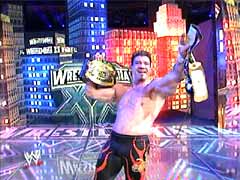 15. EDDIE GUERRERO
Real Name: Eduardo Gory Guerrero Llanes
Aliases: Mascara Magica, Latino Heat; El Gringo Loco; Black Tiger II; El Caliente
Hometown: El Paso, TX
Debut: 1987
Titles Held: AAA World Tag Team (with Art Barr); ECW World Television (2x); IWA Mid-South Heavyweight; LAWA Heavyweight; NJPW Junior Heavyweight Super Grade Tag League Championship (with the Great Sasuke); PWF World Tag Team (with Hector Guerrero); WCW Cruiserweight (2x); WCW United States Heavyweight; WWA International Cruiserweight; WWA World Welterweight; WWA World Trios (with Chavo and Hector Guerrero); WWE Championship; WWE Tag Team (4x – 2 with Chavo Guerrero (Jr.), 1 with Rey Misterio (Jr.), 1 with Tajiri); WWE United States; WWF European (2x)
Other Accomplishments: First WWE United States Champion; Winner of Wrestling Observer Newsletter’s Feud of the Year award in 1994 (with Art Barr vs. El Hijo del Santo and Octagon); Winner of Wrestling Observer Newsletter’s Tag Team of the Year award in 1994 (with Art Barr); Winner of Wrestling Observer Newsletter’s Feud of the Year award in 1995 (vs. Dean Malenko); Winner of PWI Comeback of the Year award in 1999; Winner of PWI Most Inspirational Wrestler award in 2002 and 2004; Winner of Wrestling Observer Newsletter’s Tag Team of the Year award in 2002 (with Chavo Guerrero); Winner of Wrestling Observer Newsletter’s Best on Interviews award in 2005; Winner of Wrestling Observer Newsletter’s Most Charismatic award in 2005; Ranked #2 in the PWI 500 in 2004; Recipient of PWI Stanley Weston award in 2005; Winner of New Japan Pro Wrestling Best of the Super Juniors tournament in 1996; Author of autobiography Cheating Life, Stealing Death; Eleventh WWE Triple Crown champion; Fifth WWE Grand Slam champion; Recipient of El Paso’s Star of the Mountain award in January of 2006; Inducted to WWE Hall of Fame in 2006; Inducted to Wrestling Observer Newsletter Hall of Fame in 2006; Inducted to AAA Hall of Fame in 2008
Eddie Guerrero was born to wrestle. As a matter of fact, it was a given that he would. His father, Salvador Guerrero, had been nicknamed “Gory” due to the bloodbaths that his matches usually degenerated into. To this day, Gory is considered one of the greatest luchadors to ever compete due to his skill at wrestling. Two of the holds that he created, the Camel Clutch and Gory Special, are still used regularly to this day.
Gory’s three older sons wrestled as well. Hector, Chavo, and Mando were not only known for competing in Mexico, however. They also competed regularly in various US promotions.
Eddie, however, was quite a bit younger than his brothers. As a matter of fact, his nephew Chavo Jr. was only three years younger than he was. Eddie has told stories of how he and Chavo Jr. used to wrestle each other at Gory’s home while Gory worked as a promoter in El Paso. After wrestling for New Mexico Highlands University in college Eddie returned home to learn the family business.
In 1987 Eddie began wrestling for CMLL under his real name. Eddie had some success in CMLL, taking the hair of Negro Casas, La Fiera, Ari Romero (twice) and Lobo Rubio. CMLL management later gave Eddie a gimmick change – now he would compete as the masked Mascara Magica. In November 1992 Eddie made lucha history.
Mascara Magica jumped from CMLL to Antonio Pena’s upstart promotion AAA. In his first appearance Magica came out, unmasked, and revealed his true identity as the son of Gory Guerrero. This unprecedented act in a sport where masks were revered made an immediate impact. Eddie soon found himself tagging with El Hijo del Santo as La Pareja Atomica (the Atomic Pair). This was in reference to a tag team that both men’s fathers – Gory and El Santo – had been part of decades earlier.
Eddie’s first taste of true international fame came in 1993 when he began competing for New Japan Pro Wrestling as the second Black Tiger where he battled Tiger Mask III, who unmasked as Koji Kanemoto in 1994. 1994 also saw Black Tiger II and the Great Sasuke win the NJPW Junior Heavyweight Super Grade Tag League Title. Eddie went on to take third place in 1994 and 1995’s Best of the Super Junior Tournaments before winning it in 1996.
Back in Mexico, however, a legendary feud was brewing. Eddie had turned on El Hijo del Santo and allied himself with Love Machine Art Barr as La Pareja del Terror. They also added Madonna’s Boyfriend (Louie Spicolli), Konnan, and Chicano Powers under the stable name of Los Gringos Locos. For his part, Hijo del Santo had chosen Octagon for his partner.
This led to Eddie’s debut on American pay-per-view. At November 6, 1994’s When Worlds Collide, Eddie and Art Barr faced Santo and Octagon in a hair vs. masks match. Eddie and Barr lost and had their heads shaved.
The pay-per-view opened another door for Eddie and Barr. ECW’s Paul Heyman saw the show and immediately contacted the two. It was arranged that they would come in to ECW shortly in order to begin feuding with Public Enemy.
However, tragedy would intervene. On November 23 Art Barr was found dead in his apartment. The cause of death was initially ruled an aneurysm, but later reports changed it to unknown causes. Eddie would begin using Barr’s Frog Splash as a finisher in tribute to his late friend.
Eddie made his ECW debut on April 8, 1995’s Three Way Dance. At the show he defeated 2 Cold Scorpio to win the ECW television title. This led into a feud with Dean Malenko, the man that Scorpio had won the title from. Malenko took the title from Eddie on July 21 and Eddie regained it a week later. Eddie lost the title back to Scorpio on August 25th.
The feud with Malenko ended in a two out of three falls match that wound up as a draw. This would also be Eddie’s last match in ECW as both he and Malenko had signed contracts with WCW.
Late in 1995 Eddie began wrestling in WCW dark matches. His debut was on the October 2 Nitro where he defeated Dean Malenko. The next week he defeated Chris Benoit.
On December 18 Eddie found himself wrestling WCW champion Ric Flair. Flair won the match by pinning Eddie with the Figure 4.
Eddie spent much of 1996 chasing the United States title. In September the title was vacated when then-champion Ric Flair suffered a shoulder injury. A tournament was set up to crown a new champion, and at Starrcade Eddie defeated Diamond Dallas Page to claim the title.
Eddie wound up battling such opponents as the Four Horsemen, nWo representative Syxx, and Scott Norton as he defended his title. At March’s Uncensored his reign came to an end at the hands of Dean Malenko. During the match Eddie also tore one of his pectoral muscles and went onto the shelf for three months.
Eddie returned in June and promptly set his sights on both the Horsemen (after his return attack on Dean Malenko) and Cruiserweight champion Chris Jericho. In August, Eddie had unsuccessful attempts to capture Jericho’s title as well as Mongo McMichael’s United States title.
At September’s Fall Brawl Eddie’s luck changed as he defeated Jericho to become the new Cruiserweight champion. Eddie then focused on Rey Misterio Jr. and wound up losing the title to Rey at Halloween Havoc in a mask vs. title match.
Two weeks later Eddie regained the belt by defeating Rey. He held the belt until the December 29 Nitro when he lost the belt to Ultimo Dragon.
Eddie didn’t waste time. He briefly battled Booker T for the Television title and attacked his own nephew Chavo when Chavo laughed at him following a loss. Eddie defeated Chavo in a match that made Chavo his personal slave.
Eddie soon had Chavo facing old foe Ultimo Dragon. Things got strange at Slamboree. Eddie defeated Dragon even though Chavo had tried to help Dragon. After the match, Chavo began to act as if he was becoming unhinged.
At Bash at the Beach, Chavo and Eddie faced each other in a hair vs. hair match. After Eddie won, Chavo seized the clippers and shaved his own head.
Backstage, problems were cropping up between Eddie and Eric Bischoff that culminated in Eddie demanding his release during a live Nitro. Eddie vanished and returned in October to found the latest New World Order knockoff the Latino World Order.
Eddie wound up feuding with Rey Misterio Jr. When Eddie defeated Rey in a match, Rey was forced to join the LWO.
That angle slammed to a halt on New Year’s Eve, 1998. Eddie was in a serious car accident that nearly killed him. He would be absent for months while he recovered.
Eddie returned to action in July and soon joined Konnan and Rey Misterio Jr. in the Filthy Animals. Billy Kidman would soon join as well and the group would begin feuding with Shane Douglas’s Revolution.
Backstage politics again reared their head, however. In January head booker Vince Russo was stripped of power and sent home. Kevin Sullivan gained the position in his place.
At Souled Out Chris Benoit had won the WCW world title. Benoit had married Sullivan’s ex-wife and feared retribution from Sullivan. In addition, several other wrestlers worried about how they would be used under Sullivan. In the end, Benoit, Eddie, Perry Saturn, and Dean Malenko asked for (and were granted) their releases from WCW.
The January 31 Raw opened with Head Cheese taking on the New Age Outlaws for the WWF World Tag Team titles. Suddenly the camera revealed Eddie, Benoit, Saturn, and Malenko in the front row. The four got involved with a brawl and their WWF tenure had begun.
The four allied with Cactus Jack and it was announced on Smackdown that there would be a gauntlet of three matches to decide whether they got WWF contracts or not.
In the first match, X-Pac defeated Dean Malenko. The second saw Eddie and Saturn vs. Road Dogg and Billy Gunn. Again, things didn’t go as planned. Eddie was still rehabbing an earlier arm injury and landed his frog splash awkwardly enough to damage his left elbow. Dogg pinned Guerrero quickly to end the match and allow Eddie to get medical attention.
On Raw, the four gained WWF contracts anyway by turning on Cactus Jack and allying with D-Generation X.
Eddie’s eye soon landed on Chyna and he began pursuing her. After Wrestlemania the two became a couple. On April 3, Eddie (with Chyna’s help) defeated Chris Jericho to capture the European title.
Eddie kept the title until July when former Radical stable-mate Perry Saturn defeated him to capture the gold.
However, problems were beginning to appear in Eddie’s relationship with Chyna. At Summerslam Chyna won the Intercontinental title. On the September 4 Raw, Eddie defeated Kurt Angle and Chyna to win the belt. Eddie told Chyna it was an accidentally win, but he celebrated behind her back.
While this was going on Eddie was also growing more and more jealous of the fact that Chyna was preparing to pose for Playboy. The relationship finally ended when Chyna caught Eddie in the shower with two of the Godfather’s hos.
Eddie rejoined the Radicalz and they resumed a feud with DX. On the November 23 Smackdown Chyna helped Billy Gunn defeat Eddie for the Intercontinental title.
However, problems were once again brewing backstage. Following his car accident Eddie had grown more and more dependent on painkillers. In late May Eddie was “injured” by Albert to explain his absence as he went to rehab.
Eddie completed his rehab period and was being phased back into the WWF house show schedule while he was also wrestling for Cincinnati’s Heartland Wrestling Association.
On November 9th Eddie fell off the wagon and wound up arrested for DUI. Three days later he was released by the WWF.
Eddie decided to pick himself up and began working independent dates. With dates for Ring of Honor, Australia’s WWA, and IWA Mid-South, Eddie rebuilt his name and his reputation by putting on excellent matches against foes like Low-Ki, Super Crazy, CM Punk, and Rey Misterio Jr.
Eddie’s hard work paid off as he was re-signed in April of 2002. On April 27 he and the Amazing Red teamed to face the Maximos at “A Night of Appreciation.” After the match, the ROH roster came out to pay their respects to Eddie.
On April 1, 2002, however, Eddie had made his return to the WWE by jumping Rob Van Dam after a match on Raw to start a feud. The feud grew as at April 21st’s Backlash PPV Eddie defeated RVD to recapture the Intercontinental title. In May, after retaining the title against RVD, Eddie attacked Stone Cold Steve Austin in a bar. This helped wrap the RVD feud as Eddie lost a ladder match to RVD on May 27th that saw Austin attack Eddie and Chris Benoit come to the defense of his friend. Unfortunately, shortly after the Austin feud started Austin decided to leave the WWE, also leaving Eddie directionless apart from his tag team with Benoit.
In August, Eddie and Benoit were sent to Smackdown. They got off to an incredible start by defeating a team composed of Hulk Hogan and the Rock on their first night.
This also ushered in an era known as the Smackdown Six by wrestling fans. The Six were Eddie, Chavo Guerrero Jr., Edge, Benoit, Kurt Angle, and Rey Misterio. The way the Six earned their name was because whenever fans saw one of these six men in a match, they knew it would be a good one regardless of who their opponent was.
Chris Benoit soon began to turn his focus to Kurt Angle, so Eddie began tagging with his nephew Chavo as Los Guerreros. Vignettes were produced around the team’s catchphrase “we lie, we cheat, we steal.”
In October, the Guerreros were eliminated from the WWE Tag Team title tournament by Angle and Benoit, although a week later they earned another title shot. At Survivor Series, the Guerreros won a triple threat match against the champions and the team of Edge and Rey Misterio to win the belts.
As 2003 dawned, Eddie also was feuding with John Cena and his ally B-2 (the former Bull Buchanan). Eddie finally got the win, but another challenge was already on the horizon.
On February 6, Eddie and Chavo’s reign came to an end at the hands of Team Angle (Shelton Benjamin and Charlie Haas). Eddie and Chavo lost a rematch at Wrestlemania, but were still undeterred. The feud escalated going into May as the Guerreros stole the tag team belts. On the May 3 Smackdown, they returned the belts and stole Kurt Angle’s gold medals.
At Judgment Day on May 18, Eddie was at a severe disadvantage. He and Chavo had earned a rematch against Team Angle, but Chavo had torn his bicep and was sidelined for six months. Eddie selected a new tag team partner – Tajiri – and we had our match. When the dust cleared, Eddie and Tajiri held the belts.
Team Angle kept trying to regain the titles. Finally on July 3 they found Eddie and Tajiri’s weak spot. During the match, Tajiri landed on the hood of Eddie’s lowrider. Eddie freaked out and rushed to check on his car while Team Angle pinned Tajiri to win the match and the belts. After the match Eddie snapped and assaulted Tajiri, finally throwing him through the windshield of the car and turning heel in the process.
With the tag team belts gone, Eddie’s attention shifted to Chris Benoit’s United States title. On July 27 at Vengeance Eddie defeated Benoit (with help from Rhyno) to win the belt.
However, John Cena soon resurfaced and targeted Eddie, even going so far as to steal Eddie’s lowrider (which of course returned Eddie to the face side). Eddie was set to take on Cena in a street fight on the September 11 Smackdown. Eddie won the match after Chavo returned and the two cousins made sure Cena lost.
Eddie became a double champion a week later as he and Chavo once again defeated Haas and Benjamin (now calling themselves the World’s Greatest Tag Team) to recapture the tag team belts.
October would prove to be a bad month for Eddie. At No Mercy, Eddie lost the US title to the Big Show. That same week on Smackdown the Basham Brothers (Doug and Danny) took the tag belts away.
Chavo was furious. He finally told Eddie that he was sick of how Eddie was letting the team down. Eddie tried to apologize and wound up attacked by the Bashams for his trouble.
In January tensions continued to grow between Eddie and Chavo with Kurt Angle having to keep them apart at the first Smackdown of the year. On the 15th, after Chavo had busted Eddie open the week before, Chavo’s father Chavo Sr. appeared on Smackdown. He addressed his brother and apologized for what Chavo Jr. had done. Chavo Jr. then attacked Eddie and his father joined in.
At the January 29 Smackdown things turned around for Eddie as he won a mini-Royal Rumble and was guaranteed a title shot against Brock Lesnar at No Way Out.
Eddie capitalized on his opportunity and won the belt. Soon after, however, Kurt Angle started setting his sights on the champion. This culminated at Wrestlemania XX when Eddie defeated Kurt Angle to retain the belt.
Eddie soon ran roughshod over Smackdown with his trademark style. He defeated the Big Show in a loser leaves the WWE match. However, a feud with the rich JBL beckoned, especially after Bradshaw began insulting Eddie’s Hispanic heritage.
At Judgment Day, Eddie retained the title over Bradshaw in a bloodbath. The match was so bloody that after the match Eddie reportedly went into shock and had to be rushed to the hospital.
At the Great American Bash a month later Bradshaw captured the belt from Eddie. Their feud ended with a cage match that Bradshaw won with help from Kurt Angle. This exposed that an injury of Angle’s that had confined him to a wheelchair as fake. This caused Vince McMahon to strip Angle of his duties as Smackdown GM.
Eddie and Angle feuded with Eddie even going so far as to auction off the contents of Angle’s office. Angle retaliated by having Luther Reigns in his corner as backup. On the September 16 Smackdown Eddie got his own backup as the Big Show returned and began feuding with Angle.
After this, Eddie began tagging with Rey Misterio. On February 20, Eddie and Rey defeated the Basham Brothers to win the belts.
However, Chavo soon began getting into Eddie’s head to try and turn Eddie against Rey. After a few miscues, Eddie wound up challenging Rey to a match at Wrestlemania that, he claimed, was only in the spirit of competition.
At Wrestlemania, Rey defeated a notably-irritated Eddie. Things only grew worse following, as both partners would attempt to help out during a match only to wind up costing their partner the match.
Finally things came to a head on April 28. MNM captured the tag team titles by pinning Rey after Eddie refused to tag in. The next week Eddie assaulted Rey and then began pinning opponents (including Jimmy Jacobs) after pulling Rey’s mask over their heads.
As the feud went on, Eddie kept finding himself unable to defeat Misterio. Finally Eddie said that he would reveal a secret of Rey’s past – something that had Rey doing whatever Eddie wanted to prevent that.
This culminated at the Great American Bash. Eddie lost a match and the stip was that Eddie could never reveal the secret.
However, that didn’t mean much to someone whose motto was to lie, cheat, and steal. Eddie promptly revealed the secret anyway – that he was the father of Rey’s son Dominic.
This led to Eddie filing paperwork to take custody of Dominic. At Summerslam, Rey defeated Eddie in a ladder match to retain custody. The feud ended on September 9 when Eddie defeated Rey in a cage match.
The next week Eddie found himself promoted to the #1 contender’s spot to Batista’s world heavyweight title. At No Mercy Batista defeated Eddie, but Eddie defeated Randy Orton by DQ to again become the #1 contender.
On November 13, 2005 Eddie Guerrero passed away from heart failure. His nephew Chavo had attempted to check on him and discovered the body.
Eddie Guerrero’s contributions to professional wrestling will never be forgotten. He carried the banner of his family high throughout his career.
Although Eddie’s career had its highs and lows, he never gave up. At his career (and life’s) lowest point, he focused on overcoming his obstacles and returning to the career he loved. His heart and determination drove him to success and one of the WWE’s highest prizes.
His sudden death only cemented his place as one of the most athletic and beloved competitors in wrestling. And his tradition lives on as Chavo Guerrero Jr. has adopted the frog splash as one of his trademark moves in honor of Eddie, just as Eddie had done for Art Barr.
Eddie has done what few other wrestlers have done. He successfully crossed over from lucha libre to American pro-wrestling. He worked in each of the Big Three (WWF, WCW, and ECW) and held titles in each. When he passed away, it was acknowledged literally worldwide from the US to Mexico to England (where Vampiro paid tribute to his friend). Even TNA, where Eddie had never worked, paid tribute to him before their pay-per-view that night. The WWE’s next week of programming was devoted solely to paying tribute to him.
Eddie also had that special knack to take a ridiculous gimmick (such as one where he was working to earn his GED) and was still able to get it over with a crowd with his sheer charisma and personality. For that, Eddie has earned his place not only in this top 100 list, but also in wrestling history itself. 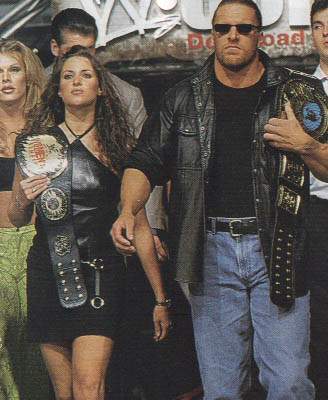 14. TRIPLE H
Real Name - Paul Levesque
Aliases - Jean-Paul Levesque; Terra Ryzing; Hunter Hearst Helmsley
Hometown - Greenwich, Connecticut
Debuted - March, 1992
Titles Held - IWF Heavyweight; WWF/WWE Championship (7x); WWF European (2x); WWF/WWE Intercontinental (5x); WWF Tag Team (with Stone Cold Steve Austin); WWE World Heavyweight (5x)
Other Accomplishments - First WWE World Heavyweight champion; 1997 WWF King of the Ring; Winner of 2002 Royal Rumble; Seventh WWF Triple Crown champion; Second WWF Grand Slam champion; Winner of Wrestling Observer Newsletter award for Feud of the Year in 2000 (against Mick Foley), 2004 (vs. Shawn Michaels and Chris Benoit), and 2005 (vs. Batista); Winner of Wrestling Observer Newsletter’s Wrestler of the Year award in 2000; Ranked #1 on the PWI Top 500 list in 2000; Winner of Wrestling Observer Newsletter’s Most Overrated award for 2002, 2003, and 2004, Winner of Wrestling Observer Newsletter’s Readers’ Least Favorite Wrestler award for 2002, 2003, and 2004; Winner of Wrestling Observer Newsletter’s Worst Feud of the Year award in 2002 (vs. Kane) and 2006 (with Shawn Michaels vs. Vince and Shane McMahon); Winner of Wrestling Observer’s Worst Match of the Year award in 2003 (vs. Scott Steiner); Winner of PWI Most Hated Wrestler of the Year award in 2003, 2004, and 2005; Winner of PWI Feud of the Year award in 2004 (vs. Chris Benoit); Winner of PWI Match of the Year award in 2004 (vs. Shawn Michaels and Chris Benoit); Inducted to Wrestling Observer Newsletter Hall of Fame in 2005
For Paul Levesque it has been a long, storied road on his way to wrestling royalty. He started out as humble journeyman like so many in the wrestling business do. He found training under the very capable hands of Killer Kowalski at a school that has ended breeding more than a handful of legitimate wrestling stars. Right from the beginning he had all the cosmetic characteristics that could theoretically make him a star in the industry: he was tall, athletically build and had a full head of blond hair.
WCW
It wasn’t long before he made his way to World Championship Wrestling and got his first taste of national television exposure. He debuted under the awful guise of Terra Ryzing, but went nowhere fast.
Not surprisingly that gimmick didn’t last long, and he soon transitioned into a preening Frenchman named Jean-Paul Levesque, an obvious play off of his real name. He was one of the few young stars making a name for himself in WCW in 1994, especially as Hulk Hogan and his influx of former WWF talent arrived on the scene. His most notable outing was a 20 minute opening match affair against fellow new sensation Alex Wright at Starrcade ‘94.
The plan was then to pair up Levesque with Lord Steven Regal in an aristocratic tag team, and the pair did a few on-air gigs together in early ‘95, but Levesque knew he wanted more than to be mired in a mid-card tag team and left WCW, with Regal blessing nonetheless.
The American Blueblood
It wasn’t too far into 1995 when vignettes for “The American Blueblood” Hunter Hearst-Helmsley began appearing on WWF television. It was essentially a take off on the same Jean-Paul Levesque character he was portraying in WCW. At the time the one-note high society gimmick seemed like it would easily get lost in the shuffle of the gimmick-heavy WWF landscape that featured evil grunge rockers, evil fitness gurus and friendly garbage men, but fortunately for HHH he was given the token newcomer undefeated streak that lasted for many months. While working his way through the company he had made backstage friends with veterans like Shawn Michaels, Kevin Nash and Scott Hall as part of the now-infamous backstage Kliq. Politically it was a good move until the four men broke kayfabe and embraced in the middle of the ring in Madison Square Garden on Hall and Nash’s last night with the company. With Hall and Nash leaving and Michaels as WWF Champion, it was Helmsley who took the brunt of the punishment. He lost in the first round of King of the Ring ’96 after apparently being penciled in to win the whole tournament. In hindsight KOTR ’96 brought us Austin 3:16 so maybe it wasn’t such a bad thing. He jobbed to anything under the sun until October ’96 when he beat Marc Mero for the Intercontinental Championship. His reign was decent, but not spectacular and he dropped the belt in February ’97 to a very young rookie named Rocky Maivia in what ended up being the first in their myriad of meetings. I don’t think anyone could have imagined how intrinsically those two men would become linked over the following years.
By this point he was safely nestled in the mid-card and ended up feuding with Goldust in an angle that introduced the world to Chyna. He then won the King of the Ring in ’97 and embroiled in a summer-long rivalry with Mankind that would set the stage to their more epic matches years later. It was this feud with Mankind that led to a seemingly random RAW main event tag where Hunter teamed with Shawn Michaels to take on Undertaker and Mankind.
DeGeneration X
That random pairing soon morphed into the makings of one of the most influential stables of all time – DeGeneration X. By this point Hunter began dropping a lot of his blueblood mannerisms and started to let his joking, wise guy persona shine through. Michaels began calling him “Triple H” on screen, which quickly morphed into his full-time ring name as a way to get away from his full-length cumbersome moniker. He worked as Michaels’ lackey until the day after WrestleMania XIV at which point he declared himself the leader of the new DX army, bringing in X-Pac, Chyna and The New Age Outlaws to pad out the roster.
Quickly they become the second or third hottest act in the WWF and they spent 1998 waging war and trading Championships with The Nation, which was now led by a re-invented Rocky “The Rock” Maivia. Their goofy gimmicks and wild behavior was revolutionary for its time. Along with Stone Cold Steve Austin, the Triple H-led DX was the major catalyst and driving force behind the wildly successful “Attitude” era, as their skits, pranks and in-ring antics pushed the envelope for what was allowable on WWF television.
By 1999 they had turned their attentions to Mr. McMahon’s Corporation, which also included Triple H’s number one nemesis The Rock. At WrestleMania XV, HHH abandoned DX and joined The Corporation, putting him and Rock as allies for the first and probably only time in their careers. By this point, Helmsley had started to bulk up and started to look like a superstar that the WWF loves to push. He had one more match with Rock for old time’s sake at Fully Loaded in July before transitioning into the main event. He met Steve Austin and Mankind in a main event triple threat WWF Championship match at SummerSlam ’99, which was followed by the next night on RAW where Triple H pinned Mankind to win his first WWF Championship.
The Game
Keep in mind that at this point, Triple H was still a star on the rise and his winning of the WWF Championship introduced a new star into the main event scene. Fans backlashed and claimed that he wasn’t ready and that he was being over-pushed, but in my opinion he looked like he belonged. He gained momentum through the fall of ’99 and finally became the mega-heel he was destined to be when he interrupted the wedding of Test and Stephanie McMahon in December ’99. He announced he had already married a drugged up Stephanie at a drive-through Vegas wedding chapel was now heir apparent to the McMahon dynasty. He battled Vince McMahon in the main event of Armageddon later that month, pulling out the victory thanks to interference from Stephanie. She showed that she was in on the ruse the whole time, and the McMahon-Helmsley Era was born. Triple H and Stephanie ruled the WWF through the first part of 2000 while he was finally coming into his own as an in-ring performer. He had two star making performances with Mick “Mankind” Foley in early 2000 that “retired” Foley and made Triple H legitimate in a lot of fans’ eyes. He followed that up by being the only heel to walk out of WrestleMania as WWF Champion, and continued to run roughshod over the roster with his “Fac-gime.”
He was a solidified main player of the main company at the time and headlined cards against men like The Rock, Undertaker, Steve Austin, Chris Jericho, Kurt Angle and others. In the spring of 2001 he paired up with Steve Austin to form the Two-Man Power Trip, picking up a Tag Championship and pair of Intercontinental Titles. Unfortunately during an absolutely fantastic May 2001 match with Austin against Chris Jericho and Chris Benoit, HHH tore his quad clean off the bone and would be required to be out of action for a long period of time.
By this point his on-air relationship with Stephanie McMahon had run its course, but behind the scenes the pair had also become a couple, which obviously brought an end the real life and on-screen partnership with Chyna. In the year and a half since HHH had been on top he had become overexposed and it was nice to have him off our television screens for a little while. Plus on the bright side for Triple H, he got to miss out on the abysmal “InVasion” storyline.
The Cerebral Assassian
When he returned in time for the 2002 Royal Rumble, he received a homecoming fit for, well, uh king. He got a return video set to U2’s “Beautiful Day” and his return on the January 7, 2002 was hyped as “can’t miss television.” Unfortunately when he came back he was the bulkiest he had ever been, obviously using the time off nursing his leg injury to work on the top half of his body with what I’m sure was a combination of the best workout equipment known to man and a dose of “modern medicine.” He won the Royal Rumble match to no one’s surprise but his extra bulk and the lack of mobility from his ring rusted-leg caused him to be a step down from the worker he was during his glory days of 2000. That, combined with the knowledge of his now well-known relationship with the boss’ daughter, caused the start of a serious backlash from the fans against Triple H. His complete burial of Chris Jericho en route to their Undisputed Championship match at WrestleMania X8 didn’t help any matters either.
He toiled (well, as much as you can toil while still being at the top of the card) through the first few months of the brand expansion until it was decided that the RAW brand would now be the “Triple H show.” He brought Shawn Michaels out of a four-year retirement and the pair put on a war at SummerSlam ’02. Then when Brock Lesnar left for SmackDown! as Undisputed Champion, it was decided that the belts would be un-unified and Triple H would carry the mantle for RAW as World Heavyweight Champion. This is where the Triple HHHate gets strong. He tore through Kane, Rob Van Dam, Scott Steiner and Booker T through the end of 2002 and into 2003, stopping only to trade the World Championship with his buddy Shawn Michaels and bury the Intercontinental Championship.
Evolution
In the summer of 2003 he, alongside his manager and mentor Ric Flair, formed a super group to be proud of called Evolution. He (the present), Flair (the past) and Dave Batista & Randy Orton (the future) formed a heel group unlike one seen since the glory days of the Four Horsemen (as was Triple H’s design.) As 2003 closed Triple H was World Champion, Orton was Intercontinental Champion and Flair & Batista were Tag Champs which provided a beautiful visual that symbolized their excellence.
As 2004 dawned he re-ignited his feud with Michaels after a stellar World Championship match they had on the last RAW of 2003, live from Michaels’ hometown in San Antonio. Along the way Chris Benoit was added to the mix and the trio absolutely tore the house down in the main event of WrestleMania XX in what has been called one the greatest matches not only in WrestleMania history, but in wrestling history in general. (Of course that point is now fiercely contested thanks to the actions of one Mr. Benoit.) Triple H stayed in the background for a few months until Randy Orton won the World Championship from Benoit, at which point it was time to regain his throne. He kicked Orton out of Evolution and kicked off a feud that was supposed to culminate at WrestleMania 21 and make Randy Orton the company’s next great hero. Unfortunately the turn and subsequent follow-up were botched, as Orton didn’t play a convincing face and Triple H looked dominant at every turn. The pair blew off the feud at Royal Rumble 2005 to make room for Batista, who was doing the slow burn face turn the right away. At WrestleMania 21, Triple H put Batista over clean as a whistle in the main event of the show, and then subsequently lost two rematches to him and faded off of television through the summer and early fall.
It was a refreshing change to have Hunter off of television for a few months, and when he returned he turned on his old mentor Ric Flair. They engaged in an old-school blood feud culminating in a Last Man Standing match at Survivor Series 2005. He kept himself out of the title picture for a few months and by the time WrestleMania XXII rolled around it seemed inevitable that Triple H would take out the new “it” guy John Cena to regain his throne. To the surprise of most HHH put Cena over clean as well (making that three WrestleMania main event jobs in a row) and faded away from the main event.
DeGeneration X v2.0
He paired up with Michaels to reform DeGeneration X, and they now played it over the top, like a comedy act, as opposed to the ground-breaking edginess they displayed eight years earlier. They spent the summer and fall feuding with The McMahons and The Spirit Squad, burying both groups at every turn. They finally found equal opposition in late 2006 when Edge and Randy Orton paired up to form the poorly named “Rated RKO.” The two duos battled through the end of the year until New Year’s Revolution ‘07 when Triple H tore his quad (the other one this time) during a tag team match between the four men.
The King of Kings
It was same song, different verse as he was forced to sit out months of in-ring action (including an anticipated rematch against John Cena at WrestleMania 23). He made his grandiose return at SummerSlam 2007, squashing King Booker in short order to prove who the true “King of Kings” was. He learned his lesson this time as he came back lighter and leaner, and looked in the best natural shape he had in years.
A freak injury to John Cena allowed Triple H to contend for the WWE Championship at No Mercy in October 2007. He held the belt for all of two hours, defeating Randy Orton for the vacant Championship at the beginning of the night and defending against Umaga later on before dropping the belt back to Orton in the main event in a Last Man Standing match. Smarks claimed that Triple H just did three PPV matches in one night as an “F-U” to TNA and Kurt Angle, who just wrestled in three Championship matches in one night at TNA’s September PPV. That two hour reign was the first time Triple H had been WWE Champion since March 2005. I think it’s safe to say he earned some of his smark credibility back for being out of the Title picture for so long. After all he is one of those guys that doesn’t need the belt anymore to be over.
His almost sure-fire Royal Rumble victory was thwarted when John Cena made a surprise return and claimed victory. But after an Elimination Chamber victory in February, Triple H was set to challenge for the Championship at WrestleMania once again. This time everyone and their mailman’s dog was sure he was going to walk out as Champion, but once again lost, this time in a triple threat against Cena and Orton. Finally a month later at Backlash, Triple H beat Orton in a rematch to their Last Man Standing bout and came out with his twelfth WWE/World Championship.
Since then he has done the unthinkable, and moved himself and the WWE Championship to the SmackDown! brand after it became a running punch line for years that “Triple H wouldn’t work Tuesdays.” As I write he this has become a flagship for the Friday night brand as they prepare for their move to MyNetworkTV and try to bring balance back between the RAW and SmackDown! brands.
The man behind the gimmick
Okay, now that all of that is out of the way, let’s talk about Triple H. Here is a guy who has drawn more hatred from both marks and smarts alike than almost anyone else in history. He had the uncanny ability to not only draw heat for being an effective heel in the ring but also for his noted backstage relationships. It is terribly, terribly clichéd to say this, but Triple H really has “evolved” over his tenure on the national spotlight. After starting out as an indistinguishable long-haired heel, he transformed into the tried-and-true aristocrat gimmick that’s an easy heat-getter. The gimmick finally gave way to an actual character as he became the wise-ass guy that everyone loved into hate and finally just loved. From there he became the archetypical brute heel who used power, force and those around him to climb his way to the top. He sidled up with the boss’ daughter and became the bad guy of all bad guys, and then spent three years proving to everyone (including himself) that he deserved to be the top dog. When he finally was comfortable in his position he was able to comfortably back away and share the spotlight.
Even after he spent over two years away from the spotlight and has now taken a move to the supposed “b-show” he still draws a lot of ire from the fans. I myself haven’t been a big Triple H fan since his glory days in 2000. But does he deserve to be this high on the list? Absolutely. Fact is he is at the top of his profession and has been for years. Sure he married himself into the corporation, but I really think the guy would’ve made it to the top of the industry regardless. Besides just think of the spiral a potential divorce could have on his career (not that I wish ill will to a happy couple.) He was a student of the game, constantly improved until he reached the top level and had all the physical and cosmetic tools to be a superstar. He paid his dues and suffered his punishment after the “Curtain Call” and started his rise to the top before he began “sleeping with the enemy.”
Did he have some bad years where he buried everything under the sun? Another absolute. Anyone he came in contact with-Kane, Van Dam, Steiner, Booker, Hurricane, Nash, Goldberg, Orton-you name ‘em and they felt the wrath of Hunter. There has never been a more dominating heel champion in wrestling history. Even when his mentor Flair carried the NWA as a heel, he was always giving the good guys their days in the sun. Ask Booker and Van Dam where their days in the sun went.
However the fact is he is a superstar. Even as a heel he had the coolest entrance, with the best light show, theme music, in-ring poses and taunts and always had the right camera angles that put him in the best light possible. Plus Jim Ross has saddled him with more nicknames than Funaki has won televised matches. How could you not get over with all of that? All casual fans had to do was take one look at his pre-match theatrics and his physical appearance and they could see they were watching a superstar.
Triple H made it to the top of his industry by using every available resource around him. Who can blame for that? I know I would have done the same thing myself.
|
|
|
|
|
Joined: Jun 2002
Posts: 19,546 Likes: 1
living in 1962 15000+ posts
|
|
living in 1962 15000+ posts
Joined: Jun 2002
Posts: 19,546 Likes: 1 |
 13. CURT HENNIG
Aliases - Mr. Perfect
Hometown - Robbinsdale, Minnesota
Debuted - January 30, 1980
Titles Held - AWA World Heavyweight; AWA World Tag Team (with Scott Hall); FOW Heavyweight; i-Generation Heavyweight (2x); MECW Heavyweight; NWA Pacific Northwest Heavyweight; NWA Pacific Northwest Tag Team (3x; 1 with Larry Hennig, 1 with Buddy Rose, 1 with Pat McGhee); WCW United States; WCW World Tag Team (with Barry Windham); WWC Universal Heavyweight; WWF Intercontinental (2x)
Other Accomplishments - Winner of PWI Most Improved Wrestler of the Year award in 1987; Winner of Wrestling Observer Newsletter Most Improved award in 1983; Ranked as #9 on the PWI 500 list in 1993; Inducted to WWE Hall of Fame in 2007
Curt Hennig was surrounded by the wrestling business from birth. Son of the legendary Larry “the Axe” Hennig, Curt was also surrounded by future wrestlers while still a student at Robbinsdale High School. Curt graduated with Dean Peters (WCW’s Brady Boone and All Japan’s Fire Cat), Tom Zenk, and Richard Roode (Rick Rude). In addition, Barry Darsow (Demolition Smash), John Nord (the Berserker), and Nikita Koloff were also attending the school.
After graduation, Curt headed to the University of Minnesota where he played on the football team. After a knee injury, he wound up consulting Verne Gagne for assistance with rehab.
In January of 1980, Cool Curt Hennig made his AWA debut. Hennig soon branched out. In the WWF, he wound up as an “enhancement talent” where he was also teamed with Eddie Gilbert regularly.
In 1982, Hennig headed to Don Owen’s Pacific Northwest territory. There he won his first gold on April 27, 1982 as he and his father Larry defeated Rip Oliver and Matt Borne to capture the territory’s tag team titles. The former champions reclaimed the belts on May 1, but it would be the first title of many.
Hennig’s first singles title win was in May of 1983 as he defeated Sheik Abdullah Ali Hassan to win the heavyweight title. He held this until September, when he was defeated by the Dynamite Kid.
Following his defeat by the Dynamite Kid, Hennig returned to the tag ranks where he and new partner Playboy Buddy Rose defeated Rip Oliver and the Assassin to begin his second reign as a tag team champion. Again, the reign was short – one week later they were defeated by the Dynamite Kid and the Assassin.
Hennig refused to accept defeat. He turned to another new partner in Pat McGhee and they claimed the gold on December 23. This time they held the titles until February when they were defeated by old foes the Assassin and Rip Oliver.
As 1984 dawned, Hennig returned to the AWA. He again tagged with his father and when Larry decided to step back from the ring, he was paired with another new partner named Scott Hall.
The pairing of Hennig and Hall worked and in January of 1986 they defeated Jimmy Garvin and Steve Regal to capture the AWA world tag team titles. They held them until May, when they were defeated by Buddy Rose and Doug Somers (who would shortly begin their legendary feud with the Midnight Rockers).
Hennig spent his time focusing on his singles career. Finally, at the second Superclash in 1987, Hennig reached the top of the mountain by defeating Nick Bockwinkel to claim the AWA world heavyweight title (with help from Larry Zbyszko and a roll of quarters). The belt was held up but Hennig did receive the title eleven days later.
Hennig was a dominant champion, holding the title for over a year. In May of 1988 he lost the title to Jerry Lawler at Superclash 3.
After losing the belt, Hennig headed East and signed with the World Wrestling Federation. Here he gained the moniker that he’s best known as today – Mr. Perfect. Videos were shot of him competing in various sports and showing how perfect he was at them by performing feats such as sinking a difficult putt, bowling a perfect game, and hitting a home run. In addition, real athletes were called in to “guest star” (such as Wade Boggs for the baseball video.
Once he debuted, Hennig would continue his dominance as he was undefeated for over a year. It was near the end of 1989 when the streak was broken. With the Genius as his manager, Perfect had begun feuding with Hulk Hogan. At Saturday Night’s Main Event Perfect escalated the feud to a new level as he stole Hogan’s world title belt, brought it backstage, and smashed it with a hammer.
Hogan repaid Hennig with Perfect’s first pinfall loss.
After losing to Brutus Beefcake at Wrestlemania VI, it was time for a change. The Genius was replaced by Bobby Heenan and Perfect captured the Intercontinental title in April by defeating Tito Santana in the finals of a tournament. (The title had been vacated after the Ultimate Warrior had defeated Hogan for the world title at Wrestlemania.)
During this time, Perfect continued to battle Hogan while he defended the IC belt from all comers. He held it until August, when he was defeated by the Texas Tornado (Kerry Von Erich) at Summerslam.
Perfect refused to let his gold go and recaptured it during a rematch in November. Perfect remained the champion in August of 1991 (with a little help from Ted DiBiase). He suffered a back injury during a match and agreed to Vince McMahon’s request that he wrestle one more match to drop the title. He did so on August 21 to Bret Hart.
While sidelined, Perfect found a new role. He became executive consultant to new WWF signee Ric Flair. Working with Flair’s manager Bobby Heenan, Perfect made sure that Flair won (and kept the belt). During this time Perfect was also working as a commentator.
However, problems erupted in 1992. After Hennig accepted an offer from Randy Savage to be on his team during the Survivor Series match, Bobby Heenan went ballistic on Prime Time Wrestling. After Heenan told Perfect he wasn’t at that level of wrestling anymore, he slapped Perfect in the face. Perfect responded by grabbing Heenan and emptying a pitcher of water over his head.
At Survivor Series, Perfect and Savage defeated Flair and Razor Ramon by disqualification.
Perfect continued his pursuit of Flair. At the 1993 Royal Rumble Perfect was responsible for Flair’s elimination. The next night he defeated Flair in a “loser leaves the WWF” match that sent Flair packing back to WCW.
Perfect soon found himself in a feud with Lex Luger that culminated at Wrestlemania. Luger defeated Perfect (although Perfect’s feet were in the ropes). After the match, Perfect chased Luger backstage and began attacking him only to get jumped by Shawn Michaels.
Perfect continued feuding with Michaels throughout the summer and finally defeated him at Summerslam (thanks to interference from Diesel). During this time Perfect and Bret Hart had also squared off again in the King of the Ring tournament in a match that saw Bret advancing.
Perfect vanished from the company soon thereafter.
Perfect returned for Wrestlemania the next year. He found himself as the guest referee for a match between Yokozuna and Luger. Yokozuna won after Hennig DQ’d Luger for putting his hands on him.
Shortly thereafter Perfect’s back problems became an issue once again and he again disappeared.
He returned again to his commentary role at the 1995 Survivor Series. After months of commentary, it was announced that Perfect would return to the ring in October of 1996. The night of the match Perfect was attacked backstage by Hunter Hearst Helmsley. Helmsley challenged Marc Mero for the Intercontinental title and won with help from Perfect.
Perfect began serving as Helmsley’s manager, but contract disputes with the WWF (reportedly over his insurance payouts for his back injury) led to Hennig leaving the company within weeks.
At the 1997 Bash at the Beach, Curt Hennig made his WCW debut as Diamond Dallas Page’s mystery partner against Randy Savage and Scott Hall. Hennig turned on Page and the two began feuding. The feud ended when Hennig defeated Page at August’s Road Wild.
While the Page feud was going on, Hennig was being heavily scouted by both the Four Horsemen and the New World Order. On August 25, Hennig was called out to the ring. Arn Anderson was announcing his retirement from in-ring competition and offered Hennig his spot in the Horsemen. As a tearful Ric Flair looked on, Hennig accepted and said that it would be an honor.
This led to Fall Brawl, where the Horsemen would face the nWo in a War Games match. The Horsemen were represented by Flair, Hennig, Chris Benoit, and Steve McMichael while the nWo representatives were Kevin Nash, Syxx, Buff Bagwell, and Konnan. During the match Hennig slammed the cage door closed on Flair’s head to end his affiliation with the Horsemen.
Hennig’s feud with the Horsemen only grew more heated as he defeated McMichael days later to capture the United States title. For months Hennig continued to defeat Ric Flair as the Nature Boy tried to take the belt from him. In addition, Hennig gained a manager – Rick Rude. Hennig finally lost the belt to Diamond Dallas Page at Starrcade.
When the nWo split, Hennig and Rude decided to ally themselves with Kevin Nash’s Wolfpac. However, Hennig suffered a knee injury and asked Konnan to replace him in a match at the Great American Bash against Goldberg. Konnan lost, so Hennig and Rude attacked him, switching sides to Hollywood Hogan’s nWo Hollywood in the process.
Hennig finally faced Goldberg at Bash at the Beach and lost. A loss to Dean Malenko followed at Fall Brawl.
During the year, Hennig’s knee injury had been growing steadily worse. In September, both Hennig and Rude were removed from television.
Hennig returned to TV alone at Starrcade, where he was instrumental in Eric Bischoff’s victory over Ric Flair. As thanks, he was almost immediately kicked out of the New World Order.
Hennig didn’t take long to rebound. He soon found himself paired with Barry Windham as a tag team. At Superbrawl in February, Hennig and Windham defeated Chris Benoit and Dean Malenko to win the WCW tag team titles. They lost the belts back to Benoit and Malenko the following month at Uncensored.
In June, Hennig returned to the spotlight as he, Windham, Kendall Windham, and Bobby Duncum Jr. joined forces to become the West Texas Rednecks. The Rednecks were assembled to feud with rapper Master P, who was intended to be the face in the feud.
The problem with the feud was that WCW had again misread their audience, who almost immediately tried to turn the Rednecks face while they booed Master P and his No Limit Soldiers. When the feud fizzled, WCW cut ties with Master P and started putting the Rednecks into feuds with the Horsemen, Harlem Heat, and the Filthy Animals. WCW also added another member to the group – Curly Bill (AKA Vincent AKA Virgil AKA Mr. Jones).
After the Rednecks broke up, Hennig soon found himself feuding with Shawn Stasiak. Stasiak was now calling himself “Perfect-Shawn” and was coming out to a knockoff of the old Mr. Perfect theme. Stasiak won the feud and Hennig began coaching him before leaving WCW in mid-2000.
After WCW shut down Hennig joined Jimmy Hart’s X Wrestling Federation. He participated in the XWF’s tapings, even facing Hulk Hogan in what Hogan felt could be his last match. The XWF almost immediately fizzled out.
In 2002, the WWF began announcing that Mr. Perfect would return at the Royal Rumble. True to the promises, Hennig returned as Perfect and was one of the last three combatants. Although the appearance was intended as a one-night deal, Hennig’s stellar performance combined with the red-hot crowd convinced the WWF to offer him a full contract.
Hennig’s stay did not last long as he was released in May following an overseas tour.
In October, Hennig made his debut for NWA-TNA by pinning NWA World champion Ron Killings in his debut match. Hennig chased Killings for a few more weeks before he found himself in a feud with Jeff Jarrett.
Again, Hennig’s stay would be cut short as he passed away on February 10, 2003 at the age of 44.
In 2007, Hennig was inducted into the WWE Hall of Fame. In addition, Hennig’s son Joe and daughter Amy are both currently training to become wrestlers like their father.
Although his list of titles is surprisingly short, Curt Hennig’s contributions to wrestling cannot be understated. He held the AWA world title for over a year and was one of the company’s shining stars at that time. While he held the Intercontinental title, it was during a time in the WWF’s history that the IC belt went to the best all-round worker in the company. Hennig has been praised by wrestlers such as Bret Hart and Ric Flair as one of the greatest wrestlers who ever lived.
But Hennig’s talent wasn’t only in the ring. He was also excellent on the microphone. This not only served him well while working in the ring, but also allowed him to make the transition to commentating when his physical condition wouldn’t allow him to compete.
Hennig was a true all-rounder, who has definitely more than earned his place in this list of the top 100 wrestlers of the modern era.  12. THE UNDERTAKER
Real Name - Mark Calaway
Aliases - Kane the Undertaker; The Punisher; Mean Mark Callous; Texas Red; The Commando; Punisher Dice Morgan; Master of Pain
Hometown - Austin, Texas
Debuted - 1984
Titles Held - USWA Unified World; WCWA Texas Heavyweight; WCW Tag Team (with Kane); WWF/WWE Championship (4x); WWF Hardcore; WWF Tag Team (6x - 1 with Stone Cold Steve Austin, 2 with the Big Show, 1 with the Rock, 2 with Kane); WWE World Heavyweight (2x)
Other Accomplishments - Winner of 2007 Royal Rumble; Sixteen year undefeated streak at Wrestlemania; Winner of PWI Feud of the Year award in 1991 (vs. Ultimate Warrior); Winner of PWI Match of the Year award in 1998 (vs. Mankind - Hell in a Cell); Ranked #2 in the PWI 500 in 2002; Winner of Wrestling Observer Newsletter Best Gimmick Award from 1990-1994; Winner of Wrestling Observer Newsletter Best Heel award in 1994; Winner of Wrestling Observer Newsletter Feud of the Year award in 2007 (vs. Batista); Winner of Wrestling Observer Newsletter Most Overrated award in 2001; Winner of Wrestling Observer Newsletter Readers’ Least Favorite Wrestler award in 2001; Winner of Worst Worked Match award in 2001 (with Kane vs. Kronik); Inducted into the Wrestling Observer Newsletter Hall of Fame in 2004
In that regard he stands in a class all alone. All of his peers have their share of detractors. Hogan has been called untalented and egomaniacal. Flair has been painted as a “belt mark” and a backstabber. Michaels and Hart are labeled whiners and crybabies. Triple H is accused of marrying into his success. Goldberg and Warrior were thought to be only in it for the money. Austin is ridiculed for taking his ball and going home when things didn’t go his way. The Rock is chastised for not “giving back to the industry.” Yet the Undertaker has seen them all come and go. He’s stood tall through all the changes over the better part of the past two decades, and has lived to tell a magnificent story.
His career started like so many of his contemporaries in the 1980s. He earned his stripes working through the regional territories of the day, primarily in Texas and Tennessee, under a variety of gimmicks like Texas Red, The Punisher and The Master of Pain. He eventually hit the “big time” at the very end of the decade when he joined WCW under the guise of “Mean” Mark Callous and replaced an injured Sid Vicious as one of The Skyscrapers until Danny Spivey left the company. He then paired up with Paul E. Dangerously as the token mid-card heavyweight “jobber to the stars,” not unlike what we see out of someone like Mark Henry or Snitsky today. His most notable match was a loss to United States Champion Lex Luger at Great American Bash ’90, while his only notable victories came over smaller men like Flyn’ Brian and Johnny Ace. (As a side note, look back at a match between Mark Callous and Johnny Ace with Paul E. Dangerously on the outside, and just try to comprehend the heights all three of those men have risen to in the industry. It’s something no one could have predicted.)
Unfortunately his pale skin and shock of red hair didn’t exactly give him the look of a main event superstar, and WCW didn’t really know what to do with him. They released him in September 1990, but he wouldn’t remain unemployed long.
When “Million $ Man” Ted DiBiase began touting a mystery partner for his “Million $ Team” at Survivor Series ’90 no one really knew what to expect. It was an era where the Internet was nonexistent and word didn’t really spread all that fast in regards to wrestling news. A young mark (much like me) couldn’t see beyond the logical choices of Dustin Rhodes, Virgil or Randy Savage. Needless to say no could have expected what we got with The Undertaker. In his initial match he captivated the audience in a way so few ever have. His look, style and mannerisms immediately made him stand out from the rest of the roster. Despite what seemed like a hokey, one-note, supernatural, dead guy gimmick, he caught on with fans and management alike, and he hasn’t looked back since. It is mind boggling to think that his upper-mid card to main event push started immediately upon his debut and really hasn’t subsided once in over seventeen years.
Without getting into a blow-by-blow recap of the man’s storied career, it’s easy to see that his stats are truly remarkable.
His now unrivaled WrestleMania unbeaten record started humbly by defeating “Superfly” Jimmy Snuka in a throwaway match on the undercard of WrestleMania VII. That streak has now extended to 16-0, with victories over all four principal members of Evolution, three World Championship victories and two legit show-closing main events.
His reputation as the “giant killer” or “beast slayer” has found him in truly abysmal matches with far less talented super heavyweight lugs like Kamala, Giant Gonzalez, King Kong Bundy, Yokozuna, King Mabel, Sid, Heidenreich, Mark Henry, The Great Khali, and others that have been blocked from memory. Yet somehow he’s come out of every one of those rivalries with his integrity and credibility in tact.
He has also endured some of the most ridiculous and over-the-top stunts ever pulled by WWE, including the infamous ten-on-one Casket match beat down from Royal Rumble ’94, the fake Undertaker bit from later that year, tying Steve Austin to his “symbol” in 1999 and of course burying his own “father” Paul Bearer in cement in 2004. And that is without getting into the entire twisted logic of that whole Paul Bearer-Kane-Undertaker family story.
What makes him so special is the versatility that he has shown with the character. The Undertaker gimmick could have easily turned into a cheese ball, Wrestlecrap-worthy waste if not for the work put into keeping it relevant in WWE’s constantly changing climate. The character has transformed from an Old West style mortician, into the purple “Phantom of the Opera” mask phase of ’95, to gothic Undertaker in ’96, and then into the Lord of Darkness as the leader of the Ministry. In 2000 he went through a complete overhaul when he became the motorcycle driving American Bad Ass. He finally came back full circle when he returned to his roots as the Texas dead man in 2004. This latest stage, which has been around since WrestleMania XX, has allowed him to incorporated little bits of all of his previous characterizations into a completely evolved character that allows him to still go “old school” while incorporated new MMA based offense into his arsenal.
Yet through all of the character changes, all of the bad angles and all of the super heavyweight brawls, the man has remained at the top of the industry. He has been in main events since 1991 and even to this day is considered one of the company’s remaining true remaining draws. He has worked with, and beat, every big thing that has come through the doors of WWE. Everyone from Hulk Hogan, Shawn Michaels, Bret Hart, Kevin Nash, Steve Austin, The Rock, Triple H, Ric Flair, Brock Lesnar, Kurt Angle, Vince McMahon himself and his greatest rivals Kane and Mankind have fallen at the feet of Undertaker.
His character has been responsible for some of the more memorable gimmick matches in the company’s history, ranging from the Buried Alive match and the Last Ride match to the more famous casket match and Hell in a Cell. He’s been a six-time World Champion, picked up seven Tag championships and even got the old Hardcore Championship one time yet has never been defined by the Championships he has won or lost. He’s won the Royal Rumble, the Elimination Chamber, and really has nothing else to prove in that department.
It’s really remarkable to think that Undertaker has already been around for close to two decades. The ability to constant re-invent himself as well as his new part time schedule constantly keeps him fresh in the fans’ eyes. His longevity within the company is unparalleled, and other than a violent crime against society I don’t picture a world where Undertaker and WWE aren’t linked in some way. When Ric Flair received his hero’s farewell back in April, people wondered if there would ever be a career celebration like that again. And in my mind you can count on one hand the number of others who are deserving of such accolades. Undertaker is one of those who is certainly deserving of it, but don’t expect him to be standing there blubbering in the middle of ring, expect him to go like he came in: quiet and with a purpose.
|
|
|
|
|
Joined: Jun 2002
Posts: 19,546 Likes: 1
living in 1962 15000+ posts
|
|
living in 1962 15000+ posts
Joined: Jun 2002
Posts: 19,546 Likes: 1 |
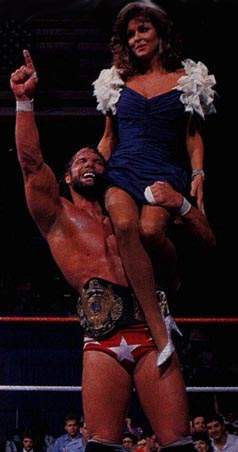 11. RANDY SAVAGE
Real Name: Randy Poffo
Aliases: the Destroyer, the Spider; the Executioner
Hometown: Columbus, OH
Debut: 1973
Titles Held: AGPW International Heavyweight; AWA Southern Heavyweight (2x); CWA International Heavyweight; NWA Mid-America Heavyweight (3x); NWA Gulf Coast Tag Team (with Lanny Poffo); ICW World Heavyweight (3x); USWA Unified World Heavyweight; WCW World Heavyweight (4x); WWC North American Heavyweight; WWF World (2x); WWF Intercontinental
Other Accomplishments: 1987 WWF King of the Ring; Winner of Wrestling Observer Newsletter’s Match of the Year award in 1987 (vs. Ricky Steamboat); Winner of PWI Match of the Year award in 1987(vs. Ricky Steamboat); Winner of PWI Most Popular Wrestler of the Year award in 1988; Winner of PWI Wrestler of the Year award in 1988; Winner of PWI Most Hated Wrestler of the Year award in 1989; Ranked #2 on the PWI 500 list in 1992; Winner of PWI Comeback of the Year award in 1995; Winner of WCW’s World War III match in 1995; Winner of Wrestling Observer Newsletter’s Worst Worked Match of the Year award in 1996 (with Hulk Hogan vs. Ric Flair, Arn Anderson, Meng, The Barbarian, Lex Luger, Kevin Sullivan, Z-Gangsta, and the Ultimate Solution); Winner of PWI Feud of the Year award in 1997 (vs. Diamond Dallas Page); Member of Wrestling Observer Newsletter Hall of Fame (class of 1996)
It looked like a sure think that Randy Poffo would wind up as a wrestler. After all, his father Angelo was a longtime wrestler (and for a time world sit-up champion, with a count of 6,033 at a single time. In addition Randy’s brother Lanny was becoming a wrestler.
However, Randy never showed much interest in wrestling. Instead his focus was on baseball. After he graduated from college in 1971 Randy floated around various farm systems as a catcher.
Things changed in 1973. Randy debuted as the masked Spider during the baseball off-season. Randy eventually walked away from the baseball diamond and embraced his career as a pro-wrestler.
Randy and Lanny Poffo began making the rounds of the Georgia and Florida territories. It was here that Randy had a career-defining moment as Georgia Championship Wrestling booker Ole Anderson told Randy that his real name just didn’t fit his personality as a wrestler. Ole suggested dropping the Poffo and instead going by Randy Savage.
Other than that, these years were uneventful ones, at least regarding titles. It was 1976 before Lanny and Randy won the NWA Gulf Coast tag team titles, and they were fired less than a month later following an “incident” with the head booker.
After another unsuccessful run, this time in Nick Gulas’s NWA Mid-America promotion, Angelo decided that his boys deserved more of an opportunity than they’d been given he’d had enough with other promotions. Poffo started his own company – International Championship Wrestling that was based out of Lexington, KY and immediately went to war with Gulas’s Mid-America and Ron Fuller’s Southeastern Championship Wrestling.
The ICW was strongly based around Savage and Lanny. As a matter of fact, over the years that the ICW was open, its world heavyweight title changed hands eight times. Seven of those saw the belt traded between Savage and Lanny.
However, times were changing in the Tennessee wrestling scene. In 1980 Jerry Jarrett’s Championship Wrestling Association purchased Gulas’s company (which they’d split from in 1986) and the expansion of Jarrett’s territory found them under attack by the Poffos.
However, the war did not go well. In 1982 ICW was bought out by the CWA and Angelo, Randy, and Lanny were brought in to war with Lawler.
Randy immediately began feuding with Lawler. In addition, he tagged with Lanny to feud with the Rock N Roll Express.
It was December of 1983 before Savage gained his first CWA title. He defeated Terry Taylor to win the Mid-America title. He lost it the following April to Jerry Lawler. That same month saw Savage defeat Austin Idol for the AWA International title. He soon dropped it back to Idol.
In late 1984 Savage turned babyface and allied himself with Lawler as they battled Jimmy Hart’s First Family. This soon collapsed, as early 1985 saw Savage turn heel and began the war with Lawler again. On March 17 Savage defeated Lawler to claim the Southern Heavyweight title. He lost it in May to Jerry Oske and regained it a week later.
Finally on June 3rd Lawler defeated Savage to win the belt back. Savage demanded a loser-leaves-town match against Lawler for a rematch. The match took place on June 8 and Savage lost, banishing him from Memphis.
Savage, however, had signed with the WWF.
Savage debuted on Tuesday Night Titans and immediately had every manager in the WWF bidding for his services. Savage turned them all down, choosing instead an announcer from the old ICW show – Elizabeth Hulette, who would become known as Miss Elizabeth (she and Savage were a real-life couple at the time).
It didn’t take long for Savage to gain gold in the WWF. In February of 1986 he defeated Tito Santana to win the WWF Intercontinental title. However, Savage had another problem as well.
George “the Animal” Steele had taken a liking to Miss Elizabeth. After Savage had defeated Steele at the January 4, 1986 Saturday Night’s Main Event, the feud began. It would run for over a year and would tie in to other feuds of Savage’s.
In November of 1986 Savage was defending his title against Ricky Steamboat. Fans gasped in horror as Savage jumped off the top rope with the bell, jamming it into Steamboat’s throat. When Steamboat finally returned, a rematch was announced for Wrestlemania. It was there that Steamboat ended Savage’s thirteen-month title reign.
Savage turned babyface in 1987 and won the WWF’s King of the Ring tournament. His next feud was against the Honky Tonk Man, self-proclaimed greatest Intercontinental champion of all time. On the October 3 Saturday Night’s Main Event Savage had a rematch. He had Honky defeated when the Hart Foundation hit the ring to save Honky’s title. When Elizabeth tried to help, Honky shoved her down and she ran to the back. As Honky smashed his guitar over Savage’s head, Elizabeth emerged from the back with Hulk Hogan. Hogan and Savage joined forces to run off Honky and the Foundation and the Mega Powers were born.
While Hogan and Savage were a team, Savage was also about to get his greatest opportunity to date. In the months leading up to Wrestlemania IV Andre the Giant had defeated Hogan for the World title then immediately handed it to Ted DiBiase. WWF President Jack Tunney ruled the title change illegal and stripped Andre of the title. Wrestlemania IV would see a tournament to crown a new champion.
Hogan and Andre were given a bye in the first round and met in the semifinals. They eliminated each other, which gave DiBiase a bye to the finals.
In contrast, Savage clawed his way through the tournament by first defeating Butch Reed, then Greg Valentine, and finally the One Man Gang. Savage spent most of the main event dominated by DiBiase but finally began fighting back. Andre soon distracted the ref to allow DiBiase to begin utilizing illegal tactics.
Suddenly Elizabeth (who’d left ringside when Andre appeared) headed back to the ring with Hogan behind her. Hogan blasted DiBiase with a chair and Savage became the new world champion.
This led to a feud that faced the Mega Powers against the Mega Bucks (DiBiase and Andre). The Powers disposed of the Bucks in the main event of the first Summerslam.
The Powers soon began experiencing difficulties as Hogan appeared to be getting a little too friendly with Elizabeth. Pressure began to build as Hogan accidentally eliminated Savage from the 1989 Royal Rumble.
Finally, at the February network show The Main Event, Savage abandoned Hogan to the mercy of the Natural Disasters after slapping Hogan in the face. After the match Hogan was checking on Elizabeth when Savage stormed out and started yelling at both of them. Savage’s heel turn was completed when he blasted Hogan with the title belt.
This led to Hogan challenging Savage to a title shot at Wrestlemania. Savage accepted. Although the match was a dead heat for most of it, Hogan finally won at the end.
Savage responded by dumping Elizabeth and replacing her with Sensational Sherri Martel while continuing to feud with Hogan.
Savage later defeated Jim Duggan for the King’s Crown and declared himself the Macho King with his manager Queen Sherri. He also held a coronation with special guest the Genius (AKA Lanny Poffo) and was presented a scepter by Ted DiBiase. The scepter would prove to be a decisive factor in many of Savage’s matches.
As 1990 wound down Savage began feuding with the Ultimate Warrior. This culminated at the 1991 Royal Rumble when Warrior refused to name Savage the #1 contender to the title (which Savage’s opponent Sgt. Slaughter had already done). Not even a visit from Sherri could change Warrior’s mind. So Savage hit the ring during the match and cracked Warrior with his scepter, giving the match to Slaughter.
This led to Wrestlemania VII, where Savage battled the Warrior in a Career-Ending match. The Warrior finally eked out a win and left a ruined Savage lying in the ring. Sherri attacked Savage, which prompted Elizabeth (who was sitting in the crowd) to rush to the ring and save him. Savage and Elizabeth reunited in the ring.
Savage remained with the WWF and began working as a color commentator, while also planning to marry Elizabeth on the air at Summerslam. At the wedding reception they opened a gift to discover a snake, a gift from Jake Roberts (who was irate that he’d been thrown out of Savage’s bachelor party for being a heel). Soon Roberts raised the stakes by having a cobra bite Savage’s arm.
This led to Jack Tunney reinstating Savage and he made a match where Savage would face Roberts at the Tuesday in Texas PPV. Savage won but Roberts got revenge by dropping Savage with three DDTs and then humiliated Elizabeth when she tried to rescue him.
Savage finally put Roberts away to end the feud at the February 1992 episode of Saturday Night’s Main Event.
However, another storm was brewing. WWF champion Ric Flair was announcing that he had “indiscreet” photos of Miss Elizabeth. This led to the main event of Wrestlemania VIII where Savage regained the title.
Later that year Savage and Elizabeth divorced and she stopped working as his manager.
On September 14 he lost the title back to Flair.
After losing the belt, Savage joined forces with the Ultimate Warrior and they formed a team known as the Ultimate Maniacs. The Maniacs soon began trying to win the tag team titles from Money Inc. (Ted DiBiase and Irwin R. Schyster).
After Warrior left the company Savage tagged with Mr. Perfect against Ric Flair and Razor Ramon.
By the time Monday Night Raw started, Savage was back behind the commentary desk, where he mainly remained throughout 1993 and 1994.
However, Savage was wrestling regularly back in Memphis. The USWA (former CWA) was co-promoting with the WWF and they were running an angle where the WWF was invading. As part of the storyline, Savage defeated Jerry Lawler in October to recapture the USWA Unified World Heavyweight title for the WWF (Tatanka had originally won the title only to be beaten by Lawler).
November saw the USWA deal fall apart. Jerry Lawler was indicted for allegedly molesting an underage girl (the girl later admitted that the incident had never happened and Lawler was cleared) and Vince McMahon, already suffering bad publicity because of the steroid scandal severed ties with the USWA. This caused Savage to vacate the USWA title.
In October of 1994 Savage’s contract expired and he immediately signed with WCW. When he was brought in at Starrcade everyone wondered whether he would ally with Hogan or attack him. Savage shook Hogan’s hand and began feuding with Avalanche (WWF’s Earthquake).
The Avalanche feud ended at 1995’s Uncensored. Savage won by DQ after he was attacked by a fan. The fan was revealed to be Ric Flair and the feud was back on.
November 26 saw Savage winning the World War III battle royal to claim his first WCW world title. Savage spent the next few months trading the belt with Flair – Flair won it at Starrcade, Savage took it back on a January Nitro, and Flair took it back at Superbrawl.
With Savage taking the title in January, Flair decided to raise the stakes. He brought in Elizabeth as one of his attending ladies and bragged that she’d divorced Savage for him. Flair also made big shows of giving away Savage’s money that Elizabeth had gotten in the divorce.
The feud with Flair continued until June, when Hogan turned on Savage at Bash at the Beach to form the New World Order with Scott Hall and Kevin Nash. Savage feuded with Hogan until October and left the company after his contract expired.
Savage returned in January and wound up joining the NWO in February. He also reunited with Elizabeth and the two began feuding with Diamond Dallas Page and Kimberly. That ran through the rest of 1997.
1998 saw Savage feuding with Lex Luger until Spring Stampede. Hollywood Hogan had tried to win the WCW world title from Sting but after failing Savage took a shot. Savage faced Sting at Spring Stampede. During the match Hogan tried to keep Savage from winning the title. Despite Hogan’s efforts, Kevin Nash jackknife powerbombed Sting to give Savage the belt.
A Nash powerbomb also tried to make sure that Savage kept it the next night on Nitro when he was challenged by Hogan. Unfortunately Bret Hart interfered on Hogan’s behalf and Hollywood won the belt.
This led to the New World Order splitting. Savage went with Nash and became a founding member of the NWO Wolfpac.
During Savage’s title match with Sting he’d suffered a knee injury that wound up keeping him out of action for nearly a year. When he returned it was a different Macho Man. He wore his hair slicked back into a ponytail and had a manager named Gorgeous George. Savage first tried to protect Page’s world title but after Nash defeated him Savage went after the belt himself with the two new members to his entourage – Madusa and Miss Madness (Nora Greenwald, better known as Molly Holly).
The 1999 Great American Bash saw the return of Sid Vicious, who joined Savage in battling Nash. This led to Sid and Savage battling Nash and Sting in a match where the winner became world champion. Savage won and lost it the next night to Hogan (with Nash’s help).
Savage’s entourage soon disbanded as Madusa and Miss Madness began blaming each other for Savage’s loss. Savage fired them and the women began feuding with each other. In addition, Savage began feuding with Dennis Rodman and defeated him at Road Wild.
2000 saw Savage joining the Millionaire’s Club with Hogan, Flair, Page, and other top names. Later that year Savage’s contract ran out and it was not renewed.
Savage vanished from the wrestling scene from the next four years and spent part of the time recording a rap album called Be a Man. In addition, he appeared in the 2002 film Spider-Man as Bonesaw McGraw.
In 2004 Savage returned, this time for TNA. He was brought in to join forces with AJ Styles and Jeff Hardy against the “Kings of Wrestling” – Jeff Jarrett, Scott Hall, and Kevin Nash.
Due to backstage issues (one story involves a confrontation with Hulk Hogan) Savage left the company after staying only weeks. To date, Savage has not returned to wrestling.
Randy Savage left a huge imprint on wrestling. His charisma was off the charts and although he was a heel his relationship with Elizabeth was a highlight of the 80’s WWF.
Savage’s charisma and in-ring skills kept him at the top of the WWF. His match with Ricky Steamboat at Wrestlemania III is a modern-day classic and has been called the greatest match in WWF history. His charisma meant that as much as fans hated him as a heel, they loved him as a babyface. For proof, check out Wrestlemania where he and Elizabeth reunite and you can see fans crying throughout the arena.
Thanks to the Wrestlemania III match, Savage became one of the best known wrestlers around. You can ask anyone to name a match from Wrestlemania III and there will likely be only two responses: Hulk/Andre and Savage/Steamboat.
Savage easily transitioned from the beloved hero who defeated DiBiase at Wrestlemania IV to the hate-filled heel that became the Macho King. And when the King was defeated by the Warrior and betrayed by Sherri, the fans (and Elizabeth) took him back again.
Savage was also not afraid to reinvent himself as he did in 1999. The cowboy hats, fancy sunglasses, and tasseled sleeves were gone. Now he had a much cooler appearance that rejuvenated his career.
Savage was able to turn his wrestling fame into other opportunities. During the 1990’s he became a spokesman for Slim Jim. He appeared in Spider-Man. He does voice-over work. And, of course, there was the infamous rap album.
Even today Savage remains one of the most identifiable faces in wrestling. He is so much so that TNA’s Jay Lethal has resurrected the Macho Man gimmick as a tribute to Savage.
With incredible wrestling skills and charisma that was off the charts Savage took the wrestling world by storm. And it was all the baseball diamond’s loss.
|
|
|
|
|
Joined: Jun 2002
Posts: 19,546 Likes: 1
living in 1962 15000+ posts
|
|
living in 1962 15000+ posts
Joined: Jun 2002
Posts: 19,546 Likes: 1 |
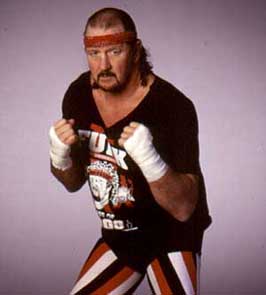 10. TERRY FUNK
Aliases - Chainsaw Charlie
Hometown - Amarillo, Texas
Debuted - 1965
Titles Held - NWA Florida Heavyweight; NWA Florida Southern Heavyweight (2x); NWA Florida Television; NWA Florida Tag Team (with Dory Funk Jr.); NWA Florida North American Tag Team (with Dory Funk Jr.); ECW Television; ECW World Heavyweight (2x); NWA Georgia Tag Team (with Dory Funk Jr.); NWA Georgia Television; IWA World Heavyweight (2x); WCW Hardcore (3x); NWA/WCW United States (2x); NWA Americas Heavyweight; NWA International Tag Team (with Dory Funk Jr.); NWA Los Angeles World Tag Team (with Dory Funk Jr.); NWA World Heavyweight; 3PW Heavyweight; NWA Western International Tag Team (2x, with Dory Funk Jr.); NWA Western States Heavyweight (7x); NWA Western States Tag Team (2x, with Ricky Romero); NWA Western World Tag Team (2x, with Dory Funk Jr.); SCW Southwest Heavyweight; SCW World Tag Team (with Dory Funk Jr.); NWA Missouri Heavyweight; USWA Unified World Heavyweight; WWF Tag Team (with Cactus Jack)
Other Accomplishments - Winner (with Dory Funk Jr.) of AJPW World’s Strongest Tag Team League in 1977, 1979, and 1982; Winner of PWI Most Inspirational Wrestler of the Year award in 1997; Winner of Wrestling Observer Newsletter Best Brawler award in 1989; Winner of Wrestling Observer Newsletter Best Heel award in 1989; Winner of Wrestling Observer Newsletter Best on Interviews award in 1989; Winner of Wrestling Observer Newsletter Feud of the Year award in 1989 (vs. Ric Flair); Winner of PWI Wrestler of the Year award in 1976; Winner of PWI Feud of the Year award in 1989 (vs. Ric Flair); Named ECW Lifetime World Champion by Paul Heyman in 1997; Inducted to WCW Hall of Fame in 1995; Member of Stampede Wrestling Hall of Fame; Inducted to Wrestling Observer Newsletter Hall of Fame in 1996; Inducted to Professional Wrestling Hall of Fame in 2004; Winner of Cauliflower Alley Iron Mike Mazurki award in 2005
Out of all the columns I’ve ever written this will be the easiest.
I love Terry Funk. I love him beyond words. Very few wrestlers have consistently entertained and excited me throughout my 10+ years of fandom as the Immortal Funker. In his career spanning over 30 years Funk has been part of some of wrestlings greatest angles, matches and confrontations. He has been able to evolve for every new generation that has watched wrestling. Whether it be master technician, hardcore brawler or crazy old man, Terry Funk is a name that any fan from any era can relate to.
Funk wrestled anyone who’s anyone in the wrestling business during his career from Ric Flair to Mick Foley to Bret Hart to CM Punk. He’s been NWA World Champion and he was at the forefront of the ECW Revolution. He’s been blown up in Death Matches in Japan and competed in excellent technical matches with men like Harely Race.
I’m not going to go through Funk’s career step by step because we honestly would be here for hours, his contributions to wrestling have been so great. Instead, I’ll take a look at some of my favorite Funk memories.
For a start, his empty arena brawl with Jerry Lawler still remains as one of the best train wrecks in wrestling history. The match itself is pretty short but the build up and pay off is excellent. Funk’s vicious pre-match promo is one of the best promos I’ve ever seen as he tears strips off Lawler, Memphis and anything else he can think of at the time. The match ending angle, where Funk has a spike shoved in his eye, has become iconic thanks to the sheer brutality and the fact that Funk screams “My Eye, You Bastard Lawler, My Eye”. I can forget some things on Raw a day after watching it but that moment is embedded in my memory.
People like to talk about Funk’s performance in the IWA-Japan King of the Death Match Tournament and it certainly deserves mention. Funk, then in his 50’s, bleeds buckets in the baking heat for three matches. Even though Mick Foley wins the tournament, Funk’s desperate and gutsy showing almost eclipses Foley’s win. However, the most memorable garbage match that I remember funk for is the Exploding Ring match from FMW’s Kawasaki Stadium show in the summer of 1996. In this match, Funk teams up with Mr. Pogo to face Hayabusa and Masato Tanaka. Not only is the match exciting and brutal but Funk steals the show again by cutting a promo on the whole of FMW, calling them chickens a goading Astushi Onita to throw water on him. Brilliant! You can find the match on You Tube but sadly I can’t find Funks promo. Still, if you want to see a good match here’s the link.
I love Funk’s Japanese music!
Anyway, Funk may have partaken in some garbage matches but he also was one half of one of 1989’s best feuds in his war with Ric Flair. 1989 may forever be remembered as Ric Flair’s year and indeed he was on fire. However, as the old expression goes, it takes two to tango. Funk’s angry promo on Flair followed by a piledriver through a table remains one of the best heel turns ever devised. Also, I defy you not to laugh as Funk calls Flair a “Banana Nose”. Just because I’m a nice dude I’ll provide a link for THAT too.
This of course led to a series of great matches between the two including a classic I Quit match, that Flair would eventually win.
Of course Funk’s been a part of some Wrestlecrap too. For instance, getting kicked in the head by a horse in a hardcore match with Chris Candido and let’s not forget that silly feud with Dustin Rhodes where he kept hitting him with rubber chickens. However, fans have come to think fondly of these silly angles and matches because quite simply, Terry Funk could make anything entertaining. He’s an all round top performer and even in advanced age he’s still able to deliver the goods as his performance at One Night Stand two years ago showed.
Overall, Terry Funk is a bona fide legend. The term legend was created for a man like him. He is not only one of the most talented wrestlers ever but he has a natural warmth and charisma that makes it near impossible to hate him. Also, judging by accounts from other wrestlers, Funk appears to be a friendly and humble man who’s prepared to put business before ego. It was his selfless performances in ECW that helped make stars of the opponents he worked with. Paul Heyman has openly said that there wouldn’t be an ECW without Terry Funk, his contributions to that company really helped legitimize it in a lot of peoples eyes.
What’s more, Funk reminds us of that eccentric family member we all love. He’s been a wrestler, a hardcore warrior and middle aged and crazy but what attracts us most to Terry Funk is the fact that he’s human. He may not be one of us, but how many of us could Moonsault at 60?
I’m glad Terry Funk has made it so high on the list. I truly think it’s deserved and I hope you all do too. If not, you’re a no good Satchel Ass!!!
|
|
|
|
|
Joined: Jun 2002
Posts: 19,546 Likes: 1
living in 1962 15000+ posts
|
|
living in 1962 15000+ posts
Joined: Jun 2002
Posts: 19,546 Likes: 1 |
 9. KURT ANGLE
Hometown: Pittsburgh, Pennsylvania
Debut: 1992 (amateur), 1999 (professional)
Titles Held: IWGP Third Belt; PPW Heavyweight; TNA World Heavyweight (2x); TNA World Tag Team (with Sting); TNA X Division; WCW United States; WCW World; WWE World; WWF/WWE Heavyweight (4x); WWF European; WWF Intercontinental; WWE Tag Team (with Chris Benoit)
Other Accomplishments: 1996 Olympic Gold Medalist in freestyle wrestling; 1987 Pennsylvania State wrestling champion; 1988 Clarion University Freshman of the Year; FILA Junior World Freestyle champion in 1988; USA Junior Freestyle wrestling champion in 1987; NCAA Division I All-American for 1990, 1991, and 1992; NCAA Division I champion for 1990, 1991, and 1992; USA Senior Freestyle champion in 1995 and 1996; Winner of PWI Most Hated Wrestler of the Year award in 2000; Winner of Wrestling Observer Newsletter’s Best Gimmick award for 2000; Winner of PWI Feud of the Year award for 2000 (vs. Triple H); Winner of PWI’s Rookie of the Year award for 2000; Winner of Wrestling Observer Newsletter’s Most Improved award for 2000; Ranked #1 on the PWI 500 in 2001; Winner of PWI Most Inspirational Wrestler of the Year award in 2001; Winner of Wrestling Observer Newsletter’s Most Outstanding Wrestler award from 2001-2003; Winner of Wrestling Observer Newsletter’s Best on Interviews award in 2002; Winner of Wrestling Observer Newsletter’s Best Technical Wrestler award in 2002; Winner of Wrestling Observer Newsletter’s Wrestler of the Year award for 2002; Winner of Wrestling Observer Newsletter’s Readers’ Favorite Wrestler award in 2002 and 2003; Winner of Wrestling Observer Newsletter’s Feud of the Year award in 2003 (vs. Brock Lesnar); Winner of PWI Comeback of the Year award in 2003; Winner of PWI Feud of the Year award in 2003 (vs. Brock Lesnar); Winner of PWI Match of the Year award in 2003 (vs. Brock Lesnar - September 16, 2003); Winner of PWI Most Popular Wrestler award in 2003; Winner of PWI Wrestler of the Year award in 2003; Winner of PWI Match of the Year award in 2005 (vs. Shawn Michaels at Wrestlemania 21); Winner of PWI Feud of the Year award in 2007 (vs. Samoa Joe); Member of USA Wrestling Hall of Fame (class of 2001); Member of Wrestling Observer Newsletter Hall of Fame (class of 2004)
Kurt Angle has been a wrestling machine since he first stepped onto a wrestling mat. He excelled at the mat game through high school and college, picking up two NCAA heavyweight-wrestling championships along the way. He reached the pinnacle of amateur wrestling in 1996 by winning an Olympic gold medal at the Summer Olympic Games in Atlanta, GA. After proving himself at that level he initially resisted moving on to the pro game.
His first foray into pro wrestling was months after his Olympic victory when he attended an ECW taping at the request of fellow Pittsburgh native Shane Douglas. Unfortunately that event saw Raven “crucify” The Sandman on a homemade cross. Angle was so disgusted by the event that he threatened to sue Heyman and ECW if he was shown on ECW TV during the same time as the “crucifixion.”
He soured on pro wrestling but was eventually wooed by the WWF in late ’98 and signed a long-term contract. Not surprisingly a natural athlete like Angle took to pro wrestling like a sponge and he was called up to the main roster just a year after signing his contract; a legit rookie in the business.
Angle debuted at Survivor Series ’99, playing up his legit Olympic background only with some over-the-top heel mannerisms. He defeated Shawn Stasiak in short order in his debut and shot up the WWF ranks very quickly. He went on a brief undefeated streak before running into the buzz saw of the debuting Tazz in January 2000. The next month he rebounded by beating Val Venis for the European Championship and then just weeks later he pinned Chris Jericho to also win the Intercontinental Championship, becoming the self-proclaimed Euro-Continental Champion. At WrestleMania 2000 he lost both belts in two-fall triple threat match to Chris Benoit and Chris Jericho without being pinned for either belt.
Through the spring of 2000 he fell into a nice upper mid-card spot, displaying his over-the-top heel mannerisms, his superb technical ability and his comedy timing, thanks to his alliance with Edge & Christian. In June 2000 he won the King of the Ring, the only man to win a 32-man tournament field. He continued his banner summer by facing Undertaker in July as part of a “young lions” triple main event at Fully Loaded and then challenged for the WWF World Championship for the first time at SummerSlam 2000.
Then at No Mercy in October 2000 he did the unthinkable by beating The Rock for the World Championship in just under a year of being on television. He defended the belt against all the top stars of the day, including Undertaker at Survivor Series, Triple H at Royal Rumble and then escaped the first (and only) six man Hell in a Cell still as Champion, an early precursor to the Elimination Chamber. Angle dropped the World Title back The Rock in February and then spent the spring battling Chris Benoit in a series of great matches.
He was integral part of the InVasion, first acting as a lieutenant on the WWF team and then its captain once Stone Cold Steve Austin deflected to the WCW side of things. It was during this time that Angle became a hero for the first time in his WWF career and ended up beating Austin for the WWF Championship in his hometown of Pittsburgh just days after the September 11 attacks. The reign wouldn’t last as he would drop the belt back to Austin just weeks later.
After the InVasion mess was settled, Angle once again become one of the company’s top heels and continued his battles with Stone Cold, The Rock and Triple H. During this time he was also able to pull out Kane’s best matches of his career, including a great undercard bout at WrestleMania X8.
Angle was the second man picked for the SmackDown brand during the initial brand expansion. He spent the spring of 2002 putting Edge on the map with a series of great matches. He then welcomed Rey Mysterio to the WWE in style and then formed an unlikely alliance with his old rival Benoit. Angle, Benoit, Mysterio, Edge and Eddie & Chavo Guerrero put on a series of spectacular free TV and pay per view matches in the fall of 2002 under the watchful booking eye of Paul Heyman. These men became lovingly known as the “SmackDown Six.” During this run Benoit and Angle became the first ever WWE Tag Team Champions, and then Angle picked up a third WWE Championship by beating The Big Show in December 2002. He and Benoit welcomed in 2003 with an absolutely fantastic Championship match at Royal Rumble ’03.
The legit wrestler then transitioned into probably his greatest rivalry, with fellow NCAA championship wrestler Brock Lesnar. They tore up the show in the main event of WrestleMania XIX where Angle dropped the Championship to Lesnar. He took some time off for a neck injury and returned in the summer. He took the belt back at Vengeance in July by beating Lesnar and Big Show in a triple threat and then defended the belt against Brock at SummerSlam. Brock ended up with the belt once again a few weeks later on SmackDown in a great 60 man Iron Man match. Angle feuded with Lesnar through the rest of the fall and then transitioned into a run against Eddie Guerrero in early 2004 after Guerrero had became WWE Champion. Angle lost to Eddie at WrestleMania XX and then became the GM of SmackDown through the spring and summer of 2004 as a way to heal more nagging injuries. He returned to the ring that summer continued his feud with Guerrero.
He remained a top card guy on SmackDown going into 2005 and started a cross-brand rivalry with Shawn Michaels that culminated in a match of the year candidate at WrestleMania 21. He was then drafted over to RAW that summer, beat Michaels in a rematch and squashed Eugene at SummerSlam. In the fall of 2005 he became the top contender for John Cena’s WWE Championship. He and Cena battled numerous times through the rest of 2005 on free TV and on PPV, but Angle was never able to win the Championship.
When Batista was injured in early 2006, Angle was hastily transferred to SmackDown to win the World Championship and replace the big man as the face of the blue brand. Angle carried SmackDown through the winter and spring of 2006 until he was then switched over to the fledgling ECW brand.
Angle was poised to take the re-launched ECW brand into a new direction, but ultimately his piling injuries and rampant drug abuse caused WWE to suspend Angle and subsequently release him unconditionally from his contract in August 2006.
On the September 2006 TNA PPV, No Surrender, it was announced that TNA had signed Angle to a long-term deal, easily the biggest signing in TNA history and one of the few legit surprise payoffs in wrestling history.
Angle instantly became the face of TNA and went on to have a great three match series with Samoa Joe before he even touched another opponent. The matches and build-up to their initial rivalry were fantastic and it was no surprise that their matches drew some of TNA’s highest buyrates.
He went on to win the TNA World Championship in May 2007, defeating fellow WWE alum Christian Cage. Ultimately he was stripped of the Title, but won it back for real a month later at TNA’s flagship King of the Mountain match. It became the Angle Show in TNA, and he even brought his wife Karen out on TV with him for constant love/hate drama. He also built an Angle Alliance with AJ Styles and Tyson Tomko.
At Victory Road, Angle, as TNA Champion, teamed with his old rival Samoa Joe, TNA X-Division Champion, to defeat Team 3-D for the TNA Tag Championships. The pair couldn’t co-exist so they battled the next month with winner take all. Angle came out of the match as the holder of every Title. In September at Turning Point, he defended all three belts in one night. He successfully defended the World Championship against Abyss, teamed with Sting to lose the Tag belts to Team Pacman and dropped the X-Title to Jay Lethal. This led to a Sting-Angle main event at TNA’s flagship event Bound For Glory in October 2007, which Sting ultimately won. A couple weeks Angle won the belt from Sting on an episode of Impact.
Angle continued to dominate the top of the card in TNA, having battles with everyone from Samoa Joe, Booker T, Scott Steiner, Kaz, Christian and his old lackey AJ Styles. In April 2008 he dropped the TNA Championship to Joe in the main event cage match at LockDown, effectively putting Joe over as a legit superstar.
In the fall of 2008, the Kurt Angle show in TNA finally gained some direction as Angle joined up with other top stars Booker T., Sting, Scott Steiner and Kevin Nash to form the Main Event Mafia, the evil foils to TNA’s Frontline, a group of young stars led by Samoa Joe, AJ Styles, Team 3-D and Rhino.
Angle has recently become embroiled in a personal rivalry with Jeff Jarrett, in a different take on the old wrestler versus owner angle. The interviews and matches have brought the best out of Jarrett and made him over and relevant in TNA fans’ eyes for the first time years.
In pure wrestling ability, Kurt Angle is one of the top four or five guys in wrestling history. He is a natural athlete and makes it look easy in the ring. Plus his fierce competitive spirit won’t let him have a bad match.
Yet he has never been viewed as top guy. For all those years in WWE when he was putting on the best match of the card there always a Rock or Austin or HHH who was more “important” to the company. It seemed as if Angle would only get his top card due when they needed him in a pinch. When someone was injured or in trouble, Angle would be there to fill in that min event void with ease.
It’s a shame when someone with the talent of Angle gets so easily overlooked. We here at Pulse Wrestling want to give Kurt Angle his proper due.
|
|
|
|
|
Joined: Oct 2000
Posts: 53,734 Likes: 2
Educator to comprehension impaired (JLA, that is you) 50000+ posts
|
|
Educator to comprehension impaired (JLA, that is you) 50000+ posts
Joined: Oct 2000
Posts: 53,734 Likes: 2 |
please move that post to the Vault of Tomorrow. thanks.
|
|
|
|
|
Joined: Oct 2000
Posts: 53,734 Likes: 2
Educator to comprehension impaired (JLA, that is you) 50000+ posts
|
|
Educator to comprehension impaired (JLA, that is you) 50000+ posts
Joined: Oct 2000
Posts: 53,734 Likes: 2 |
yknow this list was made for either controversy, or the writers are ignorant. samoa joe and raven ranked higher than jake the snake?
|
|
|
|
|
Joined: Jun 2002
Posts: 19,546 Likes: 1
living in 1962 15000+ posts
|
|
living in 1962 15000+ posts
Joined: Jun 2002
Posts: 19,546 Likes: 1 |
please move that post to the Vault of Tomorrow. thanks. got milk?
|
|
|
|
|
Joined: Oct 2000
Posts: 45,846 Likes: 1
cobra kai 15000+ posts
|
|
cobra kai 15000+ posts
Joined: Oct 2000
Posts: 45,846 Likes: 1 |
yknow this list was made for either controversy, or the writers are ignorant. samoa joe and raven ranked higher than jake the snake? agreed. i feel the same about jericho, but i know he's internet god, so i let it pass. but samoa joe's placement is a little more than startling. and as much as i like kurt angle (my favorite modern day wrestler) i can't believe he's in the top ten of all time. at the very least, it should be switched with hhh.
giant picture
|
|
|
|
|
Joined: Jun 2002
Posts: 19,546 Likes: 1
living in 1962 15000+ posts
|
|
living in 1962 15000+ posts
Joined: Jun 2002
Posts: 19,546 Likes: 1 |
 8. RICKY STEAMBOAT
Real Name: Richard Blood
Aliases: The Dragon, Sam Steamboat, Jr.
Hometown: Charlotte, NC
Debut: April 23, 1976
Titles Held: NWA Mid-Atlantic United States Heavyweight; NWA Mid-Atlantic Tag Team (4x - 3 with Paul Jones, 1 with Jay Youngblood); NWA Mid-Atlantic Heavyweight (2x); NWA Television; NWA United States Heavyweight; NWA World Heavyweight; NWA Mid-Atlantic World Tag Team (6x - 1 with Paul Jones, 5 with Jay Youngblood); WCW United States Heavyweight; WCW World Tag Team (2x - 1 with Dustin Rhodes, 1 with Shane Douglas); WCW World Television (2x); WWF Intercontinental
Other Accomplishments: Winner of PWI Rookie of the Year award in 1977; Winner of PWI Tag Team of the Year award in 1978 (with Paul Jones); Winner of Wrestling Observer Newsletter’s Tag Team of the Year award for 1983 (with Jay Youngblood); Winner of PWI Match of the Year award for 1987(vs. Randy Savage - March 29, 1987); Winner of Wrestling Observer Newsletter’s Match of the Year award for 1987 (vs. Randy Savage - March 29, 1987); Winner of PWI Match of the Year award for 1989 (vs. Ric Flair - May 7, 1989); Winner of Wrestling Observer Newsletter’s Match of the Year award for 1989 (vs. Ric Flair - May 7, 1989); Had three matches in 1989 awarded five stars by the Wrestling Observer Newsletter (vs. Ric Flair - February 20, 1989; vs. Ric Flair - April 2, 1989; vs. Ric Flair - May 7, 1989); Ranked #7 on the PWI 500 in 1991; Wrestling Observer Newsletter Five Star Match in 1992 (with Sting, Nikita Koloff, Barry Windham, and Dustin Rhodes vs. Rick Rude, Steve Austin, Arn Anderson, Larry Zbyszko, and Bobby Eaton - May 17, 1992); Recipient of PWI Stanley Weston award in 1995; Member of Wrestling Observer Newsletter Hall of Fame (Class of 1996); Member of Professional Wrestling Hall of Fame (Class of 2002)
Richard Blood was a gifted wrestler who worked his way through the AWA training camp to be one of the most solid in ring competitors of his day, and perhaps in history. You’ve probably only ever heard of his wrestling moniker though, Ricky “The Dragon” Steamboat.
The debate of who is the best ever is often a very volatile and passionate discussion. However, I have yet to have one of these discussions that didn’t have anything but a fully positive account of Ricky Steamboat. He’s a man who simply ticked every box in what a wrestler should be.
Likability
Athleticism
Selling
Steamboat excelled in all of these areas. Very few can sell as well as Steamboat. Sometimes copied but never duplicated, Steamboat could honestly make you believe his very soul was being ripped from his body. I can honestly say I’ve never seen Ricky Steamboat sell and not think he was in excruciating agony. His masterful selling and instinctive nature to wrestling psychology made Steamboat a natural at rallying the crowd behind him. His sell after Randy Savage rammed a ring bell into his throat leading to their Wrestlemania III classic is prime example of this.
When it came to athleticism, Steamboat was far and away one of the best. He turned a top rope cross body into a work of art and his distinctive way of giving an arm drag has put him firmly in history. I can’t remember the last time in training that we’ve done Arm Drags and the Steamboat method hasn’t come up, and no I can’t do it. On top of his athletic ability, Steamboat was also a cardio machine who seemingly never stopped moving at 100 miles an hour. I often wonder how he didn’t collapse dead sometimes from a heart attack he moved so fast. To steal a line from our favorite Oklahoman barbecue sauce eating commentator, Ricky Steamboat was indeed “quicker than a hiccup”
As far as likability goes, let’s put it like this. The major complaint about Ricky Steamboat was that he was so bloody nice that he could never get heel heat. Think about that for a second. Ricky Steamboat was so likable and such a natural born babyface that he could never get a crowd to boo him. Now that’s being good in your role.
To be honest, a prolonged heel run is the only thing that is missing from Steamboat’s career. Pretty much every wrestler in this list has had a run as both a heel and a face but Steamboat is one of the few wrestlers who never turned. For every major run in the U.S. that he ever had, Ricky Steamboat was a face and the fans never turned on him. That is a testament to just how good and to just how beloved Steamboat really was. He was the definition of a “career babyface”, and I don’t think a company could have turned him if they wanted too.
Steamboat had many famous feuds and matches with the peak of his career probably coming in 1989 with stupendous series of matches with Ric Flair. His matches at “Chi Town Rumble”, “Rajun Cajun” and “Music City Showdown” might go down in history as probably the best three match series ever, the matches were that good. All of them were excellent and everyone has a favorite, “Rajun Cajun” for me, but I don’t think it’s hard to call each one ****+ and the last two are definite ***** matches. They’re just so good and everyone should see them because they are an excellent example of what wrestling should be. I’m not talking about style or presentation, I’m talking about a crowd going bat-shit crazy because what they’re seeing in the ring is so bloody good. Flair and Steamboat are two clearly defined and charismatic characters butting heads and tearing the house down. THAT’S wrestling.
There’s no doubt that Ricky Steamboat is one of the best wrestlers of any era, let alone the modern one, and I feel privileged to write his induction. He’s simply fantastic and whenever WWE decide to make a DVD of his career I won’t just buy it but I’ll camp outside my nearest HMV just to make sure I get my hands on one. If you’re reading this WWE do it! I command you!
The entire Top 100 Wrestlers feature can be found here.
Last 5 posts by Michael Fitzgerald
Pulse Wrestling's Top 100 Wrestlers of the Modern Era: #10 - Terry Funk - January 26th, 2009
From the UK: WWE Great American Bash 2008 - July 22nd, 2008
From the UK: ROH Man Up 2007 - July 5th, 2008
From the UK: WWF Backlash 2000 - June 30th, 2008
Pulse Wrestling's 10 Questions with Dave Rayne - April 22nd, 2008
Discussion
4 comments for “Pulse Wrestling’s Top 100 Wrestlers of the Modern Era: #8 - Ricky “The Dragon” Steamboat”
I realize this is all very subjective at the end of the day…but this guy definitely deserved to be in the top five!
Posted by Greg Manuel | January 28, 2009, 8:46 am I disagree; I think he’s had some great matches, but I don’t think he’s top ten material - I’m a bit surprised to see him this high on the list. He had great matches with Flair, Savage and Austin, but those three have had great matches with far more people.
I won’t deny his place in history and being on the list in the first place, but I do think he’s a little over-elevated by the Flair series. Even the article above barely mentions anything else.
As short as it was, this was a well written entry though. Nice work.
Posted by CJ | January 28, 2009, 10:13 am Flair, Savage and Austin are not the only people Ricky Steamboat should be known for - there was his incredible tag team work with Paul Jones & Jay Youngblood in the ’70s and ’80s, racking up multiple tag title reigns with both men and putting on MAD crowd pleasers against the likes of Jack & Jerry - the ORIGINAL Briscoes - the team of Sgt. Slaughter and Don Kernodle, and when Paul Jones turned on him, it was Steamboat/Youngblood vs. Jones and Baron von Raschke.
There was also his WWF feuds with Don “Magnificent” Muraco and Jake “The Snake” Roberts - he was also the last NWA World Champion to defend in All Japan (against Tiger Mask), not to mention another tag title run that helped to legitimize Dustin Rhodes in the eyes of WCW fans in 1991/92, the feud between he and Rick Rude over the US title that ended with their 30 minute Iron Man match at Beach Blast ‘92…the first match of its kind that I can recall…
Then he went on to team up with Shane Douglas and give us one of the best tag title matches of 92 against Barry Windham and Brian Pillman…
Suffice to say, it seems that if you were working with Ricky Steamboat, you were certainly going to come out of it with immense career potential.
Flair, Savage & Austin might be who come immediately to mind (after all, Austin was Steamboat’s last real opponent before his career-ending injury) but there is much more to the Dragon than those three wrestlers.
|
|
|
|
|
Joined: Oct 2000
Posts: 45,846 Likes: 1
cobra kai 15000+ posts
|
|
cobra kai 15000+ posts
Joined: Oct 2000
Posts: 45,846 Likes: 1 |
I like how Gail Kims tights ride up her crack.  needs to be reseen.
giant picture
|
|
|
|
|